Instituto Murciano de Investigación y Desarrollo Agrario y Alimentario (IMIDA), Department of Biotechnology. La Alberca (Murcia), E-30150, Murcia, Spain.
Sci Rep. 2019 Apr 30;9(1):6703. doi: 10.1038/s41598-019-43134-5.
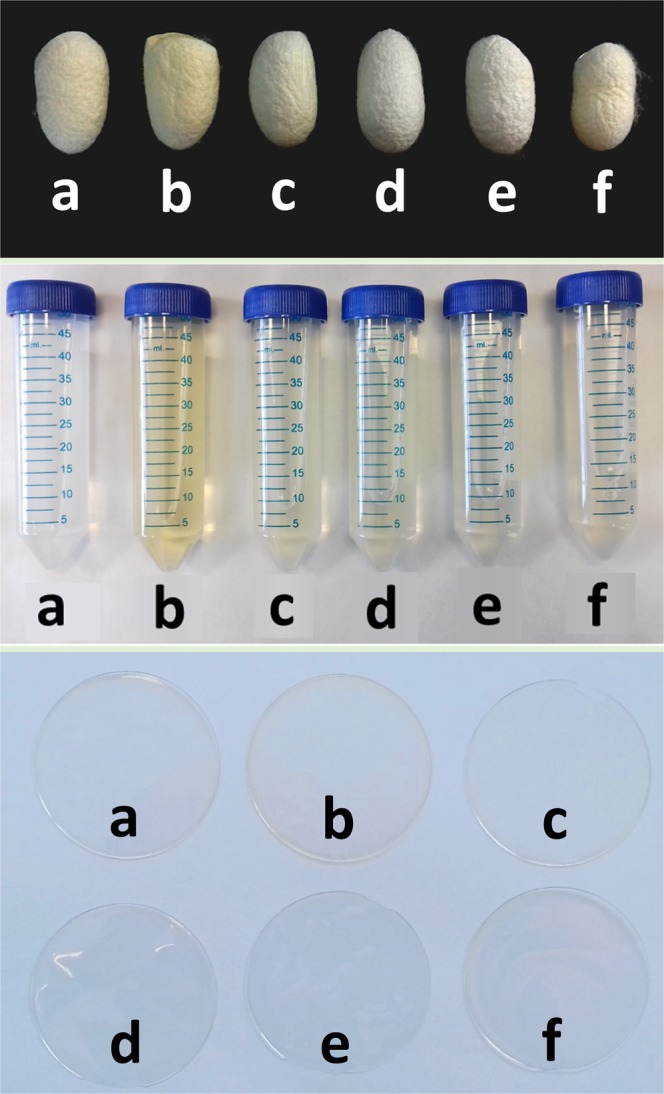
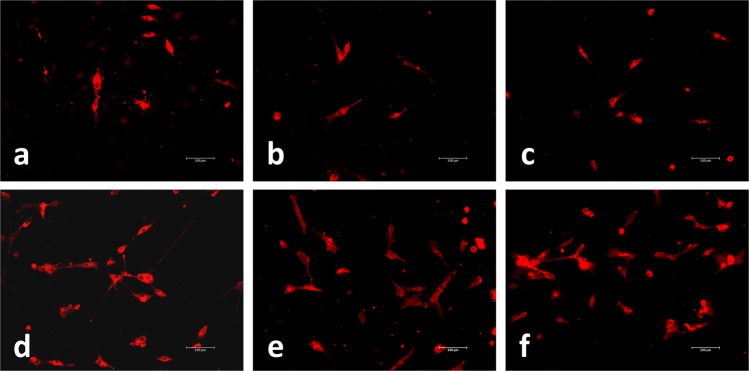
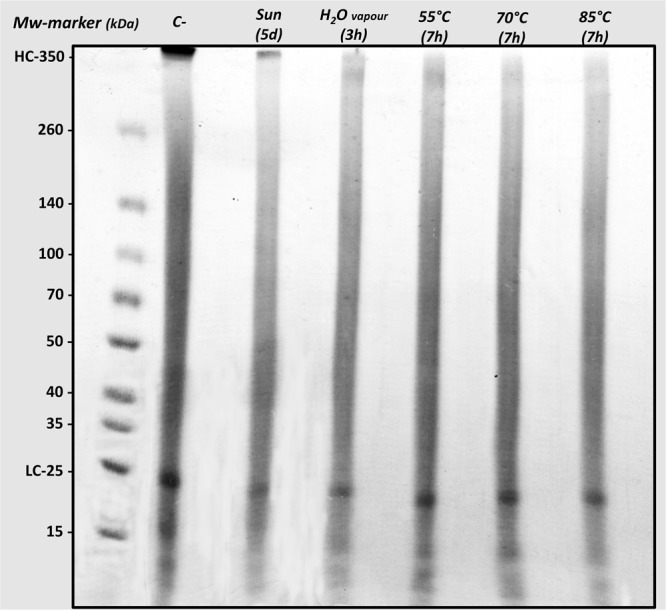
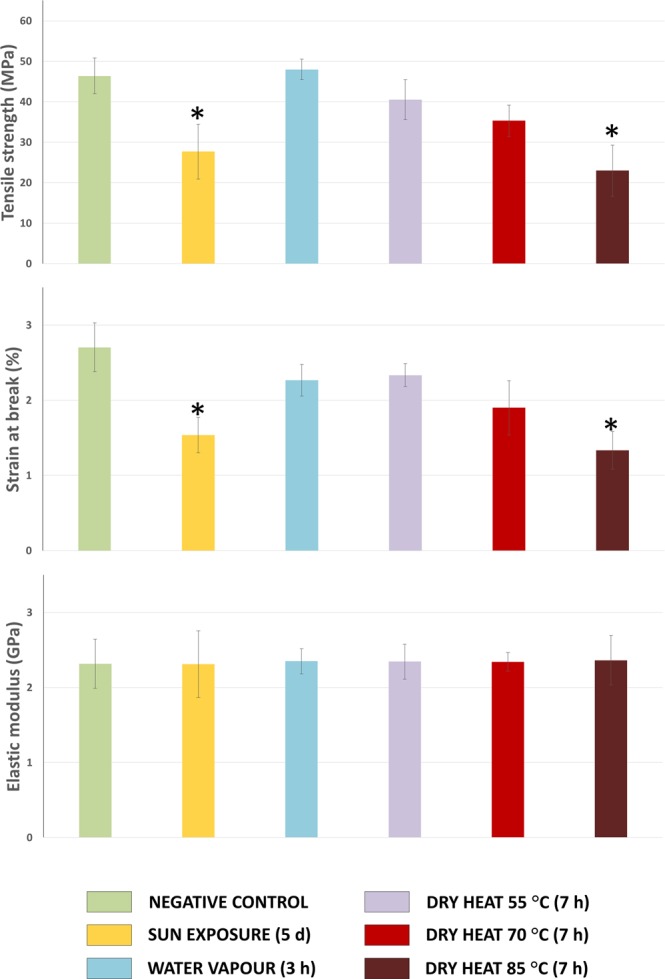
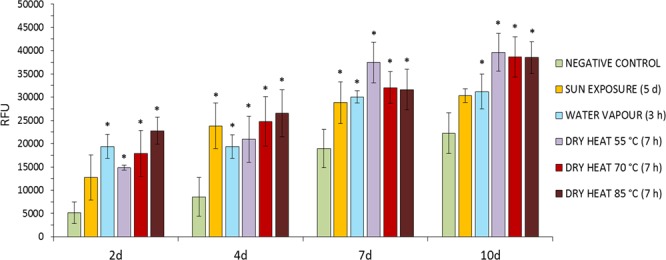
Stifling treatments are applied to silk cocoons in order to kill the pupae, preventing the emergence of moths and allowing to preserve the silk during long periods of time. All of them involve the application of aggressive steps, such as sun exposure, hot steam from boiling water or hot air, during hours or even days. None of the scientific articles related to silk fibroin biomaterials has previously taken into account this fact in its section of materials and methods. In this work, the consequences of the stifling treatments most commonly used by the silk producing countries and companies are explored in depth, using fibroin films as biomaterial model. The protein degradation (visualised by SDS-PAGE) was dramatically increased in all the fibroin dissolutions produced from stifled cocoons; heavy and light chains of fibroin were specially degraded, reducing their presence along the lanes of the gel compared to the negative control (untreated fresh cocoons). Structural changes are also described for annealed silk fibroin films. The β-sheet content, analysed by means of infrared spectroscopy, was significantly higher when stifling was performed at higher temperature (70 °C and 85 °C). It is also exposed the impact of the stifling on the mechanical properties of the materials. Tensile strength and strain at break values were detected as significantly lower when this procedure was carried out by means of dry heat (85 °C) and sun exposure. On the other hand, and contrary to expectations, the proliferation of fibroblasts growing on the materials was improved by all the different stifling methods, compared to negative control, being this improvement, especially accentuated, on the films produced with fibroin purified from cocoons treated with dry heat.
为了杀死蛹,防止蛾的出现并在长时间内保存丝绸,人们会对蚕茧进行闷蒸处理。所有这些处理都涉及到一些剧烈的步骤,如暴露在阳光下、沸水中的热蒸汽或热空气,持续数小时甚至数天。之前,没有任何与丝素生物材料相关的科学文章在其材料和方法部分考虑到这一事实。在这项工作中,深入探讨了丝绸生产国和公司最常用的闷蒸处理的后果,使用丝素薄膜作为生物材料模型。在所有由闷蒸蚕茧制成的丝素溶解物中,蛋白质降解(通过 SDS-PAGE 可视化)显著增加;丝素的重链和轻链特别降解,与未经处理的新鲜蚕茧(阴性对照)相比,它们在凝胶条带中的存在减少。还描述了退火丝素薄膜的结构变化。通过红外光谱分析,β-折叠含量在闷蒸温度较高(70°C 和 85°C)时显著升高。还揭示了闷蒸对材料力学性能的影响。当通过干热(85°C)和阳光暴露进行此处理时,拉伸强度和断裂应变值明显降低。另一方面,与预期相反,与阴性对照相比,所有不同的闷蒸方法都能提高在材料上生长的成纤维细胞的增殖,尤其是在使用从用干热处理的蚕茧中纯化的丝素制成的薄膜中,这种改善更为明显。