Department of Chemistry, Indiana University, 800 E. Kirkwood Av., Bloomington, IN 47405, United States.
Department of Chemistry, Indiana University, 800 E. Kirkwood Av., Bloomington, IN 47405, United States.
Curr Opin Virol. 2019 Jun;36:38-46. doi: 10.1016/j.coviro.2019.02.010. Epub 2019 May 6.
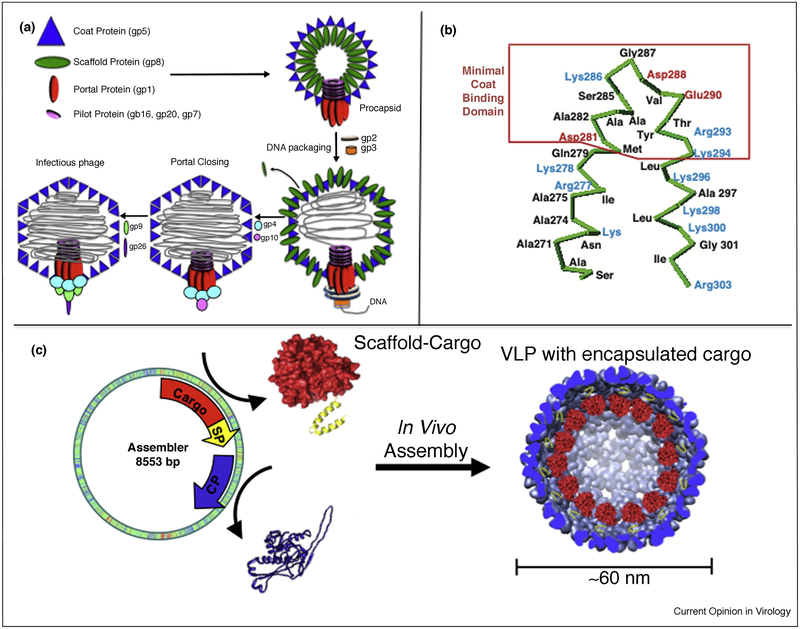
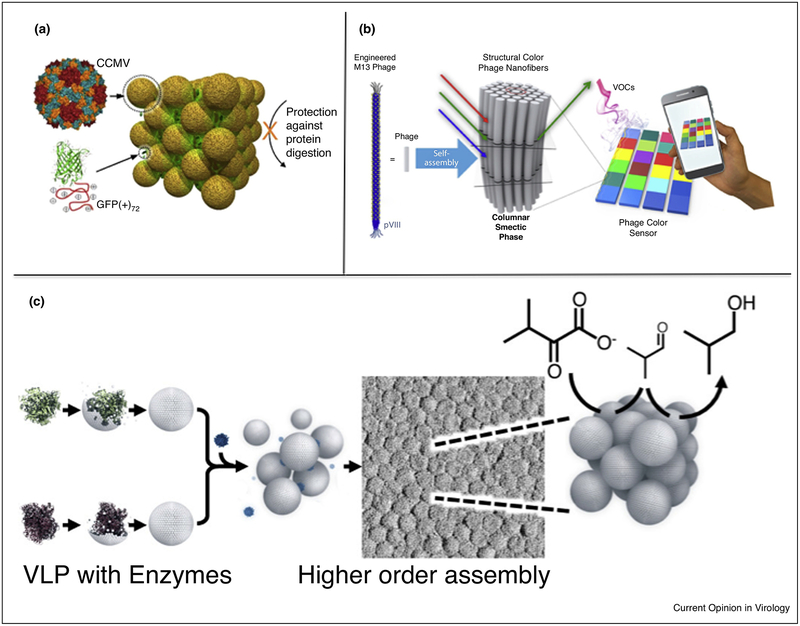
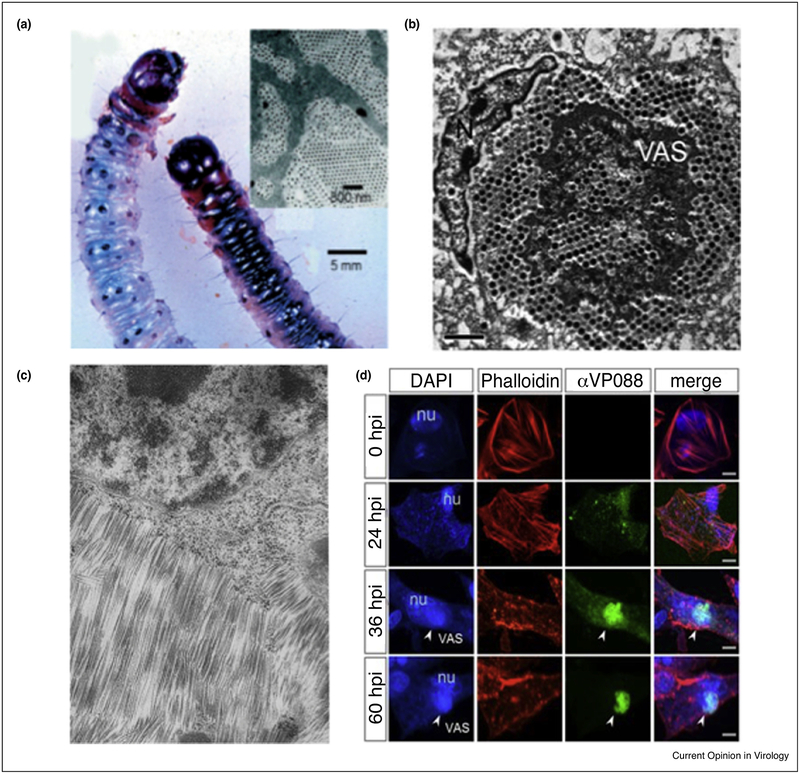
In biology, there are an abundant number of self-assembled structures organized according to hierarchical levels of complexity. In some examples, the assemblies formed at each level exhibit unique properties and behaviors not present in individual components. Viruses are an example of such where first individual subunits come together to form a capsid structure, some utilizing a scaffolding protein to template or catalyze the capsid formation. Increasing the level of complexity, the viral capsids can then be used as building blocks of higher-level assemblies. This has inspired scientists to design and construct virus capsid-based functional nano-materials. This review provides some insight into the assembly of virus capsids across several length scales, and certain properties that arise at different levels, providing examples found in naturally occurring systems and those that are synthetically designed.
在生物学中,有大量根据复杂程度的层次组织的自组装结构。在一些例子中,每个层次形成的组装体表现出个体组件所不具有的独特性质和行为。病毒就是一个例子,在病毒中,首先是单个亚基聚集在一起形成衣壳结构,有些病毒利用支架蛋白来模板或催化衣壳形成。增加复杂性的层次,然后可以将病毒衣壳用作更高层次组装体的构建块。这激发了科学家们设计和构建基于病毒衣壳的功能纳米材料。本综述提供了对跨越多个长度尺度的病毒衣壳组装的一些见解,以及在不同层次出现的某些特性,同时提供了自然发生系统和人工设计系统中的例子。