Chellamuthu Prithiviraj, Naughton Kyle, Pirbadian Sahand, Silva Kalinga Pavan T, Chavez Marko S, El-Naggar Mohamed Y, Boedicker James
Department of Physics and Astronomy, University of Southern California, Los Angeles, CA, United States.
Department of Biological Sciences, University of Southern California, Los Angeles, CA, United States.
Front Microbiol. 2019 May 7;10:938. doi: 10.3389/fmicb.2019.00938. eCollection 2019.
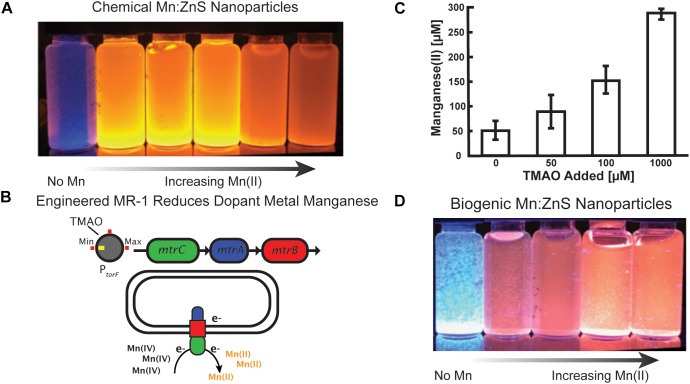
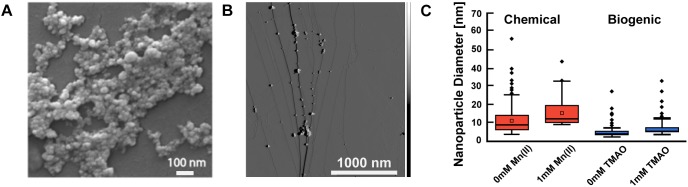
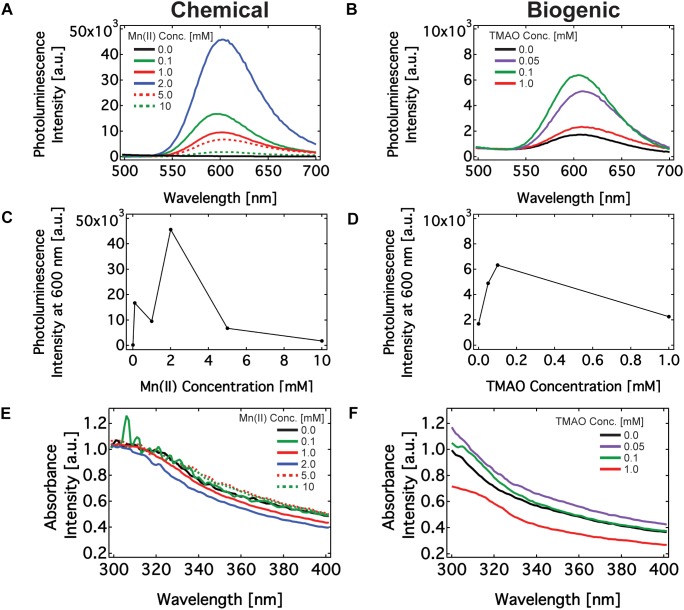
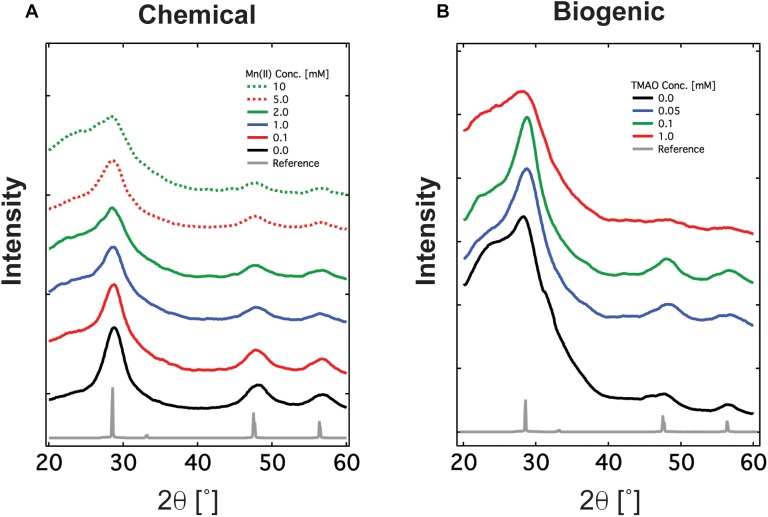
Bacteria naturally alter the redox state of many compounds and perform atom-by-atom nanomaterial synthesis to create many inorganic materials. Recent advancements in synthetic biology have spurred interest in using biological systems to manufacture nanomaterials, implementing biological strategies to specify the nanomaterial characteristics such as size, shape, and optical properties. Here, we combine the natural synthetic capabilities of microbes with engineered genetic control circuits toward biogenically synthesized semiconductor nanomaterials. Using an engineered strain of with inducible expression of the cytochrome complex MtrCAB, we control the reduction of manganese (IV) oxide. Cytochrome expression levels were regulated using an inducer molecule, which enabled precise modulation of dopant incorporation into manganese doped zinc sulfide nanoparticles (Mn:ZnS). Thereby, a synthetic gene circuit controlled the optical properties of biogenic quantum dots. These biogenically assembled nanomaterials have similar physical and optoelectronic properties to chemically synthesized particles. Our results demonstrate the promise of implementing synthetic gene circuits for tunable control of nanomaterials made by biological systems.
细菌能自然改变许多化合物的氧化还原状态,并通过逐个原子的方式进行纳米材料合成,从而制造出多种无机材料。合成生物学的最新进展激发了人们利用生物系统制造纳米材料的兴趣,人们开始采用生物策略来明确纳米材料的特性,如尺寸、形状和光学性质。在此,我们将微生物的天然合成能力与工程化的基因控制电路相结合,用于生物合成半导体纳米材料。我们使用一种经过工程改造的菌株,该菌株可诱导表达细胞色素复合物MtrCAB,以此来控制二氧化锰的还原。细胞色素的表达水平通过一种诱导分子进行调控,这使得能够精确调节掺杂剂掺入到锰掺杂硫化锌纳米颗粒(Mn:ZnS)中的情况。由此,一个合成基因电路控制了生物量子点的光学性质。这些通过生物组装的纳米材料具有与化学合成颗粒相似的物理和光电性质。我们的结果证明了实施合成基因电路以对生物系统制造的纳米材料进行可调控制的前景。