Wang Wenbin, Qiu Xiangpo, Yang Yanxin, Kim Ho Soo, Jia Xiaoyun, Yu Huan, Kwak Sang-Soo
College of Life Science, Shanxi Agricultural University, Taigu, China.
College of Arts and Science, Shanxi Agricultural University, Taigu, China.
Front Plant Sci. 2019 May 16;10:630. doi: 10.3389/fpls.2019.00630. eCollection 2019.
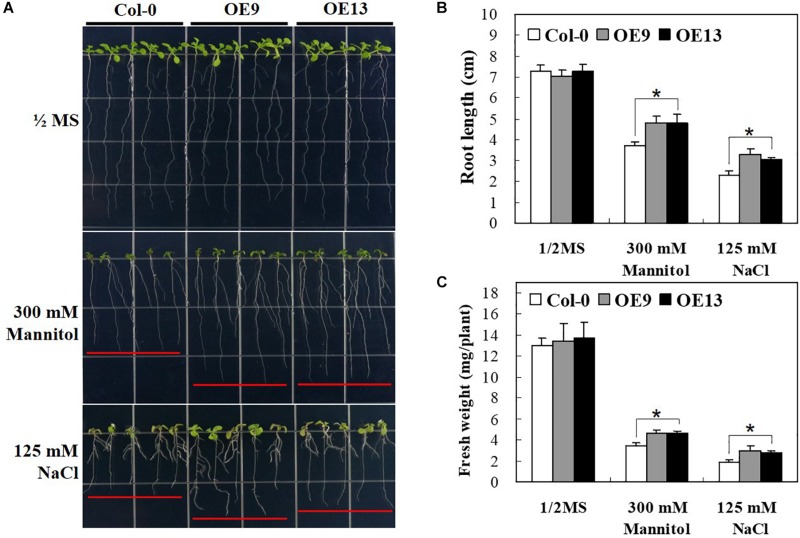
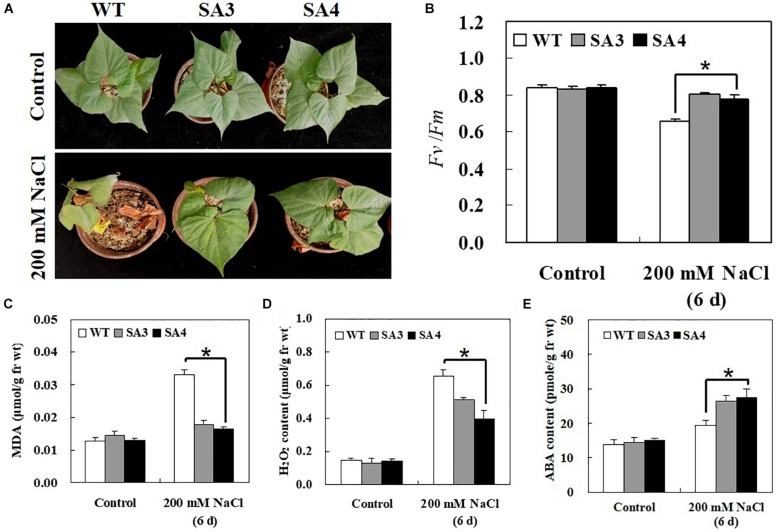
The abscisic acid (ABA)-responsive element binding factors (ABFs) play important regulatory roles in multiple abiotic stresses responses. However, information on the stress tolerance functions of genes in sweetpotato ( [L.] Lam) remains limited. In the present study, we isolated and functionally characterized the sweetpotato gene, which encodes an abiotic stress-inducible basic leucine zipper (bZIP) transcription factor. Sequence analysis showed that the IbABF4 protein contains a typical bZIP domain and five conserved Ser/Thr kinase phosphorylation sites (RXXS/T). The gene was constitutively expressed in leaf, petiole, stem, and root, with the highest expression in storage root body. Expression of was induced by ABA and several environmental stresses including drought, salt, and heat shock. The IbABF4 protein localized to the nucleus, exhibited transcriptional activation activity, and showed binding to the -acting ABA-responsive element (ABRE) . Overexpression of in not only increased ABA sensitivity but also enhanced drought and salt stress tolerance. Furthermore, transgenic sweetpotato plants (hereafter referred to as SA plants) overexpressing , generated in this study, exhibited increased tolerance to drought, salt, and oxidative stresses on the whole plant level. This phenotype was associated with higher photosynthetic efficiency and lower malondialdehyde and hydrogen peroxide content. Levels of endogenous ABA content and ABA/stress-responsive gene expression were significantly upregulated in transgenic and sweetpotato plants compared with wild-type plants under drought stress. Our results suggest that the expression of in and sweetpotato enhances tolerance to multiple abiotic stresses through the ABA signaling pathway.
脱落酸(ABA)应答元件结合因子(ABFs)在多种非生物胁迫响应中发挥重要调控作用。然而,关于甘薯(Ipomoea batatas [L.] Lam)中基因的胁迫耐受功能的信息仍然有限。在本研究中,我们分离并对甘薯IbABF4基因进行了功能鉴定,该基因编码一种非生物胁迫诱导型碱性亮氨酸拉链(bZIP)转录因子。序列分析表明,IbABF4蛋白包含一个典型的bZIP结构域和五个保守的丝氨酸/苏氨酸激酶磷酸化位点(RXXS/T)。IbABF4基因在叶、叶柄、茎和根中组成型表达,在贮藏根体中表达量最高。IbABF4的表达受ABA以及干旱、盐和热激等几种环境胁迫的诱导。IbABF4蛋白定位于细胞核,具有转录激活活性,并显示与顺式作用ABA应答元件(ABRE)结合。在拟南芥中过表达IbABF4不仅增加了对ABA的敏感性,还增强了对干旱和盐胁迫的耐受性。此外,本研究中产生的过表达IbABF4的转基因甘薯植株(以下简称SA植株)在整株水平上表现出对干旱、盐和氧化胁迫的耐受性增强。这种表型与较高的光合效率以及较低的丙二醛和过氧化氢含量相关。与野生型植株相比,在干旱胁迫下,转基因拟南芥和甘薯植株中内源ABA含量以及ABA/胁迫应答基因的表达水平显著上调。我们的结果表明,IbABF4在拟南芥和甘薯中的表达通过ABA信号通路增强了对多种非生物胁迫的耐受性。