Dimitriou Neofytos, Arandjelović Ognjen, Harrison David J, Caie Peter D
1School of Computer Science, University of St Andrews, St Andrews, KY16 9SX UK.
2School of Medicine, University of St Andrews, St Andrews, KY16 9TF UK.
NPJ Digit Med. 2018 Oct 2;1:52. doi: 10.1038/s41746-018-0057-x. eCollection 2018.
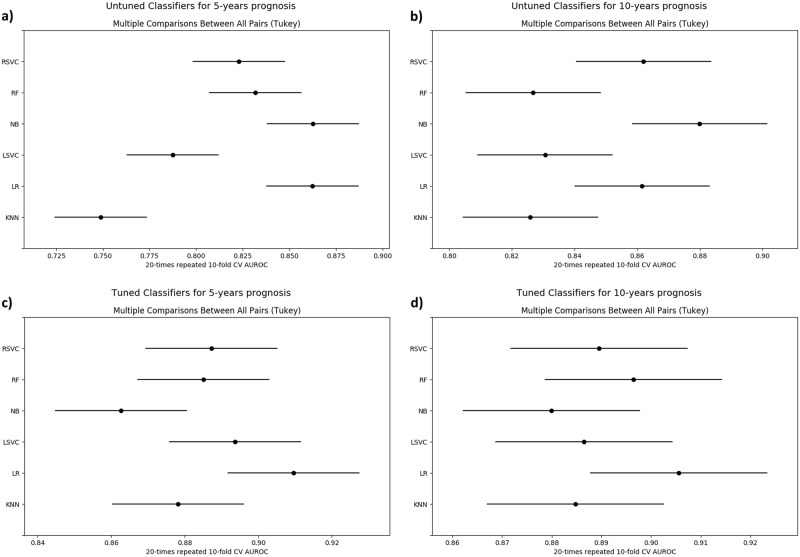
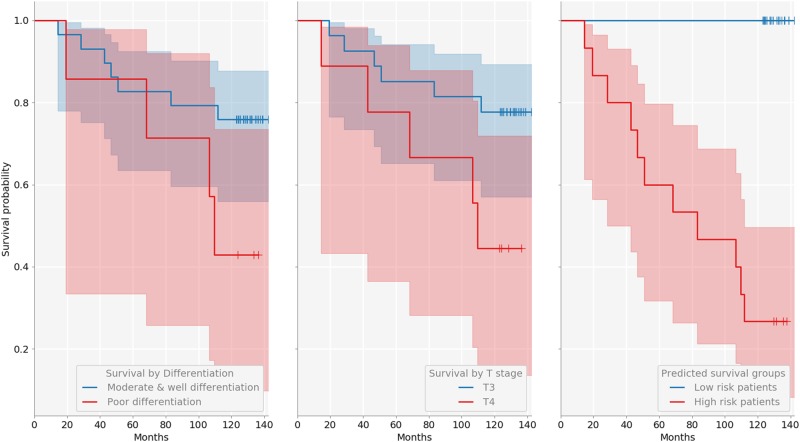
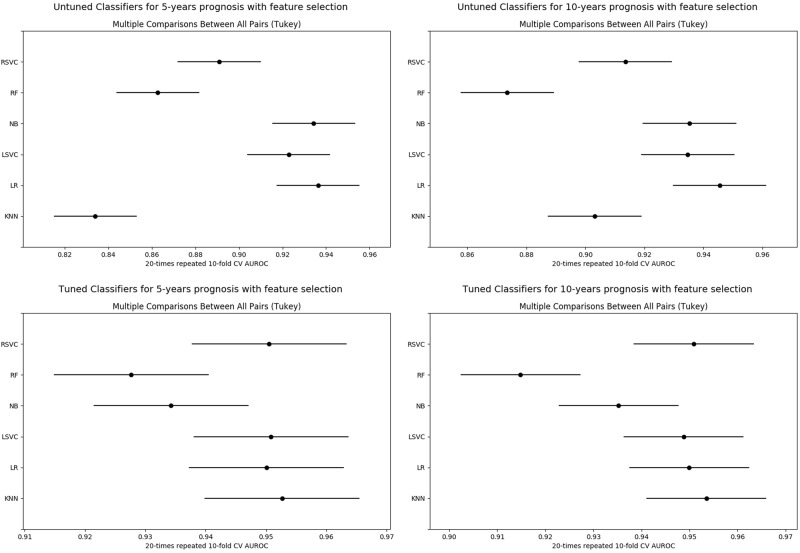
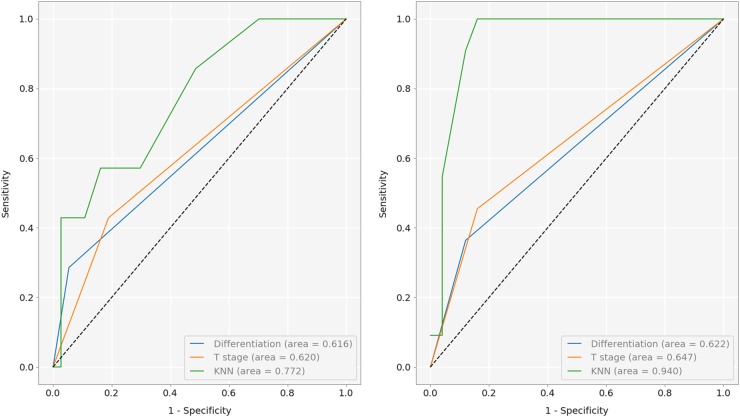
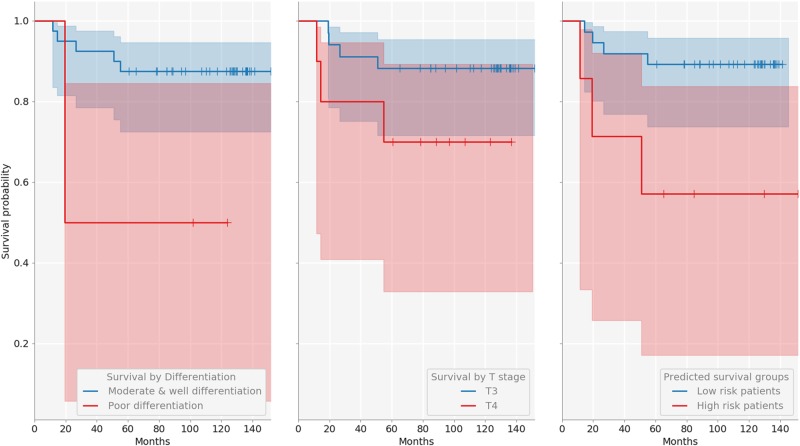
Accurate prognosis is fundamental in planning an appropriate therapy for cancer patients. Consequent to the heterogeneity of the disease, intra- and inter-pathologist variability, and the inherent limitations of current pathological reporting systems, patient outcome varies considerably within similarly staged patient cohorts. This is particularly true when classifying stage II colorectal cancer patients using the current TNM guidelines. The aim of the present work is to address this problem through the use of machine learning. In particular, we introduce a data driven framework which makes use of a large number of diverse types of features, readily collected from immunofluorescence imagery. Its outstanding performance in predicting mortality in stage II patients (AUROC = 0:94), exceeds that of current clinical guidelines such as pT stage (AUROC = 0:65), and is demonstrated on a cohort of 173 colorectal cancer patients.
准确的预后对于为癌症患者制定合适的治疗方案至关重要。由于疾病的异质性、病理学家内部和之间的变异性以及当前病理报告系统的固有局限性,在分期相似的患者队列中,患者的预后差异很大。在使用当前的TNM指南对II期结直肠癌患者进行分类时尤其如此。本研究的目的是通过使用机器学习来解决这个问题。特别是,我们引入了一个数据驱动的框架,该框架利用了大量从免疫荧光图像中容易收集到的不同类型的特征。其在预测II期患者死亡率方面的出色表现(AUROC = 0.94)超过了当前的临床指南,如pT分期(AUROC = 0.65),并在一组173例结直肠癌患者中得到了验证。