Department of Earth, Environmental and Life Sciences (DISTAV), University of Genoa, Genoa, Italy.
Department of Microbiology and Parasitology, Universidade de Santiago de Compostela, Santiago de Compostela, Spain.
Environ Microbiol. 2019 Dec;21(12):4548-4562. doi: 10.1111/1462-2920.14750. Epub 2019 Jul 31.
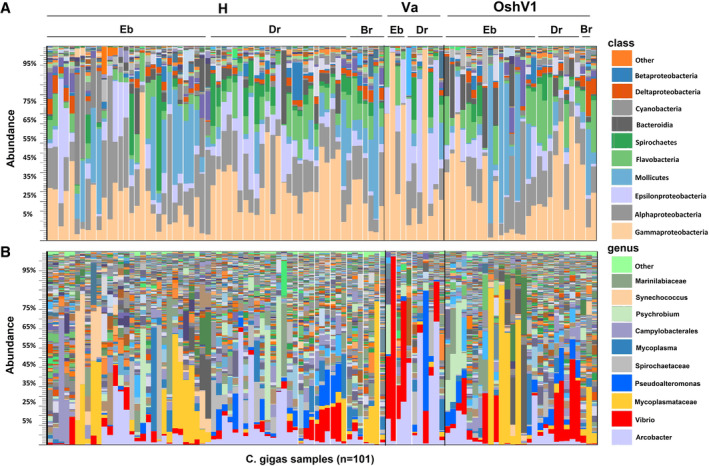
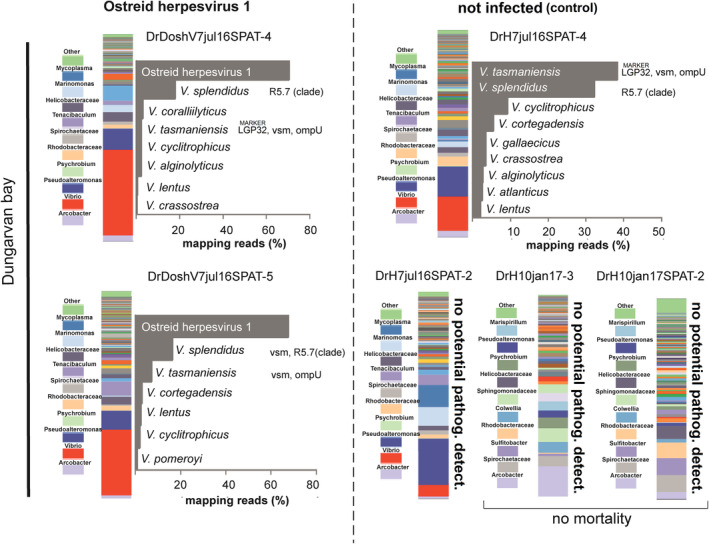
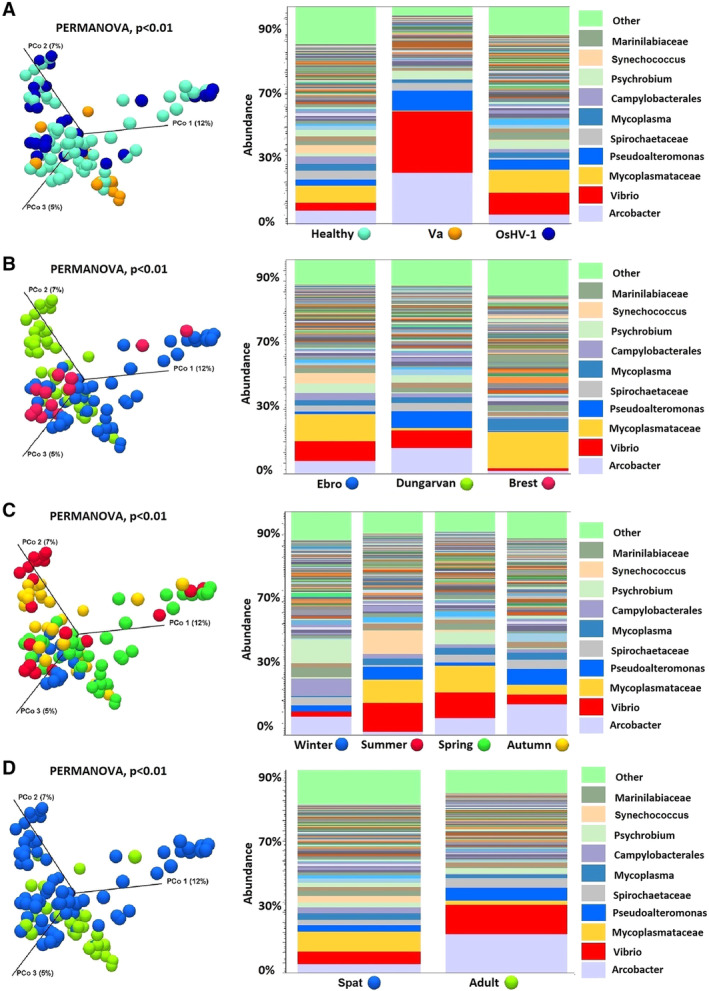
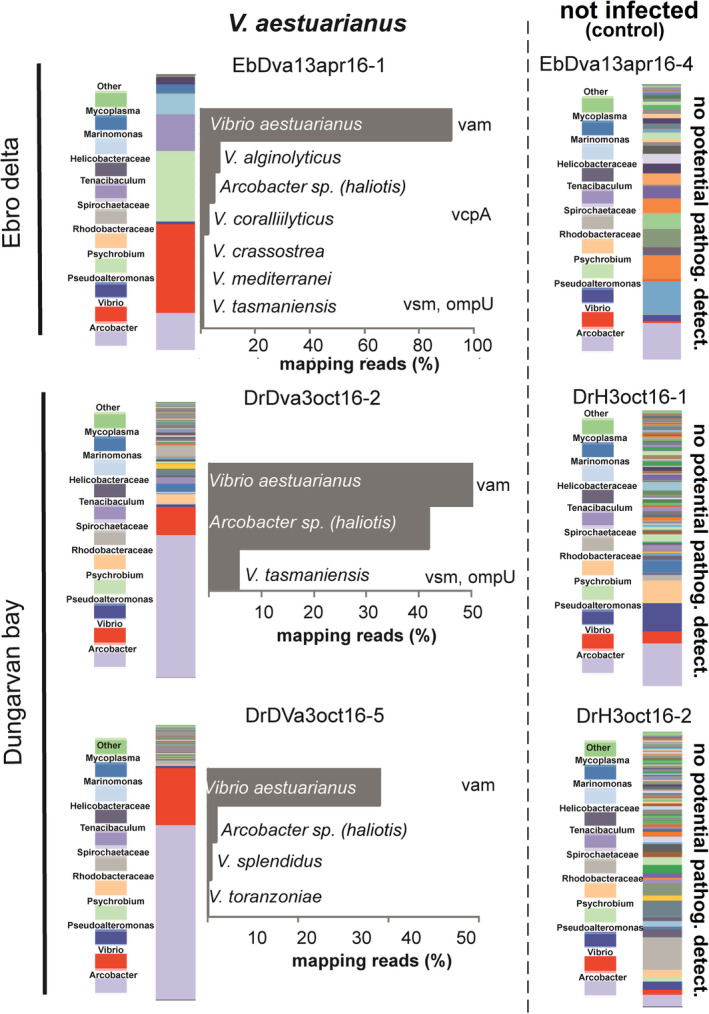
Infectious agents such as the bacteria Vibrio aestuarianus or Ostreid herpesvirus 1 have been repeatedly associated with dramatic disease outbreaks of Crassostrea gigas beds in Europe. Beside roles played by these pathogens, microbial infections in C. gigas may derive from the contribution of a larger number of microorganisms than previously thought, according to an emerging view supporting the polymicrobial nature of bivalve diseases. In this study, the microbial communities associated with a large number of C. gigas samples collected during recurrent mortality episodes at different European sites were investigated by real-time PCR and 16SrRNA gene-based microbial profiling. A new target enrichment next-generation sequencing protocol for selective capturing of 884 phylogenetic and virulence markers of the potential microbial pathogenic community in oyster tissue was developed allowing high taxonomic resolution analysis of the bivalve pathobiota. Comparative analysis of contrasting C. gigas samples conducted using these methods revealed that oyster experiencing mortality outbreaks displayed signs of microbiota disruption associated with the presence of previously undetected potential pathogenic microbial species mostly belonging to genus Vibrio and Arcobacter. The role of these species and their consortia should be targeted by future studies aiming to shed light on mechanisms underlying polymicrobial infections in C. gigas.
在欧洲,一些传染性病原体,如港湾弧菌或牡蛎疱疹病毒 1,已被反复证实与扇贝大规模疾病爆发有关。根据一种新兴的观点,双壳类动物疾病具有多微生物的性质,除了这些病原体的作用外,欧洲不同地点在多次死亡率爆发期间收集的大量扇贝样本的微生物感染可能来自于比以前认为的更多数量的微生物的贡献。在这项研究中,通过实时 PCR 和基于 16SrRNA 基因的微生物分析对大量的 C. gigas 样本相关的微生物群落进行了研究。开发了一种新的靶向富集下一代测序协议,用于选择性捕获牡蛎组织中潜在微生物致病性群落的 884 个系统发育和毒力标记物,从而能够对双壳类动物的病原生物群进行高分类分辨率分析。使用这些方法对对比鲜明的 C. gigas 样本进行的比较分析表明,经历死亡率爆发的牡蛎表现出微生物群落破坏的迹象,与以前未检测到的潜在致病性微生物物种的存在有关,这些物种主要属于弧菌属和 Arcobacter 属。未来的研究应针对这些物种及其群落的作用,以阐明 C. gigas 中多微生物感染的机制。