Dharmadeva Sharmila, Galgamuwa Lahiru Sandaruwan, Prasadinie C, Kumarasinghe Nishantha
Department of Bio-Medical Sciences, School of Biomedical Science and Physiology, Faculty of Science and Engineering, University of Wolverhampton, Wolverhampton, UK.
Department of Basic Sciences, Faculty of Allied Health Sciences, General Sir John Kotelawala Defence University, Sri Lanka.
Ayu. 2018 Oct-Dec;39(4):239-242. doi: 10.4103/ayu.AYU_27_18.
In Ayurveda, many natural plant compounds are used to inhibit inflammatory pathways for centuries with less side effects. Different parts of L. () plant are used in Ayurveda for many diseases. However, few studies have been conducted to evaluate pharmacological activities of .
The objective of the study was to analyze anti-inflammatory property of bark using albumin denaturation activity.
bark extraction was performed using cold water and hot water. The concentration gradient of extracts was prepared using egg albumin and phosphate-buffered saline. The extract was incubated in a water bath at 37°C for 15 min and was heated at 70°C for 5 min. One nonsteroidal anti-inflammatory drug and one steroid were used as reference drugs. The percentage inhibition of protein denaturation was calculated.
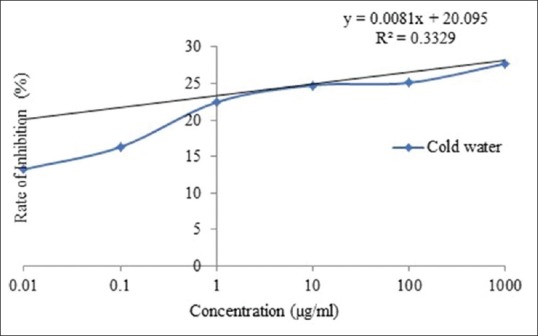
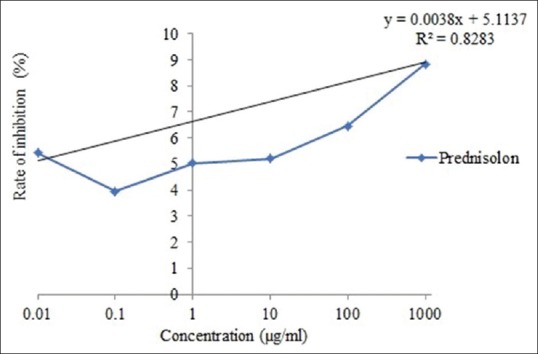
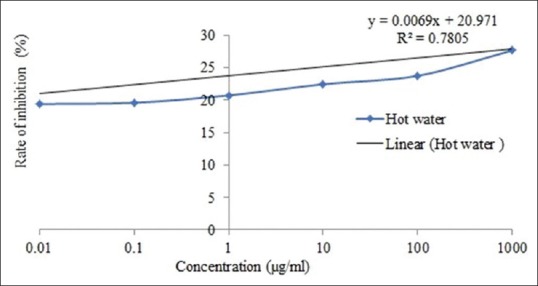
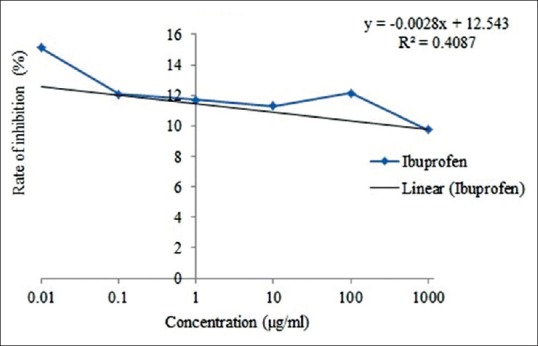
The inhibition rate of egg albumin denaturation for water extraction increased gradually with concentration. Significantly higher inhibition was showed in hot water extracts than cold water extracts at the concentration of 0.01 μg/ml and 0.1 μg/ml. In addition, the inhibition rate of water extraction was significantly higher than the reference drugs ( < 0.05).
Anti-inflammatory activity increases with the concentration of bark. Furthermore, the action of this plant is significantly higher than the reference drugs.
在阿育吠陀医学中,许多天然植物化合物数个世纪以来一直被用于抑制炎症途径,且副作用较小。L.()植物的不同部位在阿育吠陀医学中被用于治疗多种疾病。然而,针对其药理活性的研究却很少。
本研究的目的是利用白蛋白变性活性分析该植物树皮的抗炎特性。
采用冷水和热水对该植物树皮进行提取。使用蛋清蛋白和磷酸盐缓冲盐水制备提取物的浓度梯度。将提取物在37°C水浴中孵育15分钟,然后在70°C加热5分钟。使用一种非甾体抗炎药和一种类固醇作为参考药物。计算蛋白质变性的抑制百分比。
水提取物对蛋清蛋白变性的抑制率随浓度逐渐增加。在浓度为0.01μg/ml和0.1μg/ml时,热水提取物的抑制作用明显高于冷水提取物。此外,水提取物的抑制率显著高于参考药物(P<0.05)。
该植物树皮的抗炎活性随浓度增加而增强。此外,该植物的作用明显高于参考药物。