Kitko Kristina E, Zhang Qi
Program in Interdisciplinary Materials Science, Vanderbilt University, Nashville, TN, United States.
Department of Pharmacology, Vanderbilt University, Nashville, TN, United States.
Front Syst Neurosci. 2019 Jul 16;13:26. doi: 10.3389/fnsys.2019.00026. eCollection 2019.
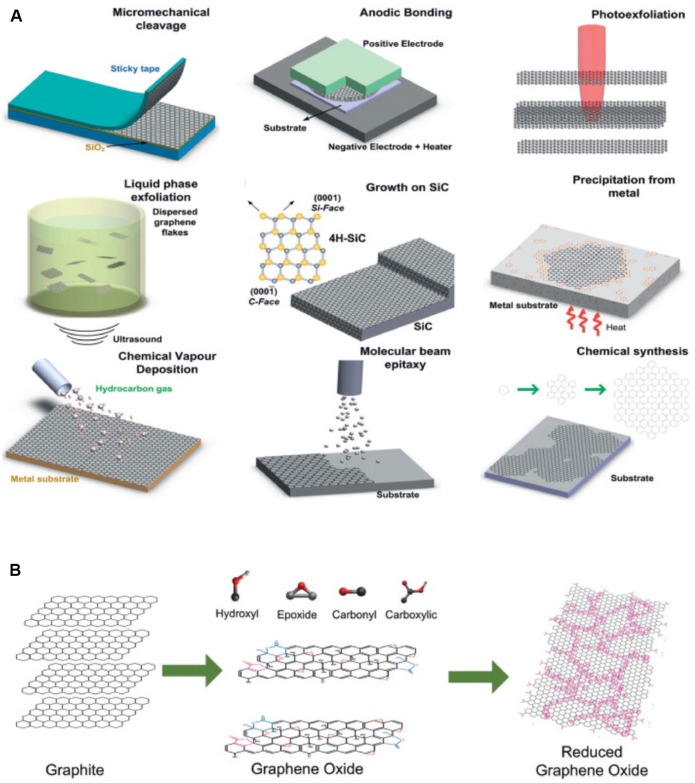
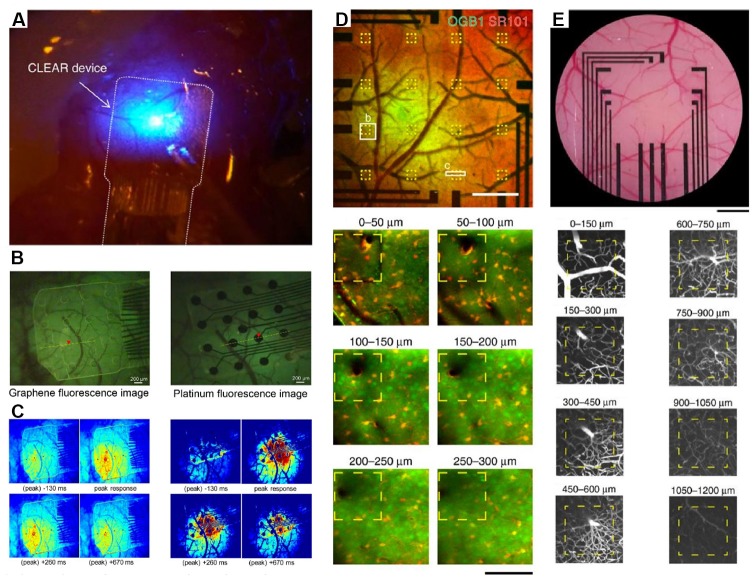
Graphene, a two-dimensional carbon crystal, has emerged as a promising material for sensing and modulating neuronal activity and . In this review, we provide a primer for how manufacturing processes to produce graphene and graphene oxide result in materials properties that may be tailored for a variety of applications. We further discuss how graphene may be composited with other bio-compatible materials of interest to make novel hybrid complexes with desired characteristics for bio-interfacing. We then highlight graphene's ever-widen utility and unique properties that may in the future be multiplexed for cross-modal modulation or interrogation of neuronal network. As the biological effects of graphene are still an area of active investigation, we discuss recent development, with special focus on how surface coatings and surface properties of graphene are relevant to its biological effects. We discuss studies conducted in both non-murine and murine systems, and emphasize the preclinical aspect of graphene's potential without undermining its tangible clinical implementation.
石墨烯,一种二维碳晶体,已成为用于传感和调节神经元活动的有前景的材料。在本综述中,我们提供了一个入门指南,介绍了生产石墨烯和氧化石墨烯的制造工艺如何产生可针对各种应用进行定制的材料特性。我们进一步讨论了石墨烯如何与其他感兴趣的生物相容性材料复合,以制造具有生物接口所需特性的新型杂化复合物。然后,我们强调了石墨烯不断扩大的用途和独特特性,这些特性未来可能会被用于神经元网络的跨模态调制或询问。由于石墨烯的生物学效应仍是一个活跃的研究领域,我们讨论了近期的进展,特别关注石墨烯的表面涂层和表面特性与其生物学效应的相关性。我们讨论了在非小鼠和小鼠系统中进行的研究,并强调了石墨烯潜力的临床前方面,同时不忽视其切实的临床应用。