Department of Agricultural and Biological Engineering, Mississippi State University, Mississippi State, MS, 39762, USA.
Department of Agricultural and Biosystems Engineering, Iowa State University, Ames, IA, 50011, USA.
Sci Rep. 2019 Aug 13;9(1):11755. doi: 10.1038/s41598-019-47788-z.
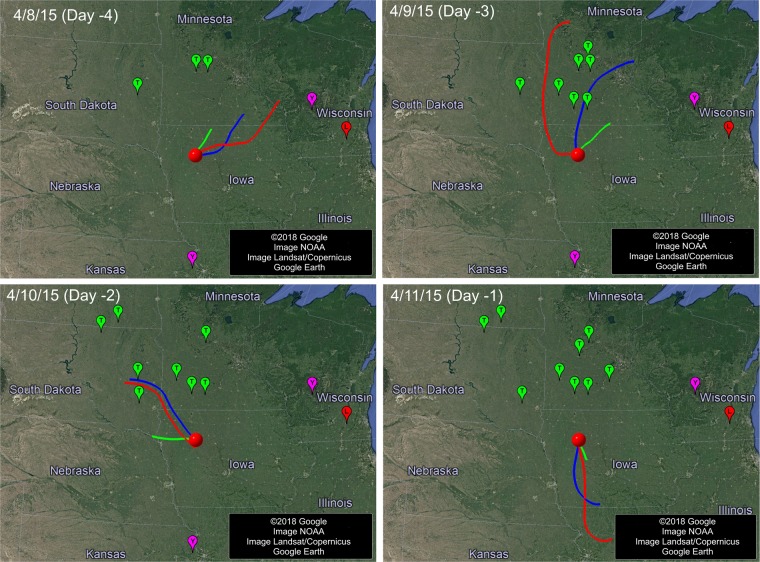
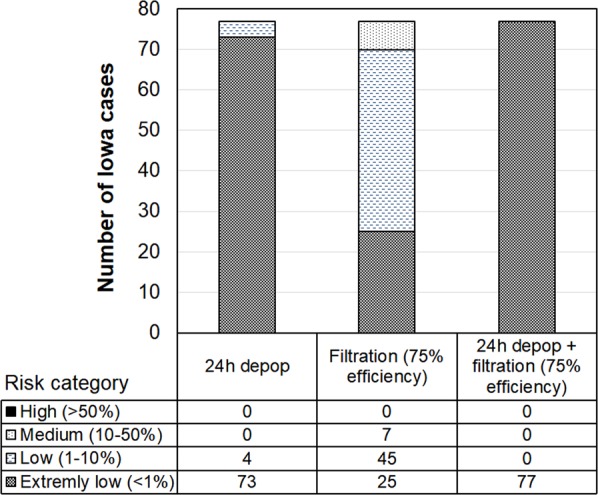
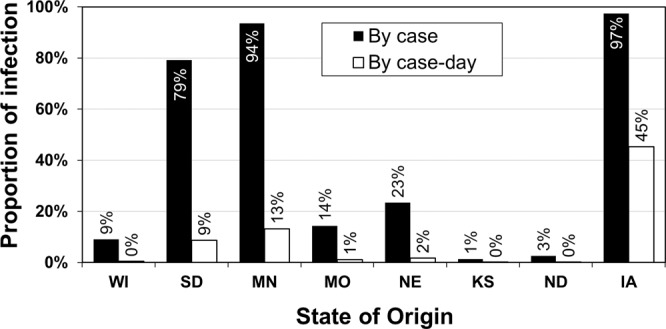
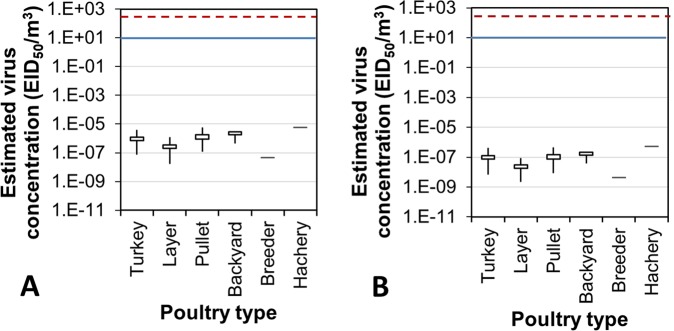
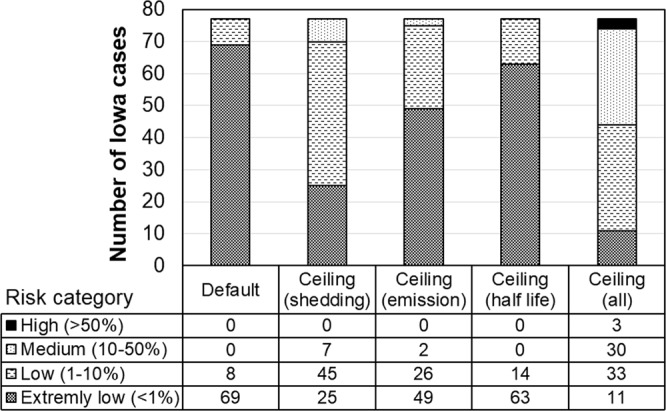
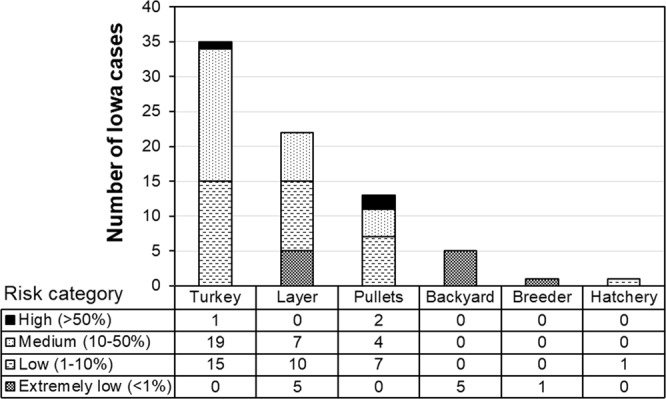
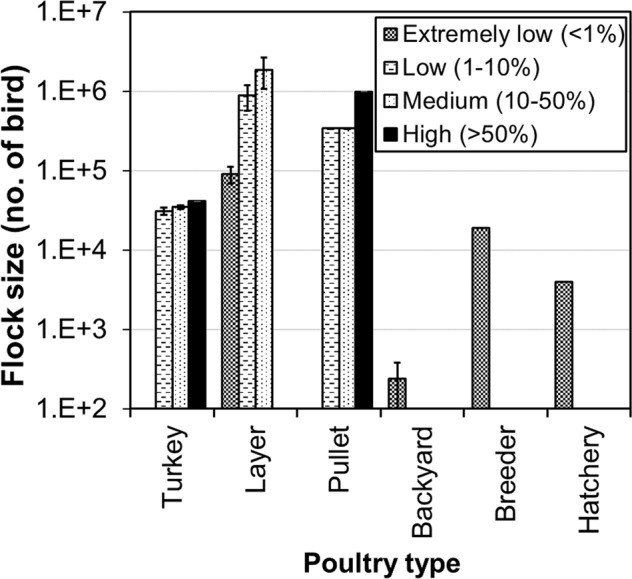
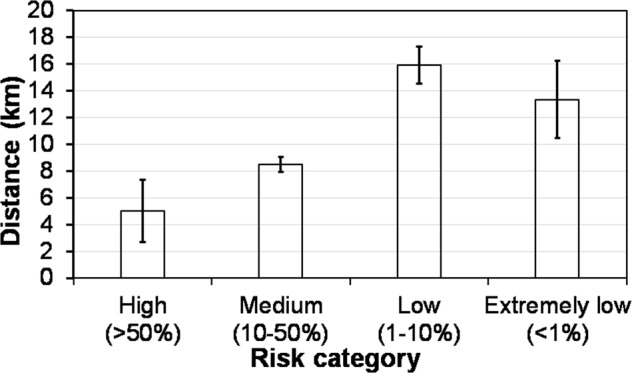
The unprecedented 2015 outbreaks of highly pathogenic avian influenza (HPAI) H5N2 in the U.S. devastated its poultry industry and resulted in over $3 billion economic impacts. Today HPAI continues eroding poultry operations and disrupting animal protein supply chains around the world. Anecdotal evidence in 2015 suggested that in some cases the AI virus was aerially introduced into poultry houses, as abnormal bird mortality started near air inlets of the infected houses. This study modeled air movement trajectories and virus concentrations that were used to assess the probability or risk of airborne transmission for the 77 HPAI cases in Iowa. The results show that majority of the positive cases in Iowa might have received airborne virus, carried by fine particulate matter, from infected farms within the state (i.e., intrastate) and infected farms from the neighboring states (i.e., interstate). The modeled airborne virus concentrations at the Iowa recipient sites never exceeded the minimal infective doses for poultry; however, the continuous exposure might have increased airborne infection risks. In the worst-case scenario (i.e., maximum virus shedding rate, highest emission rate, and longest half-life), 33 Iowa cases had > 10% (three cases > 50%) infection probability, indicating a medium to high risk of airborne transmission for these cases. Probability of airborne HPAI infection could be affected by farm type, flock size, and distance to previously infected farms; and more importantly, it can be markedly reduced by swift depopulation and inlet air filtration. The research results provide insights into the risk of airborne transmission of HPAI virus via fine dust particles and the importance of preventative and containment strategies such as air filtration and quick depopulation of infected flocks.
2015 年美国高致病性禽流感(HPAI)H5N2 的爆发前所未有,使美国的家禽业遭受重创,经济损失超过 30 亿美元。如今,HPAI 继续侵蚀着家禽业,并扰乱着全球的动物蛋白供应链。2015 年的一些传闻证据表明,在某些情况下,禽流感病毒是通过空气传播进入家禽养殖场的,因为异常的鸟类死亡率是在受感染房屋的进气口附近开始的。本研究模拟了空气运动轨迹和病毒浓度,用于评估爱荷华州 77 例 HPAI 病例的空气传播概率或风险。结果表明,爱荷华州的大多数阳性病例可能已经从该州(即州内)的感染农场和邻近州的感染农场(即州际)接收了携带细颗粒物的空气传播病毒。在爱荷华州接收点的模拟空气传播病毒浓度从未超过家禽的最小感染剂量;然而,持续暴露可能会增加空气传播感染的风险。在最坏的情况下(即最大病毒脱落率、最高排放率和最长半衰期),33 例爱荷华州病例的感染概率>10%(3 例>50%),表明这些病例的空气传播风险为中高。空气传播 HPAI 感染的概率可能受农场类型、禽群规模和与先前感染农场的距离的影响;更重要的是,通过迅速扑杀和进气口过滤可以显著降低感染的风险。研究结果深入了解了通过细粉尘颗粒传播 HPAI 病毒的空气传播风险,以及空气过滤和迅速扑杀感染禽群等预防和控制策略的重要性。