Dressler Oliver J, Howes Philip D, Choo Jaebum, deMello Andrew J
Institute for Chemical and Bioengineering, Department of Chemistry and Applied Biosciences, ETH Zürich, Vladimir Prelog Weg 1, 8093 Zürich, Switzerland.
Department of Bionano Technology, Hanyang University, Ansan 426-791, South Korea.
ACS Omega. 2018 Aug 29;3(8):10084-10091. doi: 10.1021/acsomega.8b01485. eCollection 2018 Aug 31.
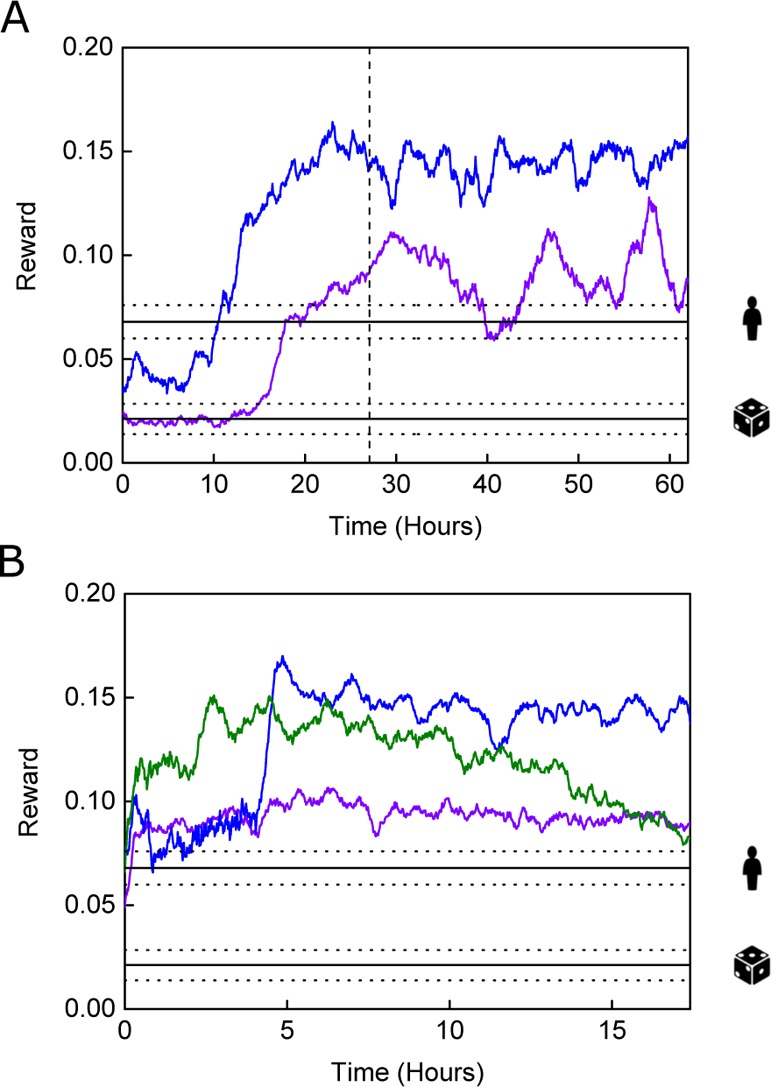
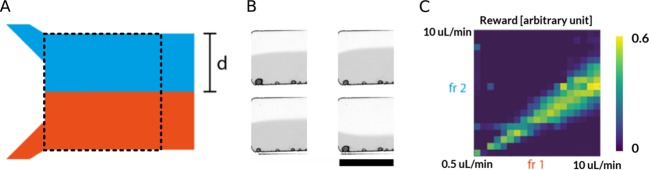
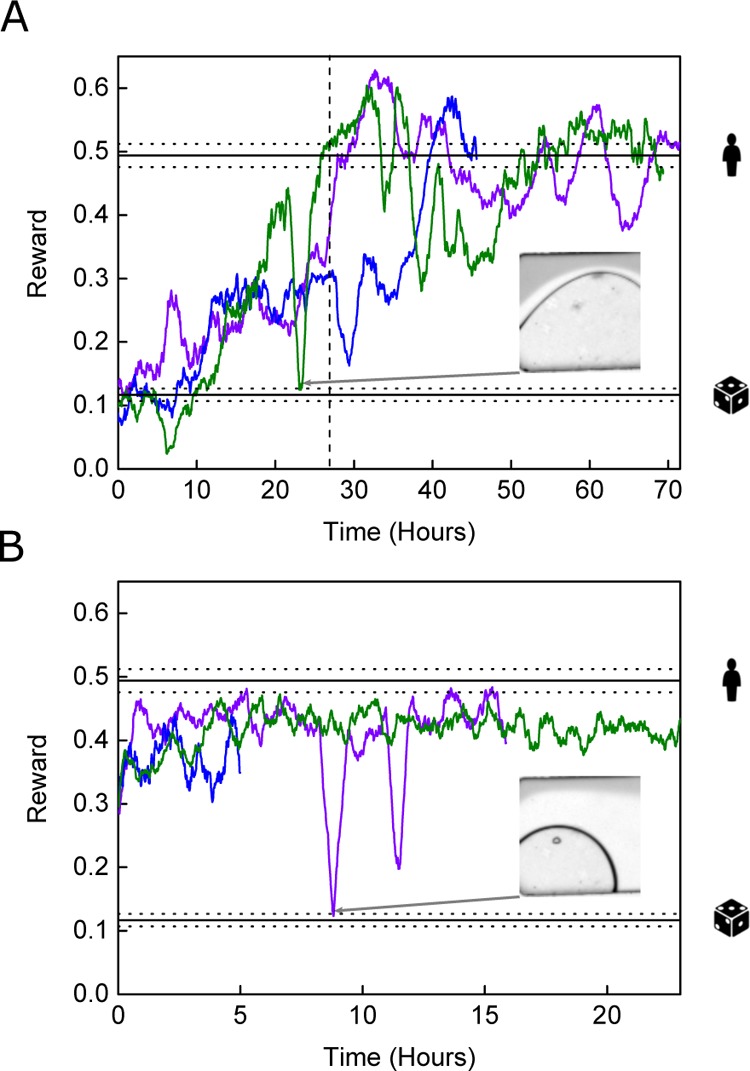
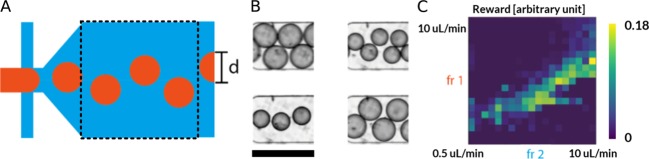
Recent years have witnessed an explosion in the application of microfluidic techniques to a wide variety of problems in the chemical and biological sciences. Despite the many considerable advantages that microfluidic systems bring to experimental science, microfluidic platforms often exhibit inconsistent system performance when operated over extended timescales. Such variations in performance are because of a multiplicity of factors, including microchannel fouling, substrate deformation, temperature and pressure fluctuations, and inherent manufacturing irregularities. The introduction and integration of advanced control algorithms in microfluidic platforms can help mitigate such inconsistencies, paving the way for robust and repeatable long-term experiments. Herein, two state-of-the-art reinforcement learning algorithms, based on Deep Q-Networks and model-free episodic controllers, are applied to two experimental "challenges," involving both continuous-flow and segmented-flow microfluidic systems. The algorithms are able to attain superhuman performance in controlling and processing each experiment, highlighting the utility of novel control algorithms for automated high-throughput microfluidic experimentation.
近年来,微流控技术在化学和生物科学领域的各种问题中的应用呈爆炸式增长。尽管微流控系统给实验科学带来了许多显著优势,但在长时间运行时,微流控平台的系统性能往往不一致。性能的这种变化是由多种因素造成的,包括微通道污染、基底变形、温度和压力波动以及固有的制造不规则性。在微流控平台中引入和集成先进的控制算法有助于减轻这种不一致性,为稳健且可重复的长期实验铺平道路。在此,基于深度Q网络和无模型情节控制器的两种先进强化学习算法被应用于两个实验“挑战”,涉及连续流和分段流微流控系统。这些算法在控制和处理每个实验时能够达到超人的性能,突出了新型控制算法在自动化高通量微流控实验中的实用性。