Yang Huahong, Gao Yun, Fan Xiaoye, Liu Xingkai, Peng Liping, Ci Xinxin
Department of Respiratory Medicine, The First Hospital of Jilin University, Changchun, China.
Institute of Translational Medicine, The First Hospital of Jilin University, Changchun, China.
Front Oncol. 2019 Aug 14;9:769. doi: 10.3389/fonc.2019.00769. eCollection 2019.
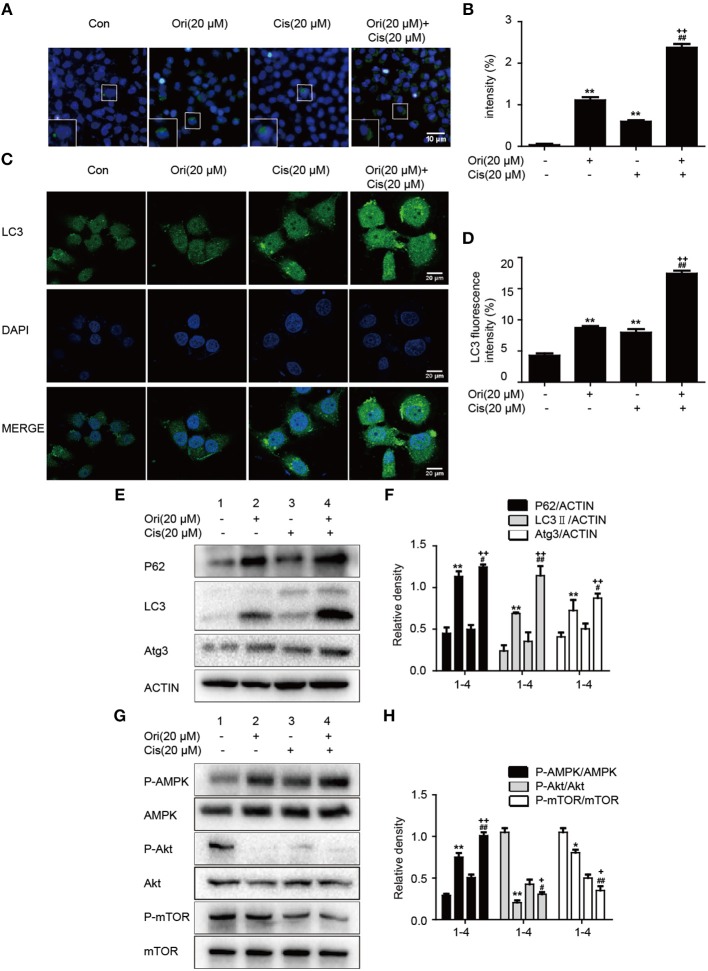
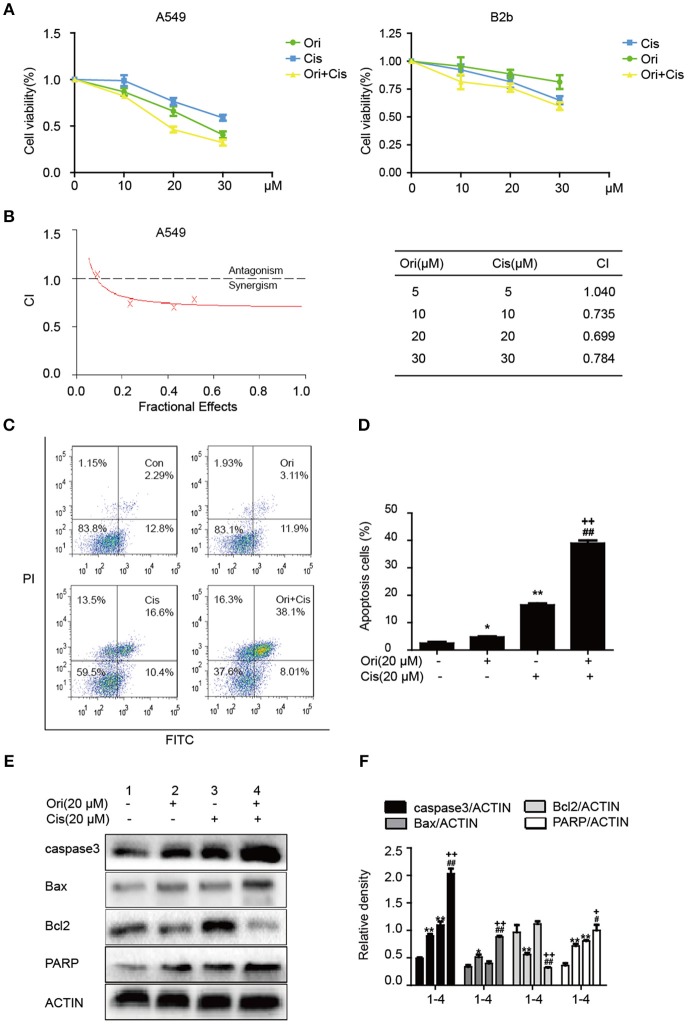
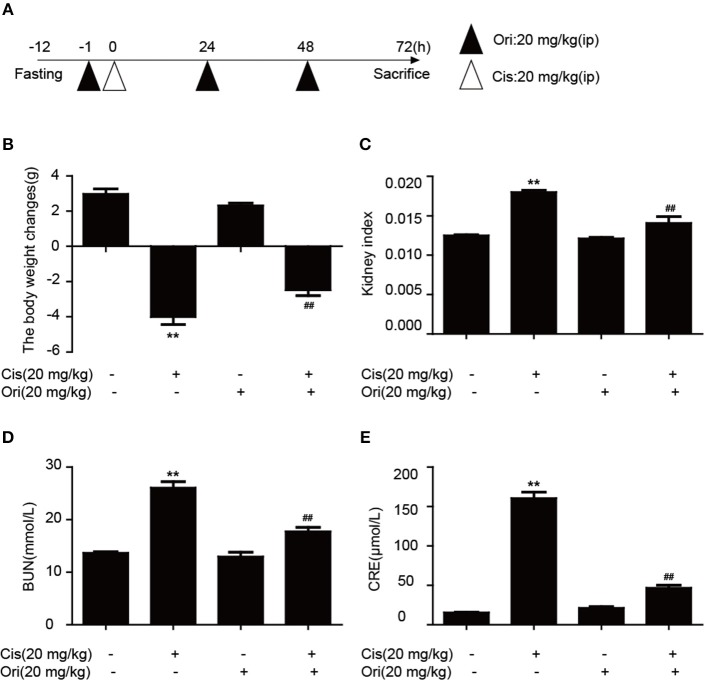
AMPK-mediated autophagy and Akt/mTOR pathways play important roles in current cancer treatments. Oridonin (Ori), an ent-kaurane diterpenoid isolated from Isodon rubescens, exerts extensive anti-tumor potential and controversial effects on autophagy. In this study, we investigated the effect of Ori on the autophagy, apoptosis, and AMPK/Akt/mTOR pathways and determined whether Ori was related to the increased cisplatin sensitivity observed in A549 cells. First, we found that Ori suppressed Akt/mTOR, Bcl2 and autophagy flux with enhanced levels of Atg3, P62, and LC3II, which was also shown as the accumulation of autophagosomes. AMPK and pro-apoptotic proteins (caspase3, Bax, and PARP) were activated in Ori-treated cells. With the pretreatment of compound c (AMPK inhibitor), the activation of autophagosomes, apoptosis and the inhibition of Akt/mTOR pathways induced by Ori were all reversed. The Ori-activated apoptosis-related markers mentioned previously and the cell-killing effect were restrained by 3-MA (inhibitor of autophagosomes) treatment. Therefore, we hypothesized that the Ori-induced pro-apoptotic effect was mediated by AMPK/Akt/mTOR-dependent accumulation of impaired autophagosomes. Furthermore, Ori could increase the sensitivity of cisplatin through its increased cell-killing, autophagy-suppressing and apoptosis-inducing activities. In addition to sensitizing cisplatin, Ori also alleviated cisplatin-induced acute renal injury , manifested as depleted BUN, CRE, kidney index, and weight loss compared to the cisplatin group. In summary, apart from its protective effect on cisplatin-induced nephrotoxicity, Ori enhanced cisplatin sensitivity via its pro-apoptotic activity mediated by AMPK/Akt/mTOR-dependent autophagosome activation, which may be a potential therapeutic target for non-small cell lung cancer.
AMPK介导的自噬和Akt/mTOR信号通路在当前癌症治疗中发挥着重要作用。冬凌草甲素(Ori)是从冬凌草中分离得到的一种贝壳杉烷二萜类化合物,具有广泛的抗肿瘤潜力,且对自噬有争议性的影响。在本研究中,我们研究了Ori对自噬、凋亡以及AMPK/Akt/mTOR信号通路的影响,并确定Ori是否与A549细胞中观察到的顺铂敏感性增加有关。首先,我们发现Ori通过提高Atg3、P62和LC3II的水平来抑制Akt/mTOR、Bcl2和自噬通量,这也表现为自噬体的积累。在经Ori处理的细胞中,AMPK和促凋亡蛋白(caspase3、Bax和PARP)被激活。用化合物c(AMPK抑制剂)预处理后,Ori诱导的自噬体激活、凋亡以及对Akt/mTOR信号通路的抑制均被逆转。3-MA(自噬体抑制剂)处理抑制了先前提到的Ori激活的凋亡相关标志物以及细胞杀伤作用。因此,我们推测Ori诱导的促凋亡作用是由AMPK/Akt/mTOR依赖的受损自噬体积累介导的。此外,Ori通过增强其细胞杀伤、自噬抑制和凋亡诱导活性来增加顺铂的敏感性。除了使顺铂敏感外,Ori还减轻了顺铂诱导的急性肾损伤,与顺铂组相比,表现为血尿素氮、肌酐、肾脏指数降低以及体重减轻。总之,除了对顺铂诱导的肾毒性具有保护作用外,Ori通过AMPK/Akt/mTOR依赖的自噬体激活介导的促凋亡活性增强了顺铂敏感性,这可能是非小细胞肺癌的一个潜在治疗靶点。