Department of Molecular and Cell Biology, University of California, Berkeley, Berkeley, United States.
Department of Physics, University of California, Berkeley, Berkeley, United States.
Elife. 2019 Sep 9;8:e48629. doi: 10.7554/eLife.48629.
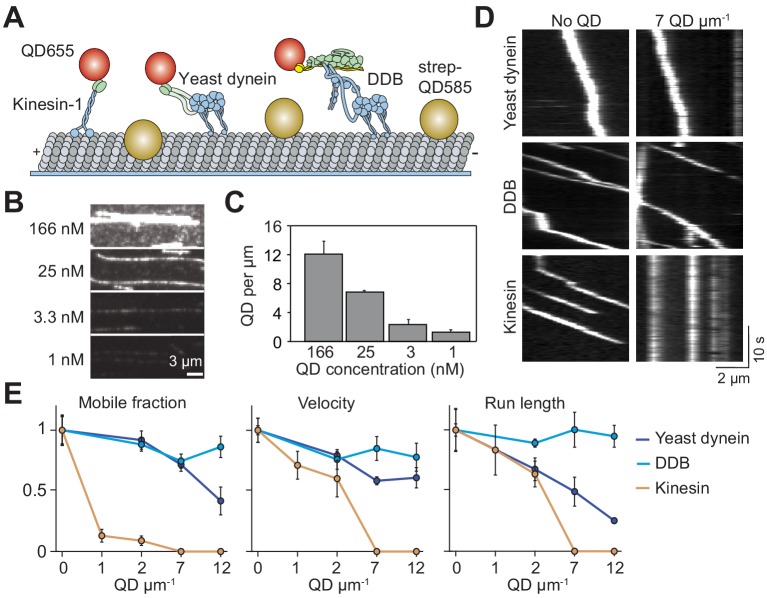
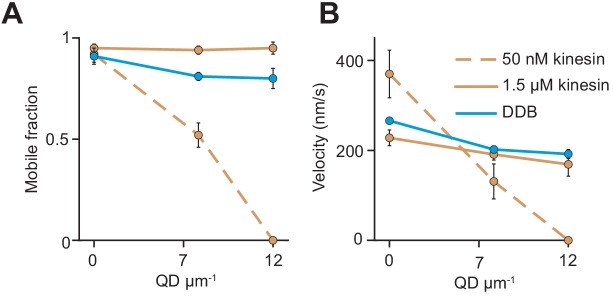
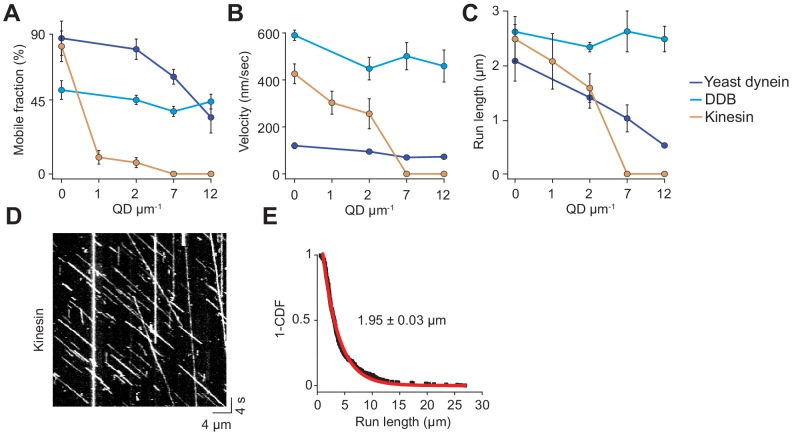
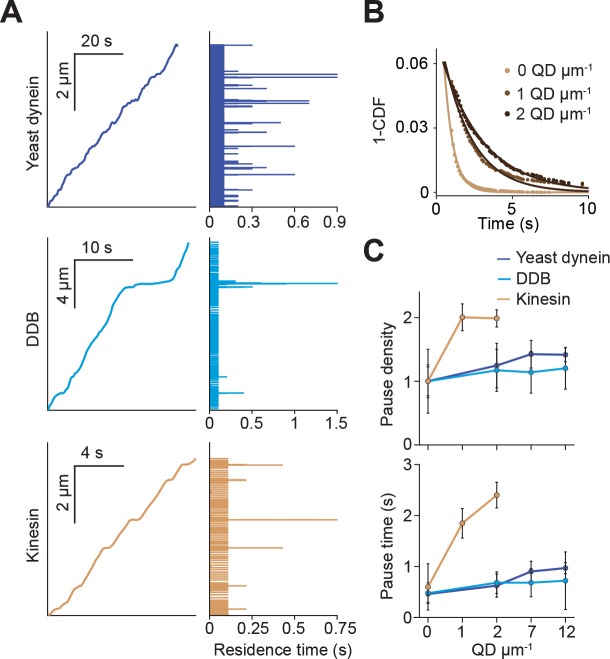
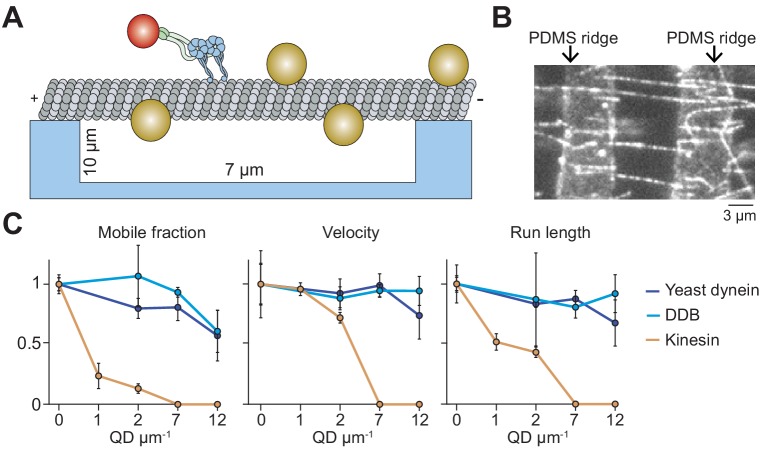
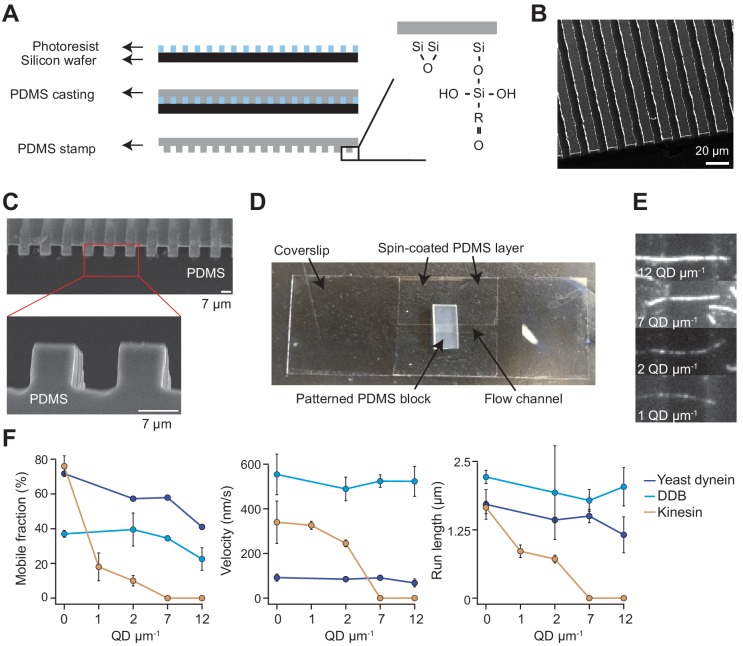
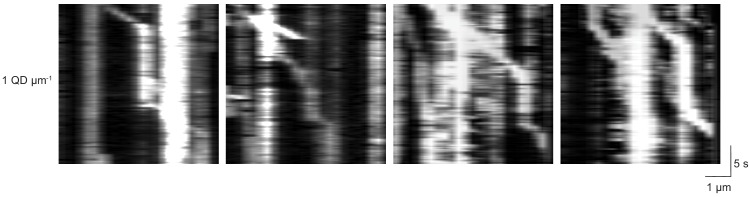
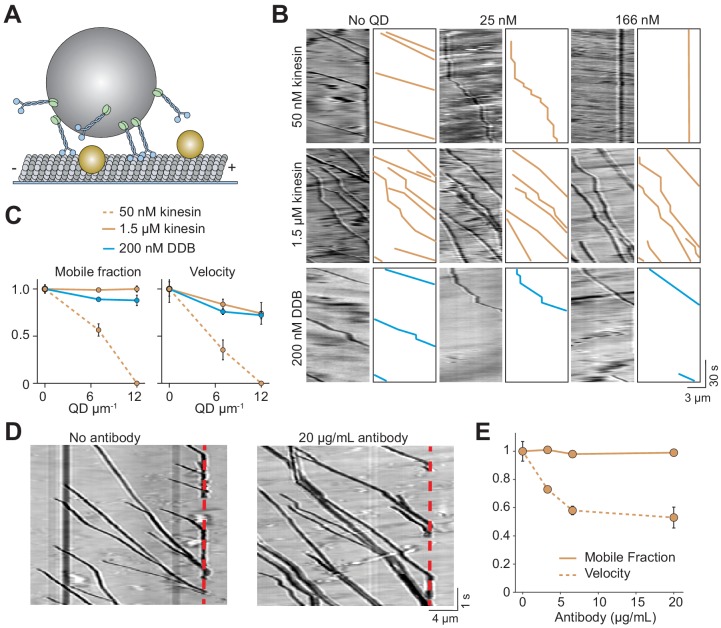
Kinesin-1 and cytoplasmic dynein are microtubule (MT) motors that transport intracellular cargoes. It remains unclear how these motors move along MTs densely coated with obstacles of various sizes in the cytoplasm. Here, we tested the ability of single and multiple motors to bypass synthetic obstacles on MTs in vitro. Contrary to previous reports, we found that single mammalian dynein is highly capable of bypassing obstacles. Single human kinesin-1 motors fail to avoid obstacles, consistent with their inability to take sideways steps on to neighboring MT protofilaments. Kinesins overcome this limitation when working in teams, bypassing obstacles as effectively as multiple dyneins. Cargos driven by multiple kinesins or dyneins are also capable of rotating around the MT to bypass large obstacles. These results suggest that multiplicity of motors is required not only for transporting cargos over long distances and generating higher forces, but also for maneuvering cargos on obstacle-coated MT surfaces.
驱动蛋白-1 和细胞质动力蛋白是微管 (MT) 马达,可运输细胞内货物。目前尚不清楚这些马达如何在细胞质中密集覆盖各种大小障碍物的 MT 上移动。在这里,我们测试了单个和多个马达在体外绕过 MT 上合成障碍物的能力。与之前的报告相反,我们发现单个哺乳动物动力蛋白能够高度绕过障碍物。单个人类驱动蛋白-1 马达无法避免障碍物,这与其无法侧向跨越相邻 MT 原纤维的能力一致。当协同工作时,驱动蛋白可以克服这一限制,有效地绕过障碍物,与多个动力蛋白一样有效。由多个驱动蛋白或动力蛋白驱动的货物也能够绕 MT 旋转以绕过大障碍物。这些结果表明,不仅需要多个马达来远距离运输货物并产生更高的力,还需要在障碍物覆盖的 MT 表面上操纵货物。