Division of Cardiovascular Medicine, Radcliffe Department of Medicine, University of Oxford, Level 6, West Wing, John Radcliffe Hospital, Oxford, OX3 9DU, UK.
Integrated Cardio Metabolic Centre, Department of Medicine, Karolinska Institutet, NOVUM, Blickagången 6, 141 57, Huddinge, Sweden.
Diabetologia. 2019 Dec;62(12):2179-2187. doi: 10.1007/s00125-019-05014-5. Epub 2019 Nov 5.
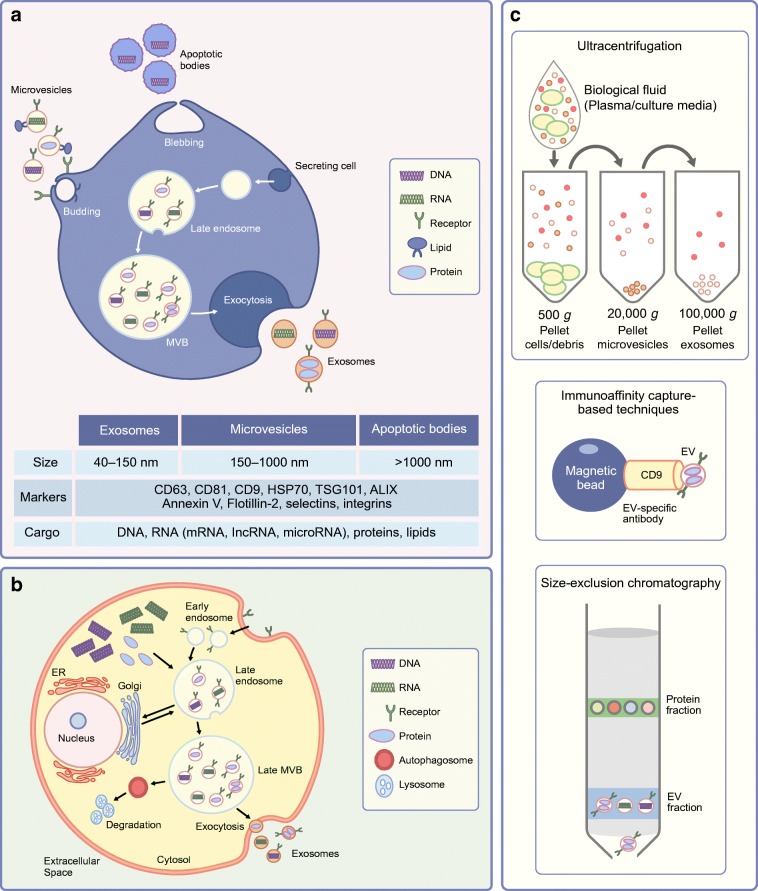
Extracellular vesicles (EVs) are submicron-sized lipid envelopes that are produced and released from a parent cell and can be taken up by a recipient cell. EVs are capable of mediating cellular signalling by carrying nucleic acids, proteins, lipids and cellular metabolites between cells and organs. Metabolic dysfunction is associated with changes in plasma concentrations of EVs as well as alterations in their EV cargo. Since EVs can act as messengers between parent and recipient cells, they could be involved in cell-to-cell and organ-to-organ communication in metabolic diseases. Recent literature has shown that EVs are produced by cells within metabolic tissues, such as adipose tissue, pancreas, muscle and liver. These vesicles have therefore been proposed as a novel intercellular communication mode in systemic metabolic regulation. In this review, we will describe and discuss the current literature that investigates the role of adipose-derived EVs in the regulation of obesity-associated metabolic disease. We will particularly focus on the EV-dependent communication between adipocytes, the vasculature and immune cells in type 2 diabetes.
细胞外囊泡(EVs)是源自于母细胞并分泌释放的亚微米级脂质包膜,可被受体细胞摄取。EVs 能够通过在细胞和器官之间携带核酸、蛋白质、脂质和细胞代谢物来介导细胞信号转导。代谢功能障碍与 EVs 血浆浓度的变化以及 EVs 货物的改变有关。由于 EVs 可以作为亲代细胞和受体细胞之间的信使,因此它们可能参与代谢性疾病中的细胞间和器官间的通讯。最近的文献表明,EVs 是由代谢组织中的细胞产生的,如脂肪组织、胰腺、肌肉和肝脏。因此,这些囊泡被提出作为系统性代谢调节中的一种新的细胞间通讯模式。在这篇综述中,我们将描述和讨论目前关于脂肪细胞衍生的 EVs 在调节肥胖相关代谢疾病中的作用的文献。我们将特别关注 2 型糖尿病中脂肪细胞、血管和免疫细胞之间依赖 EV 的通讯。