Department of Chemistry and Biochemistry , University of California, Los Angeles , Los Angeles , California 90095 , United States.
Department of Bioengineering , University of California, Los Angeles , Los Angeles , California 90095 , United States.
J Am Chem Soc. 2020 Jan 8;142(1):327-334. doi: 10.1021/jacs.9b10770. Epub 2019 Dec 18.
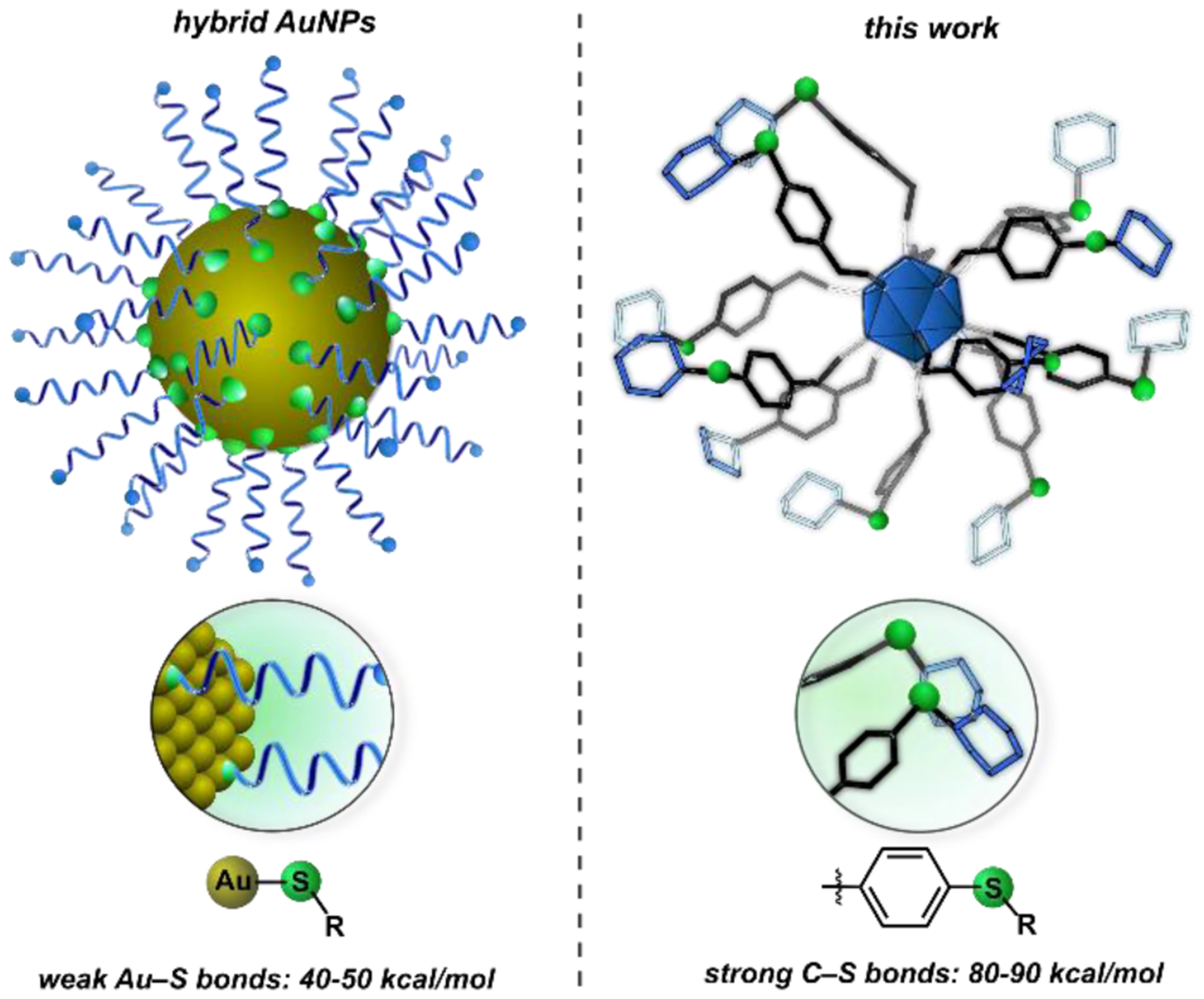
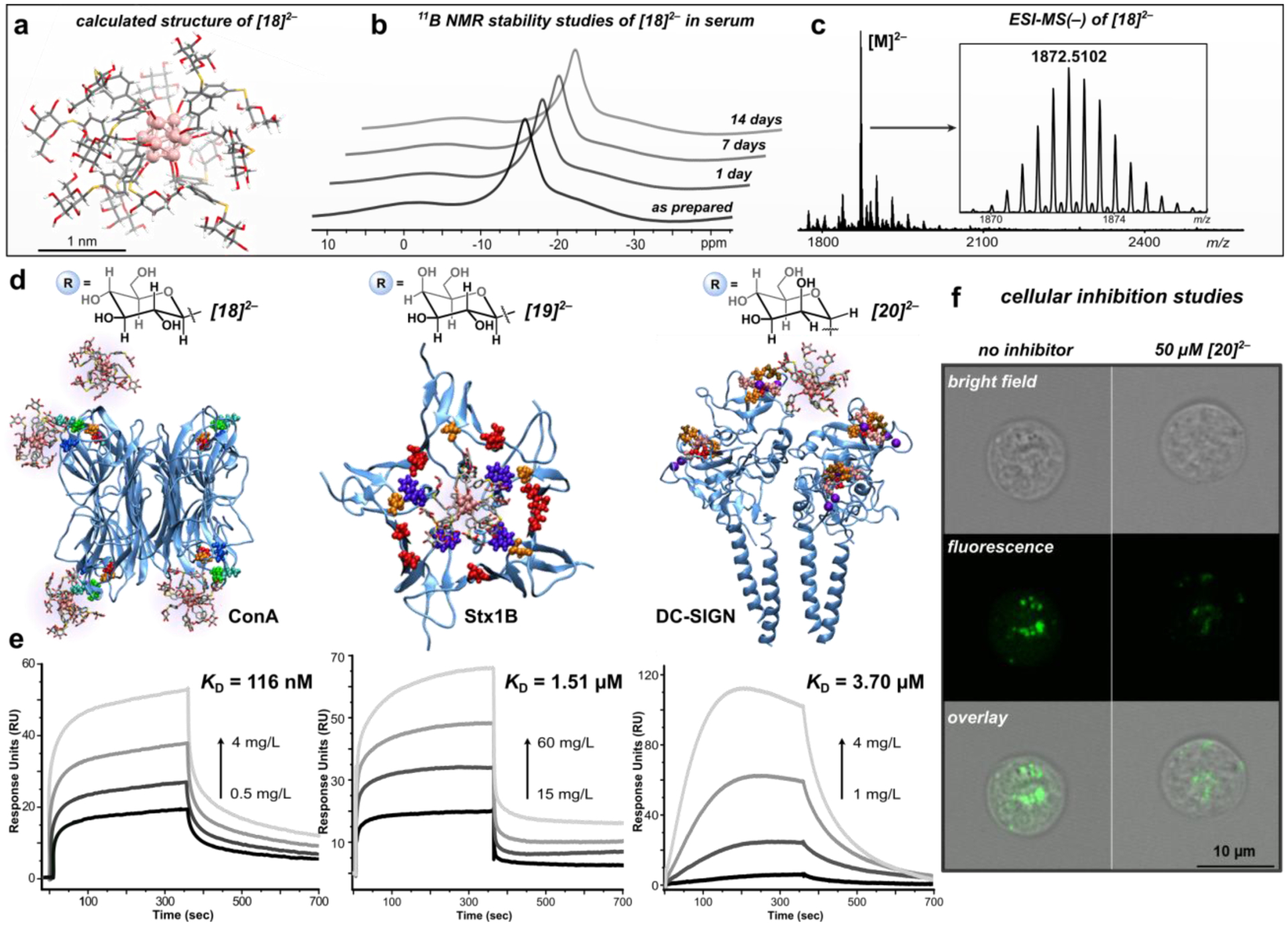
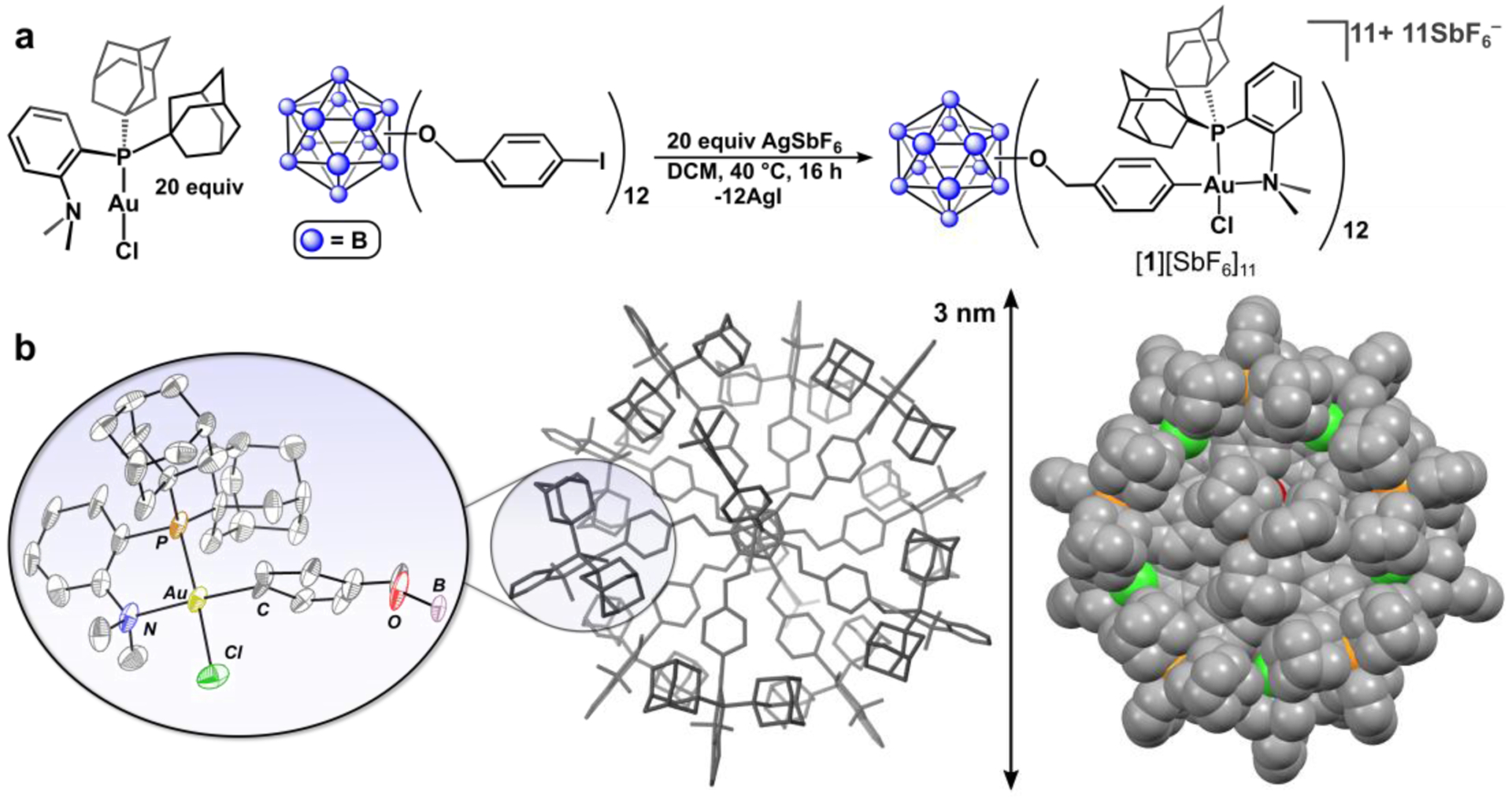
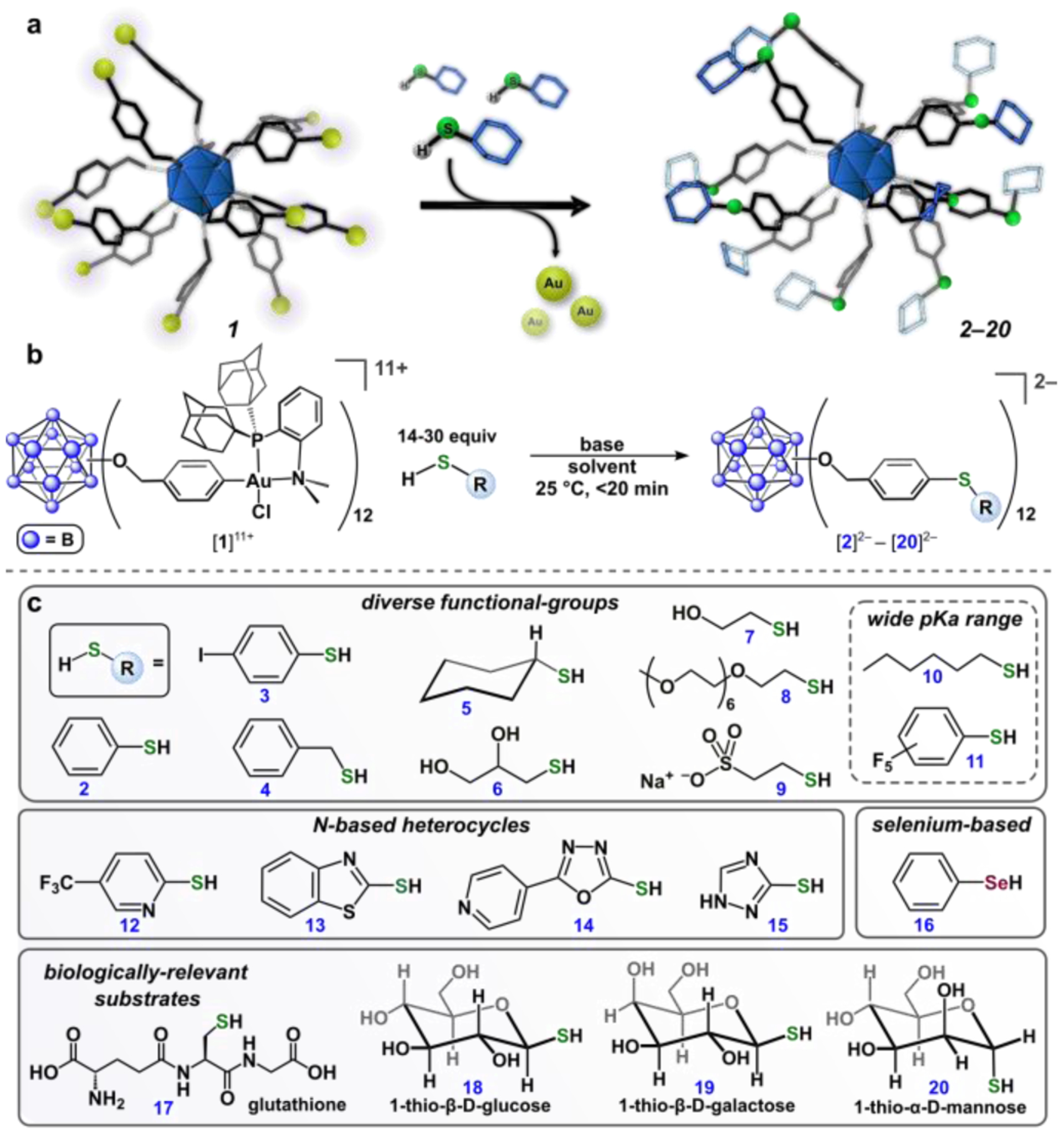
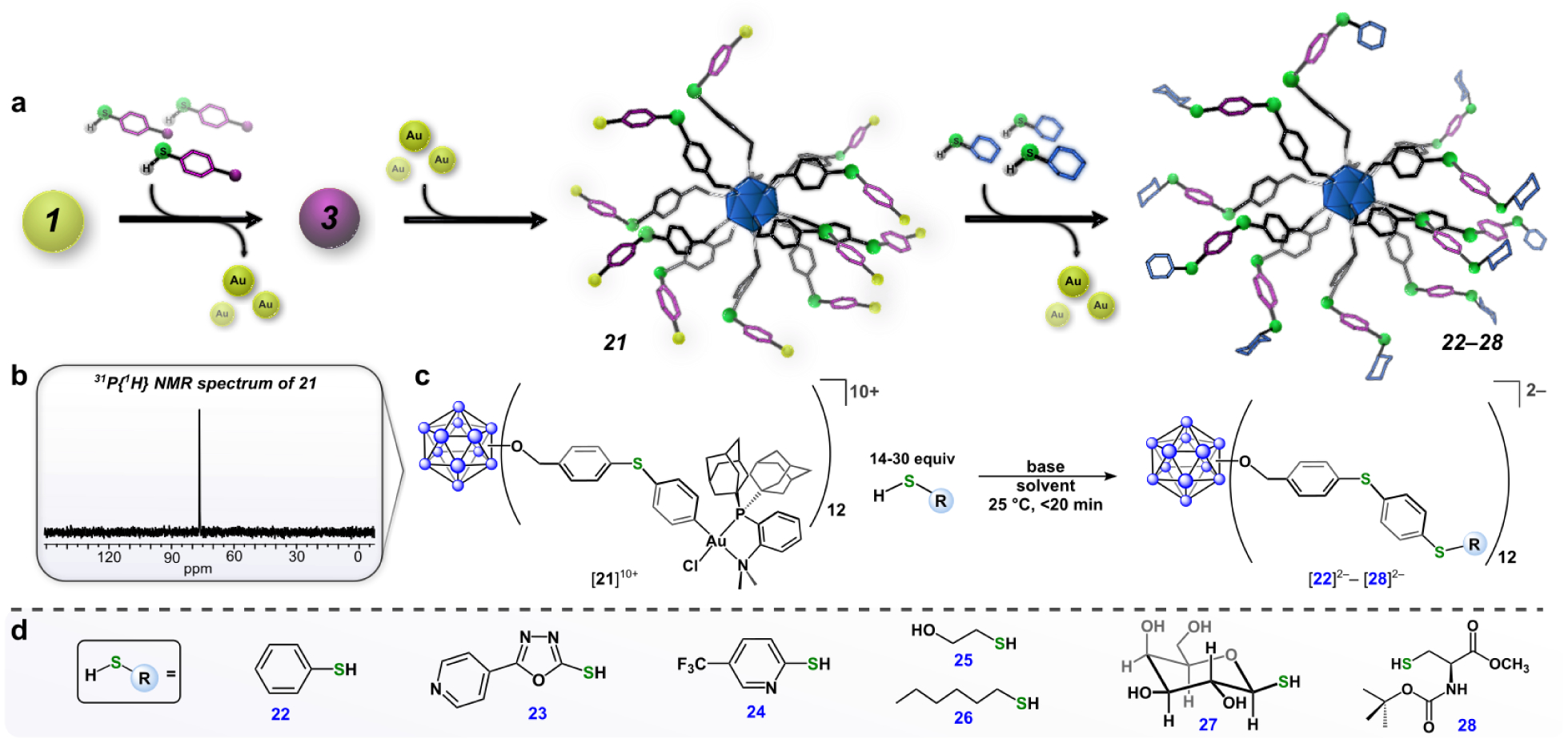
For decades, chemists have strived to mimic the intricate design and diverse functions of naturally occurring systems through the bioinspired synthesis of programmable inorganic nanomaterials. The development of thiol-capped gold nanoparticles (AuNPs) has driven advancement in this area; however, although versatile and readily accessible, hybrid AuNPs are rarely atomically precise, which limits control over their surface topology and therefore the study of complex structure-function relationships. Here, we present a bottom-up approach to the systematic assembly of atomically precise hybrid nanoclusters employing a strategy that mimics the synthetic ease with which thiol-capped AuNPs are normally constructed, while producing well-defined covalent nanoscale assemblies with diverse surface topologies. For the first time, using a structurally characterized cluster-based organometallic building block, we demonstrate the systematic synthesis of nanoclusters with multivalent binding capabilities to complex protein targets.
几十年来,化学家们一直致力于通过仿生合成可编程无机纳米材料来模拟天然系统的复杂设计和多样化功能。巯基封端的金纳米粒子(AuNPs)的发展推动了这一领域的进展;然而,尽管具有多功能性和易于获得,混合 AuNPs 通常不是原子精确的,这限制了对其表面拓扑结构的控制,从而限制了对复杂结构-功能关系的研究。在这里,我们提出了一种自下而上的方法,通过模拟通常构建巯基封端 AuNPs 的简便合成方法,系统地组装原子精确的杂化纳米团簇,同时生成具有多种表面拓扑结构的明确共价纳米级组装体。我们首次使用结构表征的基于团簇的有机金属建筑块,展示了具有多价结合能力的纳米团簇的系统合成,以用于复杂的蛋白质靶标。