Chapman University, Orange, USA.
Ningbo First Hospital of Zhejiang University, Hangzhou, China.
Sci Rep. 2020 Feb 19;10(1):2898. doi: 10.1038/s41598-020-59821-7.
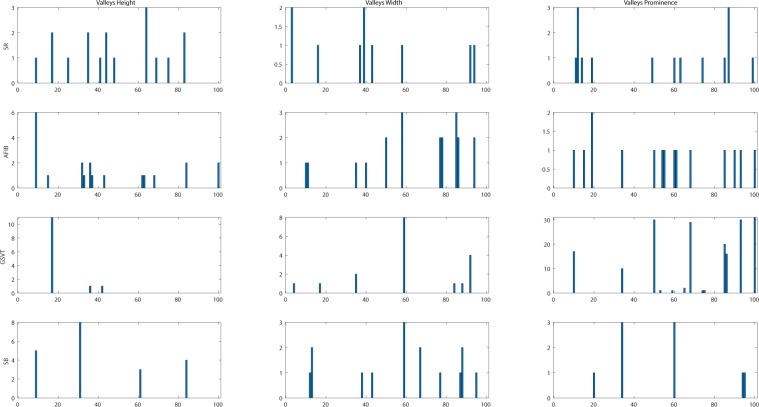
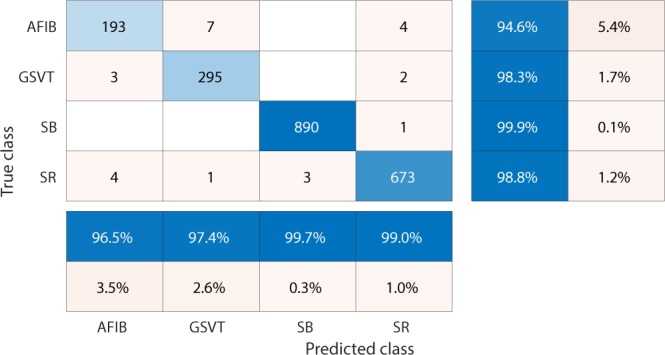
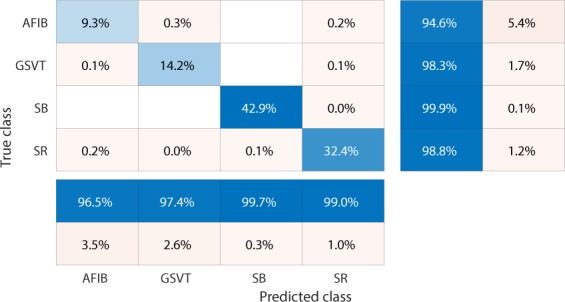
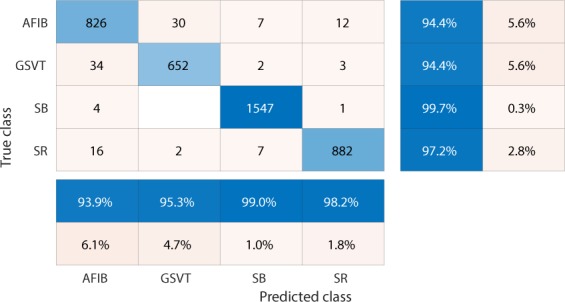
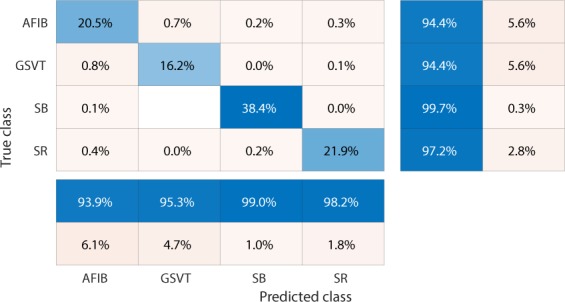
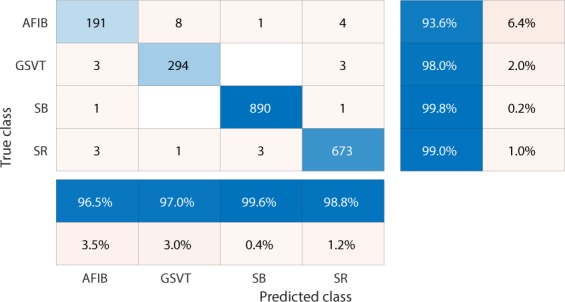
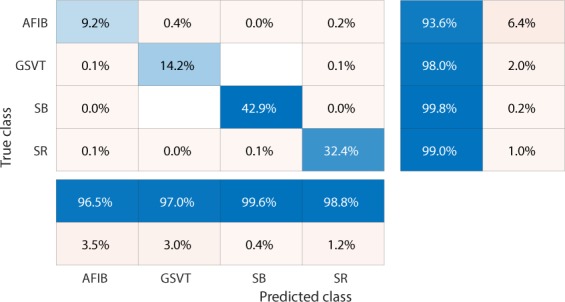
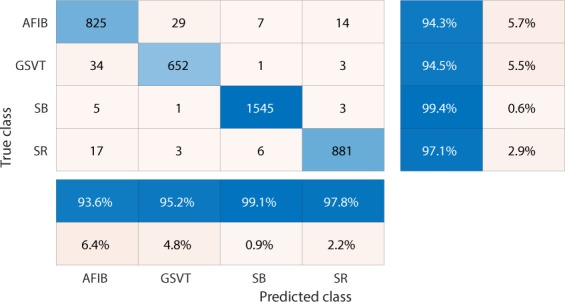
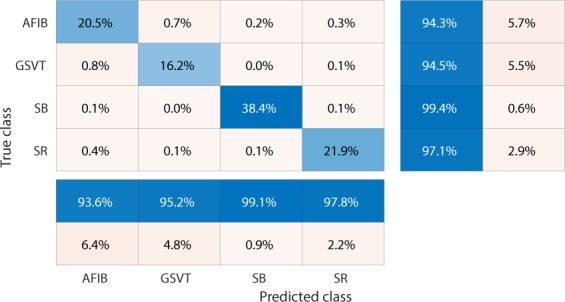
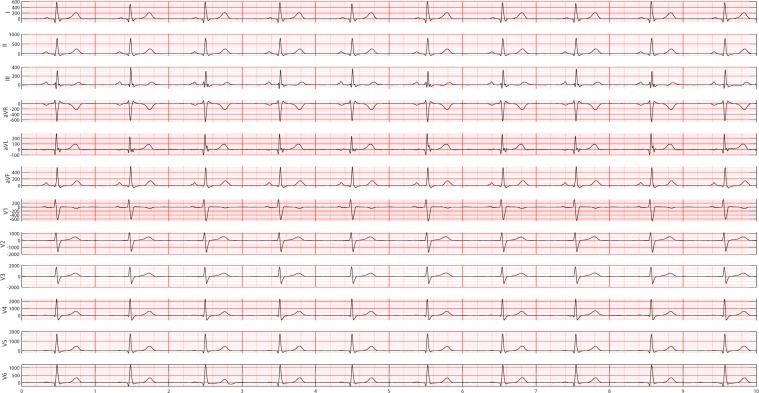
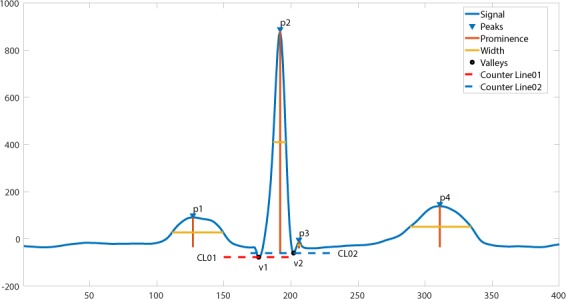
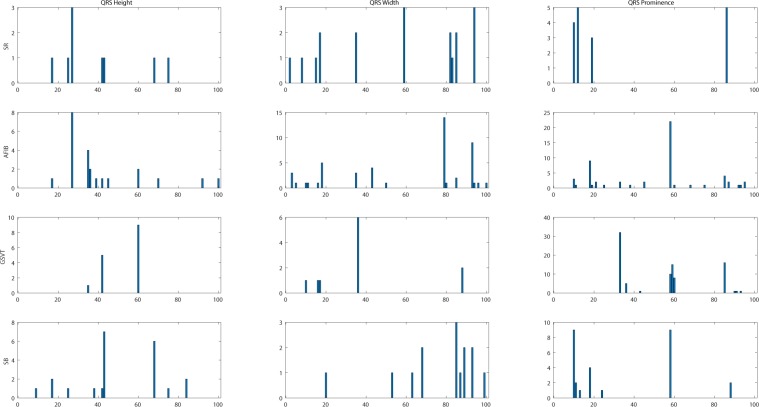
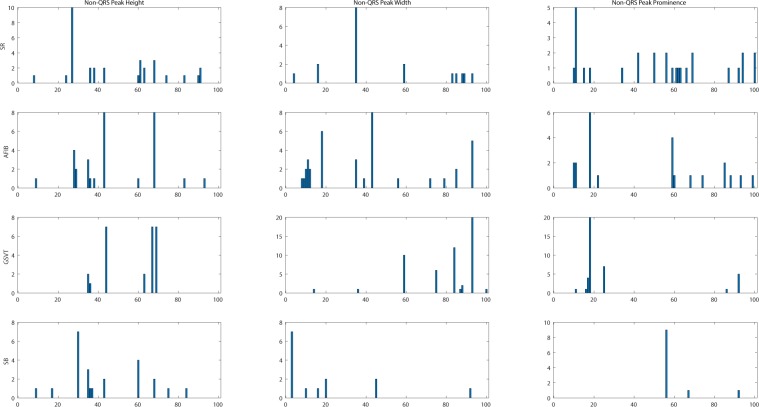
Arrhythmia constitutes a problem with the rate or rhythm of the heartbeat, and an early diagnosis is essential for the timely inception of successful treatment. We have jointly optimized the entire multi-stage arrhythmia classification scheme based on 12-lead surface ECGs that attains the accuracy performance level of professional cardiologists. The new approach is comprised of a three-step noise reduction stage, a novel feature extraction method and an optimal classification model with finely tuned hyperparameters. We carried out an exhaustive study comparing thousands of competing classification algorithms that were trained on our proprietary, large and expertly labeled dataset consisting of 12-lead ECGs from 40,258 patients with four arrhythmia classes: atrial fibrillation, general supraventricular tachycardia, sinus bradycardia and sinus rhythm including sinus irregularity rhythm. Our results show that the optimal approach consisted of Low Band Pass filter, Robust LOESS, Non Local Means smoothing, a proprietary feature extraction method based on percentiles of the empirical distribution of ratios of interval lengths and magnitudes of peaks and valleys, and Extreme Gradient Boosting Tree classifier, achieved an F-Score of 0.988 on patients without additional cardiac conditions. The same noise reduction and feature extraction methods combined with Gradient Boosting Tree classifier achieved an F-Score of 0.97 on patients with additional cardiac conditions. Our method achieved the highest classification accuracy (average 10-fold cross-validation F-Score of 0.992) using an external validation data, MIT-BIH arrhythmia database. The proposed optimal multi-stage arrhythmia classification approach can dramatically benefit automatic ECG data analysis by providing cardiologist level accuracy and robust compatibility with various ECG data sources.
心律失常是指心跳的速率或节律出现问题,早期诊断对于及时开始成功治疗至关重要。我们共同优化了整个多阶段心律失常分类方案,该方案基于 12 导联体表心电图,可达到专业心脏病专家的准确性水平。新方法由三个降噪阶段、一种新颖的特征提取方法和一个具有微调超参数的最佳分类模型组成。我们进行了一项详尽的研究,比较了数千种竞争分类算法,这些算法都是在我们专有的、大型且经过专业标记的数据集上进行训练的,该数据集包含来自 40258 名患者的 12 导联心电图,这些患者有四种心律失常类别:心房颤动、广义室上性心动过速、窦性心动过缓和包括窦性不规则节律在内的窦性节律。我们的研究结果表明,最佳方法由低通滤波器、稳健局部拟合、非局部均值平滑、一种基于区间长度比和峰谷幅度的经验分布分位数的专有特征提取方法以及极端梯度提升树分类器组成,在没有额外心脏条件的患者中达到了 0.988 的 F 分数。相同的降噪和特征提取方法与梯度提升树分类器相结合,在有额外心脏条件的患者中达到了 0.97 的 F 分数。我们的方法在外部验证数据(MIT-BIH 心律失常数据库)中使用 10 倍交叉验证平均达到了最高的分类准确性(平均 10 倍交叉验证 F 分数为 0.992)。所提出的最佳多阶段心律失常分类方法通过提供心脏病专家级别的准确性和与各种 ECG 数据源的强大兼容性,可以极大地受益于自动 ECG 数据分析。