Department of Ecology and Evolution, University of Chicago, Chicago, United States.
Department of Ecology and Evolutionary Biology, University of California, Los Angeles, Los Angeles, United States.
Elife. 2020 Feb 24;9:e55570. doi: 10.7554/eLife.55570.
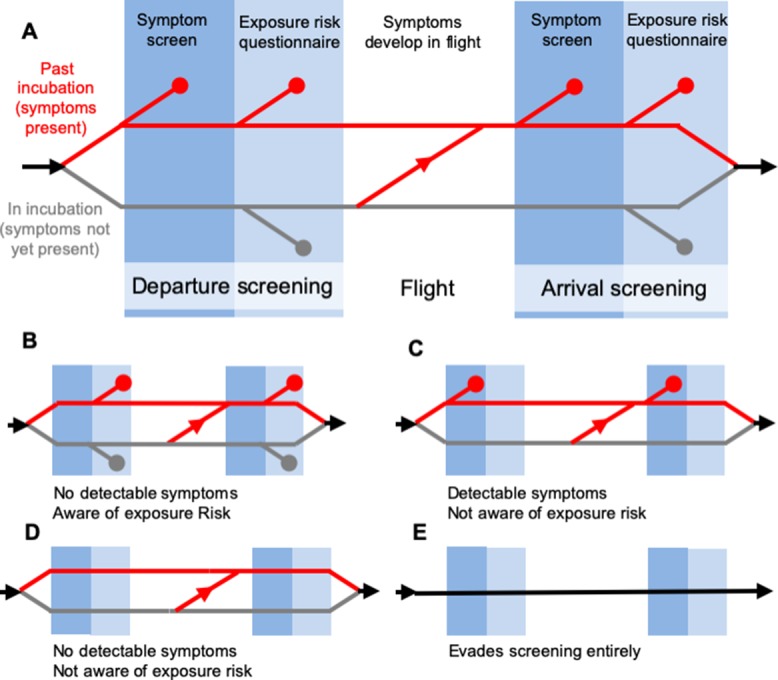
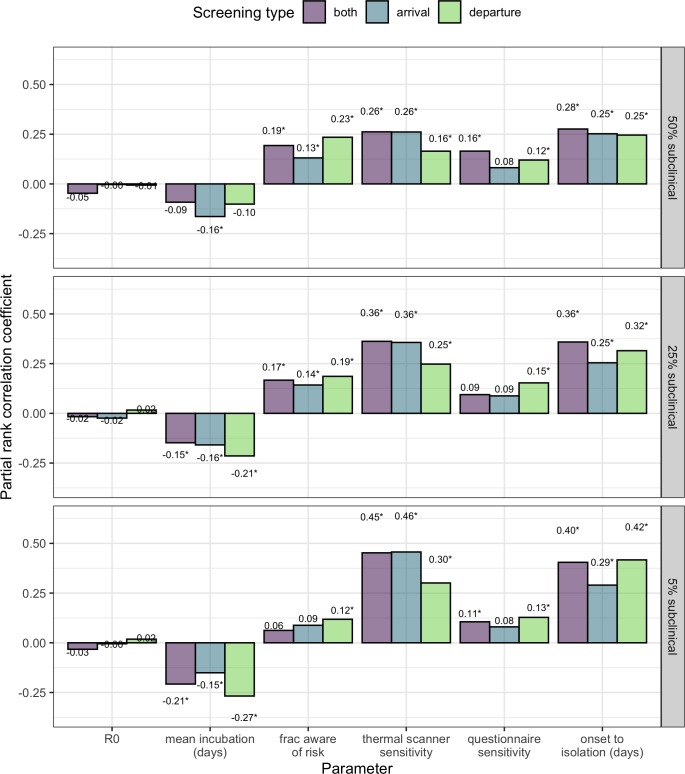
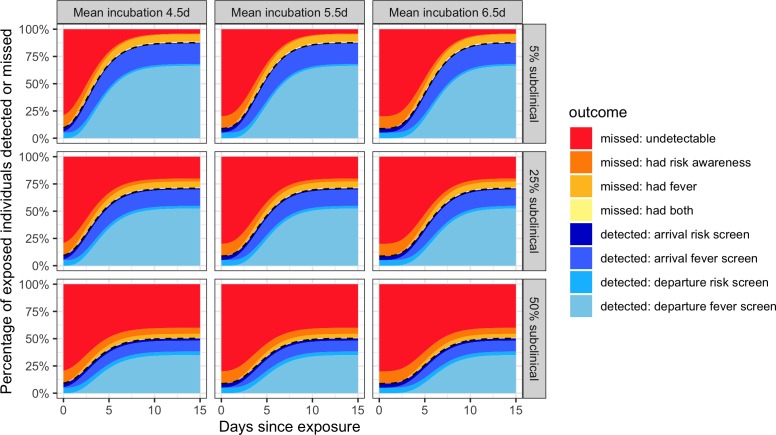
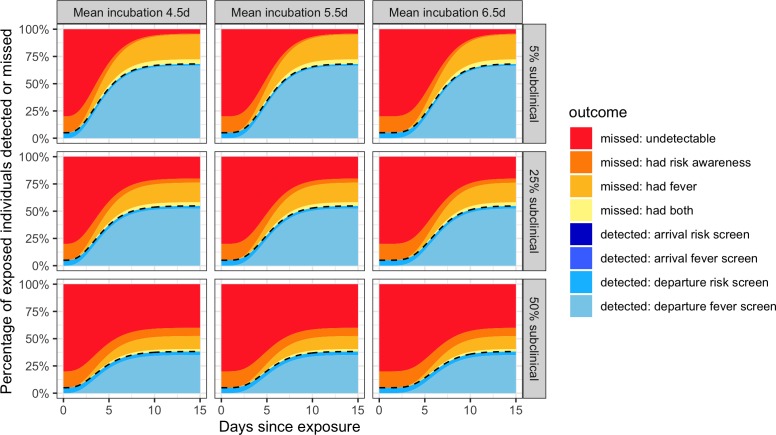
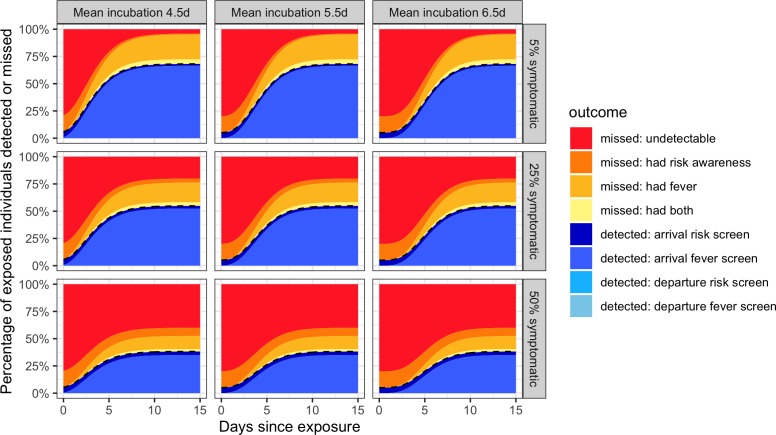
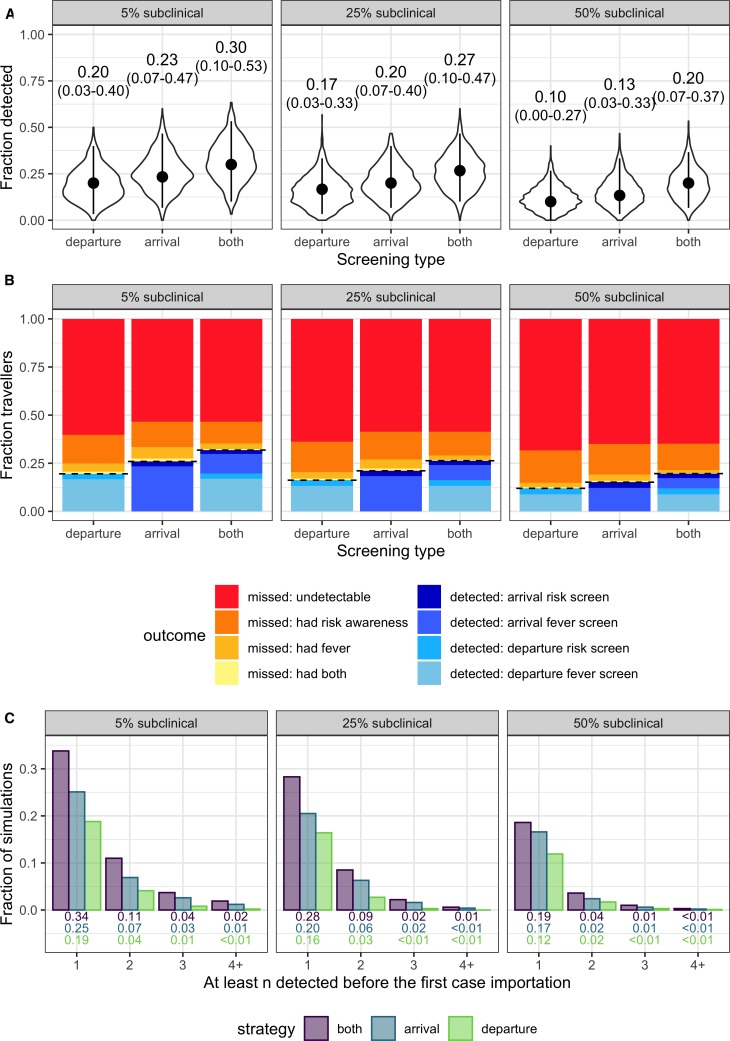
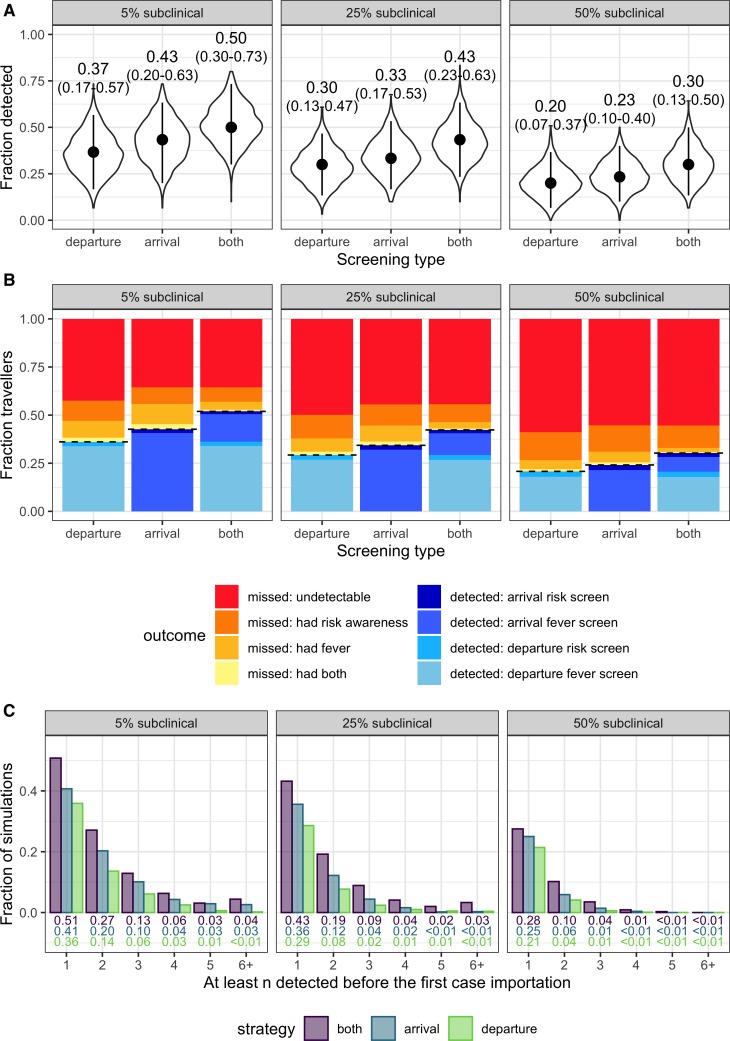
Traveller screening is being used to limit further spread of COVID-19 following its recent emergence, and symptom screening has become a ubiquitous tool in the global response. Previously, we developed a mathematical model to understand factors governing the effectiveness of traveller screening to prevent spread of emerging pathogens (Gostic et al., 2015). Here, we estimate the impact of different screening programs given current knowledge of key COVID-19 life history and epidemiological parameters. Even under best-case assumptions, we estimate that screening will miss more than half of infected people. Breaking down the factors leading to screening successes and failures, we find that most cases missed by screening are fundamentally undetectable, because they have not yet developed symptoms and are unaware they were exposed. Our work underscores the need for measures to limit transmission by individuals who become ill after being missed by a screening program. These findings can support evidence-based policy to combat the spread of COVID-19, and prospective planning to mitigate future emerging pathogens.
旅行者筛查正被用于限制新冠病毒的进一步传播,因为其最近的出现,症状筛查已经成为全球应对措施中无处不在的工具。此前,我们开发了一个数学模型来理解控制旅行者筛查有效性的因素,以防止新出现的病原体传播(Gostic 等人,2015 年)。在这里,我们根据目前对新冠病毒关键生活史和流行病学参数的了解,估计不同筛查方案的影响。即使在最佳假设下,我们估计筛查也会漏掉一半以上的感染者。通过分解导致筛查成功和失败的因素,我们发现筛查漏掉的大多数病例基本上是无法检测到的,因为它们还没有出现症状,也不知道自己已经接触过病毒。我们的工作强调了需要采取措施来限制那些在筛查程序中被漏掉后发病的个体的传播。这些发现可以为对抗新冠病毒传播的循证政策提供支持,并为减轻未来新出现的病原体的影响进行前瞻性规划。