Grieshop Andrew P, Jain Grishma, Sethuraman Karthik, Marshall Julian D
Department of Civil, Construction and Environmental Engineering North Carolina State University at Raleigh Raleigh North Carolina USA.
Resource Optimization Initiative Bangalore India.
Geohealth. 2017 Jul 28;1(5):222-236. doi: 10.1002/2017GH000066. eCollection 2017 Jul.
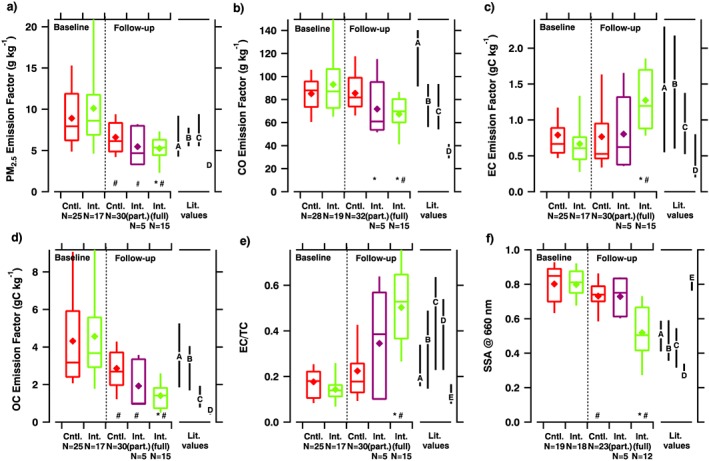
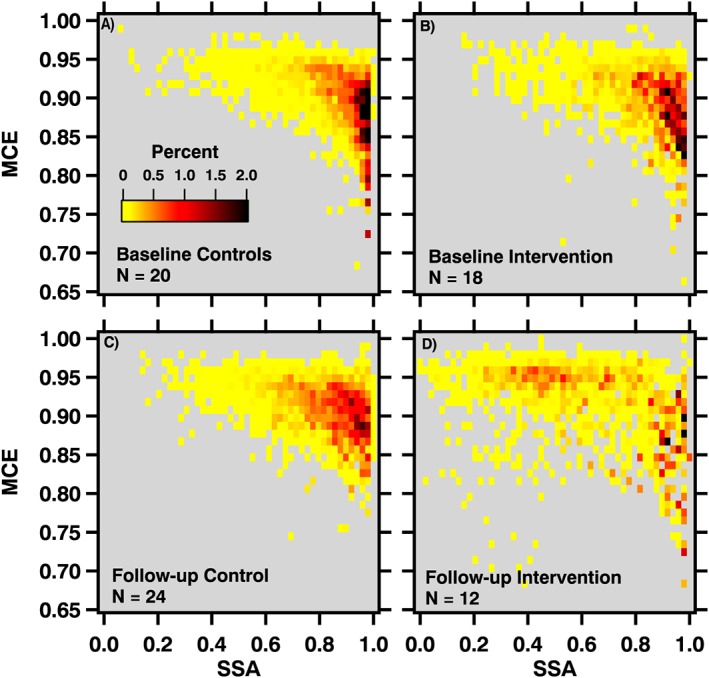
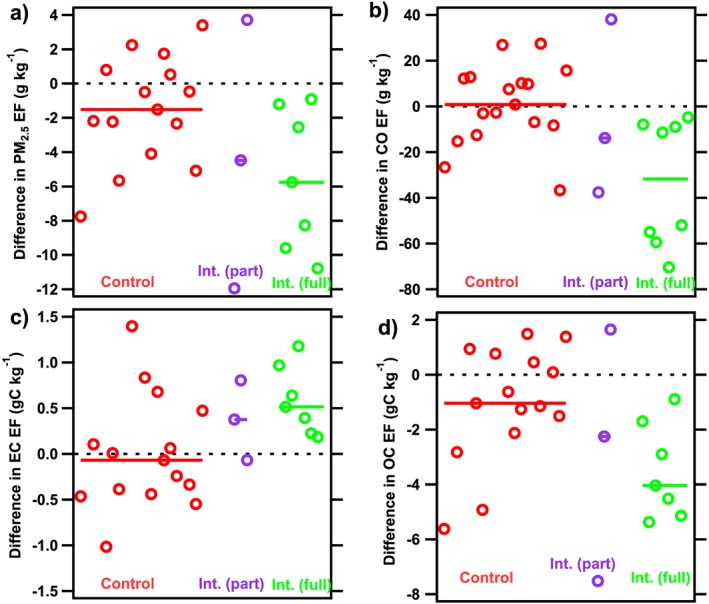
We present results of an emission characterization effort, completed as part of a larger intervention trial, of a carbon-finance-approved program replacing traditional cookstoves with "rocket"-style natural draft stoves. The 100 emission tests were conducted across 31 households in control and intervention groups, with repeated tests in most households during preintervention and postintervention periods. While mean fine particulate matter (PM) emission factor for intervention stoves was significantly lower than for traditional stoves in baseline measurements, they were only marginally lower than traditional stoves during follow-up. Intervention stove PM emissions had a larger contribution from light-absorbing (elemental) carbon than traditional stoves. Repeated measurements in control households provide evidence for strong seasonality, likely due to differences in fuel moisture/types, in traditional stove emissions, with important implications for study design. Seasonality observed in control household emission factors (baseline > follow-up) was in the opposite direction as that observed in indoor PM concentrations (baseline < follow-up), highlighting that seasonally varying conditions (e.g., ventilation rates) may modify the link between emissions and exposures. Emission factor differences in paired (pre/post) tests from the same households were similar to differences in the medians of entire groups, suggesting variability is dominated by test-to-test variation. Emission reductions from intervention stoves were significantly smaller than laboratory performance would suggest or that are required to strongly reduce exposures. Field emissions assessment like that presented here should be prioritized early in technology assessment and development to provide rigorous estimates of the benefits reasonably expected from interventions with the potential for substantial benefits to human health and the environment.
我们展示了一项排放特征研究的结果,该研究是一个更大规模干预试验的一部分,该试验针对一个碳融资批准的项目,用“火箭”式自然通风炉取代传统炉灶。在对照组和干预组的31户家庭中进行了100次排放测试,大多数家庭在干预前和干预后阶段进行了重复测试。虽然在基线测量中,干预炉灶的平均细颗粒物(PM)排放因子显著低于传统炉灶,但在随访期间仅略低于传统炉灶。干预炉灶的PM排放中,吸光(元素)碳的贡献比传统炉灶更大。对照组家庭的重复测量为传统炉灶排放中强烈的季节性提供了证据,这可能是由于燃料湿度/类型的差异,这对研究设计具有重要意义。对照组家庭排放因子中观察到的季节性(基线>随访)与室内PM浓度中观察到的季节性(基线<随访)方向相反,突出表明季节性变化的条件(如通风率)可能会改变排放与暴露之间的联系。来自同一家庭的配对(干预前/干预后)测试中的排放因子差异与整个组中位数的差异相似,这表明变异性主要由测试间的差异主导。干预炉灶的减排量明显小于实验室性能所表明的或大幅减少暴露所需的减排量。像本文所展示的现场排放评估应在技术评估和开发的早期阶段得到优先考虑,以便对有望给人类健康和环境带来重大益处的干预措施合理预期的效益提供严格估计。