The PIGMOD center, Institute of Animal Physiology and Genetics, v. v. i., The Czech Academy of Sciences, Libechov, Czech Republic.
Institute of Molecular Genetics, The Czech Academy of Sciences, Praha 4, Czech Republic.
Sci Rep. 2020 Mar 12;10(1):4619. doi: 10.1038/s41598-020-61465-6.
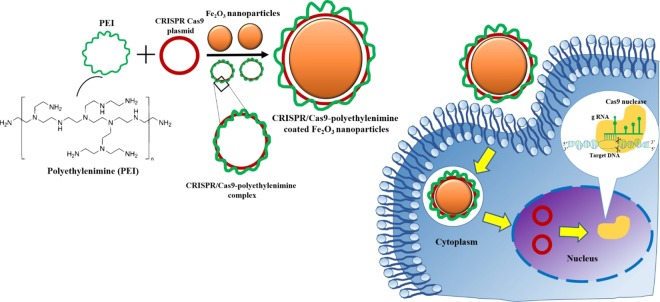
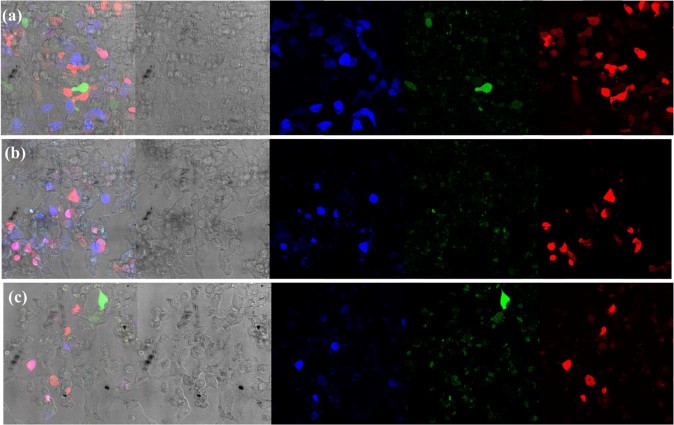
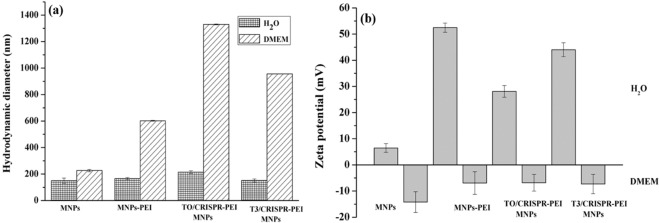
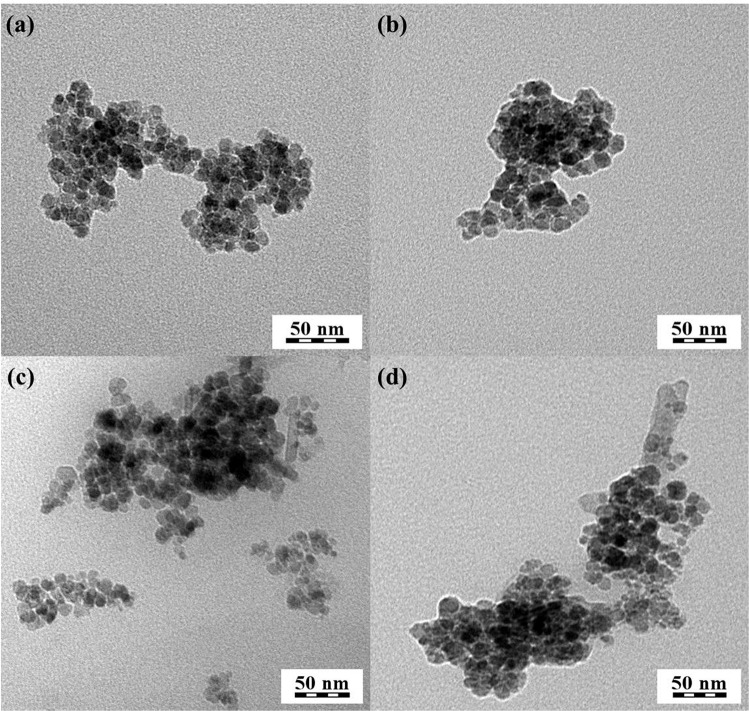
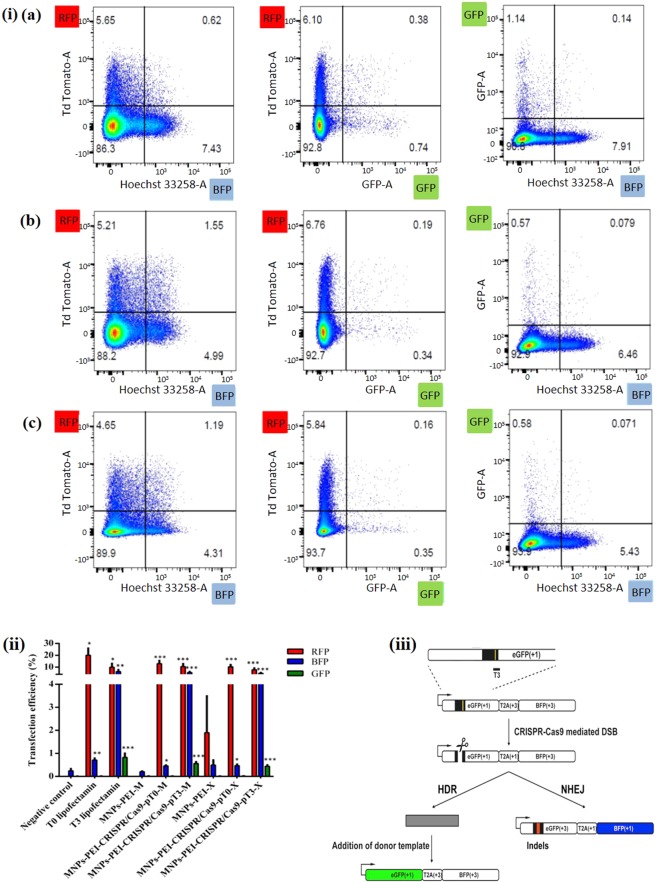
Clustered regularly interspaced short palindromic repeats-associated protein (CRISPR/Cas9) system has become a revolutionary tool for gene editing. Since viral delivery systems have significant side effects, and naked DNA delivery is not an option, the nontoxic, non-viral delivery of CRISPR/Cas9 components would significantly improve future therapeutic delivery. In this study, we aim at characterizing nanoparticles to deliver plasmid DNA encoding for the CRISPR-Cas system in eukaryotic cells in vitro. CRISPR/Cas9 complexed polyethylenimine (PEI) magnetic nanoparticles (MNPs) were generated. We used a stable HEK293 cell line expressing the traffic light reporter (TLR-3) system to evaluate efficient homology- directed repair (HDR) and non-homologous end joining (NHEJ) events following transfection with NPs. MNPs have been synthesized by co-precipitation with the average particle size around 20 nm in diameter. The dynamic light scattering and zeta potential measurements showed that NPs exhibited narrow size distribution and sufficient colloidal stability. Genome editing events were as efficient as compared to standard lipofectamine transfection. Our approach tested non-viral delivery of CRISPR/Cas9 and DNA template to perform HDR and NHEJ in the same assay. We demonstrated that PEI-MNPs is a promising delivery system for plasmids encoding CRISPR/Cas9 and template DNA and thus can improve safety and utility of gene editing.
成簇规律间隔短回文重复相关蛋白(CRISPR/Cas9)系统已成为基因编辑的革命性工具。由于病毒递送系统有显著的副作用,且裸露的 DNA 递送也不是一个选择,因此无毒、非病毒的 CRISPR/Cas9 组件递送将极大地改善未来的治疗性递送。在这项研究中,我们旨在对纳米颗粒进行表征,以实现体外真核细胞中 CRISPR-Cas 系统质粒 DNA 的递送。我们生成了与聚亚乙基亚胺(PEI)磁性纳米颗粒(MNPs)复合的 CRISPR/Cas9 复合物。我们使用表达交通信号灯报告器(TLR-3)系统的稳定 HEK293 细胞系来评估转染后高效同源定向修复(HDR)和非同源末端连接(NHEJ)事件。MNPs 通过共沉淀合成,平均粒径约为 20nm。动态光散射和 zeta 电位测量表明,NP 表现出窄的粒径分布和足够的胶体稳定性。基因组编辑事件与标准脂质体转染相比同样高效。我们的方法测试了 CRISPR/Cas9 和 DNA 模板的非病毒递送,以在相同的测定中进行 HDR 和 NHEJ。我们证明了 PEI-MNPs 是一种有前途的质粒 DNA 转染方法,可用于编码 CRISPR/Cas9 和模板 DNA,从而提高基因编辑的安全性和实用性。