The School for Molecular Cell Biology and Biotechnology, Faculty of Life Sciences, Tel Aviv University, Tel Aviv 6997801, Israel.
Biomed Mater. 2020 Jun 29;15(4):045018. doi: 10.1088/1748-605X/ab809f.
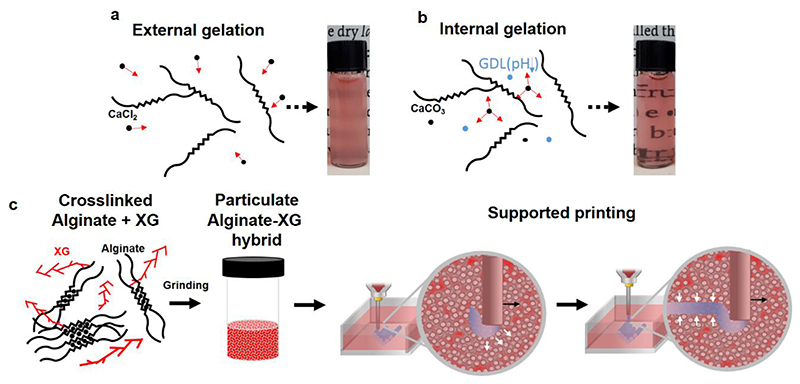
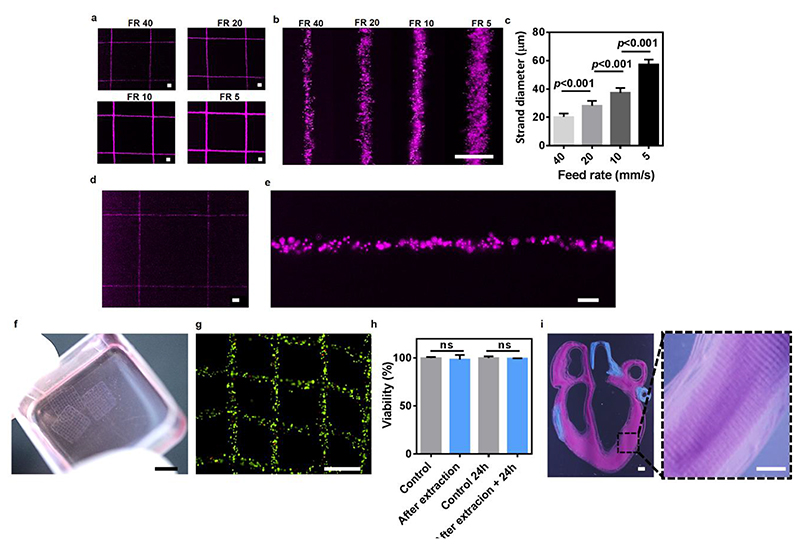
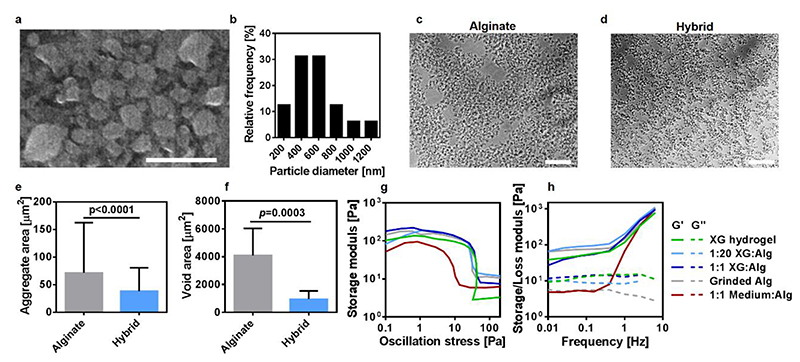
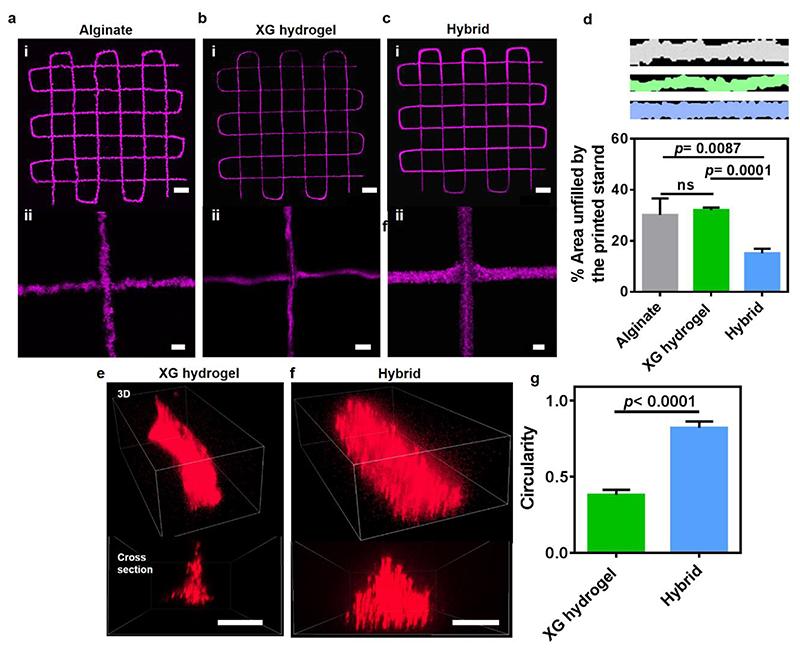
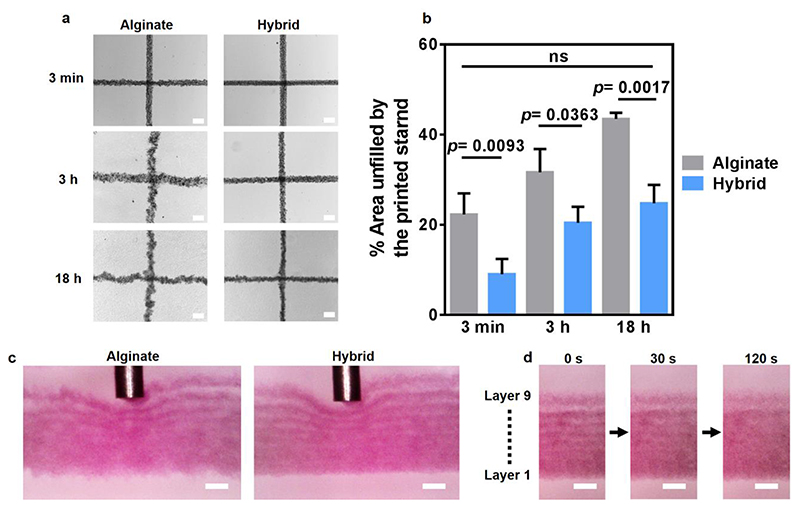
3D bioprinting may revolutionize the field of tissue engineering by allowing fabrication of bio-structures with a high degree of complexity, fine architecture and heterogeneous composition. The printing substances in these processes are mostly based on biomaterials and living cells. As such, they generally possess weak mechanical properties and thus must be supported during fabrication in order to prevent the collapse of large, volumetric multi-layered printouts. In this work, we characterize a uniquely formulated media used to support printing of extracellular matrix-based biomaterials. We show that a hybrid material, comprised of calcium-alginate nanoparticles and xanthan gum, presents superb qualities that enable printing at high resolution of down to 10 microns, allowing fabrication of complex constructs and cellular structures. This hybrid also presents an exclusive combination of desirable properties such as biocompatibility, high transparency, stability at a wide range of temperatures and amenability to delicate extraction procedures. Moreover, as fabrication of large, volumetric biological structures may require hours and even days to accomplish, we have demonstrated that the hybrid medium can support prolonged, precise printing for at least 18 h. All these qualities make it a promising support medium for 3D printing of tissues and organs.
3D 生物打印技术通过制造具有高度复杂性、精细结构和异质组成的生物结构,可能会彻底改变组织工程领域。这些过程中的打印物质主要基于生物材料和活细胞。因此,它们通常具有较弱的机械性能,因此在制造过程中必须得到支撑,以防止大型、体积较大的多层打印件坍塌。在这项工作中,我们对一种用于支持基于细胞外基质的生物材料打印的独特配方介质进行了表征。我们表明,由钙-海藻酸钠纳米粒子和黄原胶组成的混合材料具有出色的性能,能够以高达 10 微米的分辨率进行打印,从而能够制造复杂的结构和细胞结构。这种混合材料还具有独特的理想特性组合,如生物相容性、高透明度、在较宽温度范围内的稳定性以及易于进行精细提取处理。此外,由于制造大型、体积较大的生物结构可能需要数小时甚至数天的时间才能完成,我们已经证明,混合介质可以至少 18 小时的时间内支持长时间、精确的打印。所有这些特性都使其成为 3D 打印组织和器官的有前途的支撑介质。