DuPont Nutrition & Biosciences, Global Health and Nutrition Science, Sokeritehtaantie 20, 02460 Kantvik, Finland.
Nutrients. 2020 Mar 25;12(4):892. doi: 10.3390/nu12040892.
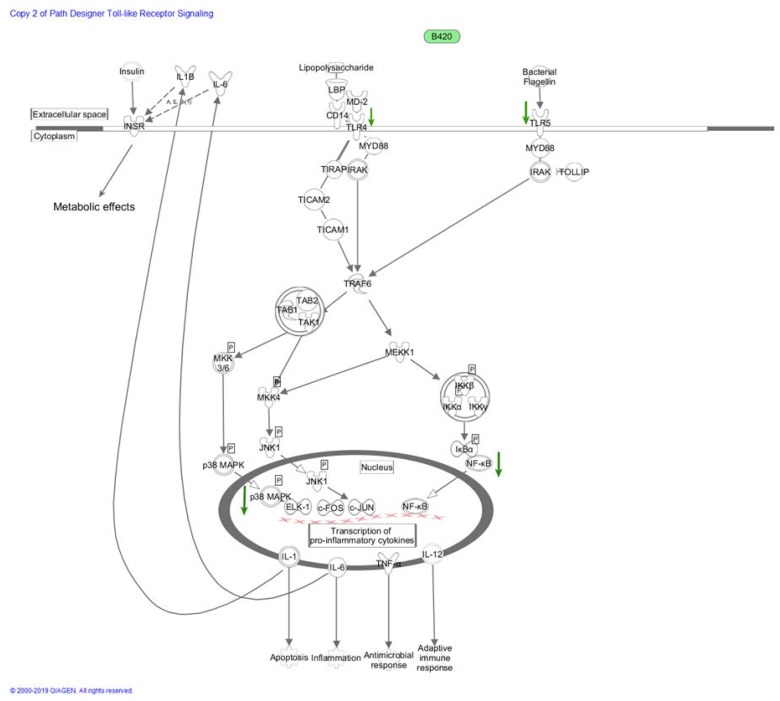
The growing worldwide epidemic of obesity and associated metabolic health comorbidities has resulted in an urgent need for safe and efficient nutritional solutions. The research linking obesity with gut microbiota dysbiosis has led to a hypothesis that certain bacterial strains could serve as probiotics helping in weight management and metabolic health. In the search for such strains, the effect of subsp. 420 (B420) on gut microbiota and metabolic health, and the mechanisms of actions, has been investigated in a variety of in vitro, pre-clinical, and clinical studies. In this review, we aim to highlight the research on B420 related to obesity, metabolic health, and the microbiota. Current research supports the hypothesis that gut dysbiosis leads to an imbalance in the inflammatory processes and loss of epithelial integrity. Bacterial components, like endotoxins, that leak out of the gut can invoke low-grade, chronic, and systemic inflammation. This imbalanced state is often referred to as metabolic endotoxemia. Scientific evidence indicates that B420 can slow down many of these detrimental processes via multiple signaling pathways, as supported by mechanistic in vitro and in vivo studies. We discuss the connection of these mechanisms to clinical evidence on the effect of B420 in controlling weight gain in overweight and obese subjects. The research further indicates that B420 may improve the epithelial integrity by rebalancing a dysbiotic state induced by an obesogenic diet, for example by increasing the prevalence of lean phenotype microbes such as . We further discuss, in the context of delivering the health benefits of B420: the safety and technological aspects of the strain including genomic characterization, antibiotic resistance profiling, stability in the product, and survival of the live probiotic in the intestine. In summary, we conclude that the clinical and preclinical studies on metabolic health suggest that B420 may be a potential candidate in combating obesity; however, further clinical studies are needed.
全球肥胖症及相关代谢性健康合并症的流行日益加剧,因此迫切需要安全有效的营养解决方案。肥胖与肠道微生物失调相关的研究提出了一个假设,即某些细菌菌株可能作为益生菌有助于体重管理和代谢健康。在寻找这些菌株的过程中,人们已经在各种体外、临床前和临床研究中研究了 subsp. 420(B420)对肠道微生物群和代谢健康的影响及其作用机制。在这篇综述中,我们旨在强调与肥胖、代谢健康和微生物群相关的 B420 研究。目前的研究支持这样一种假设,即肠道菌群失调导致炎症过程失衡和上皮完整性丧失。从肠道漏出的细菌成分,如内毒素,可以引发低度、慢性和全身性炎症。这种失衡状态通常被称为代谢性内毒素血症。科学证据表明,B420 可以通过多种信号通路减缓许多这些有害过程,这得到了体外和体内机制研究的支持。我们讨论了这些机制与 B420 控制超重和肥胖受试者体重增加的临床证据之间的联系。研究还表明,B420 可以通过重新平衡肥胖饮食诱导的生态失调状态来改善上皮完整性,例如通过增加瘦体型微生物(如 )的流行率。我们进一步讨论了在提供 B420 的健康益处方面的问题:包括基因组特征、抗生素耐药性分析、产品稳定性和肠道中活菌的生存能力在内的菌株的安全性和技术方面。综上所述,我们得出结论,B420 的临床和临床前研究表明,它可能是对抗肥胖的潜在候选药物;然而,还需要进一步的临床研究。