Yoo Dongwan, Kim Hyunil, Lee Joo Young, Yoo Han Sang
Department of Pathobiology, College of Veterinary Medicine, University of Illinois-Urbana-Champaign, Urbana, IL 61802, USA.
Department of Infectious Diseases, College of Veterinary Medicine, Seoul National University, Seoul 08826, Korea.
J Vet Sci. 2020 Mar;21(2):e38. doi: 10.4142/jvs.2020.21.e38.
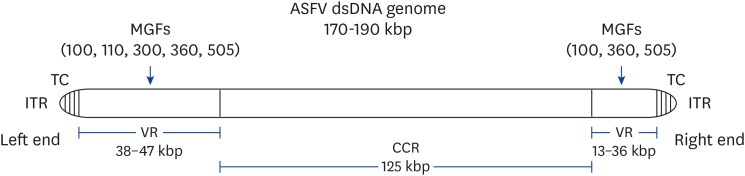
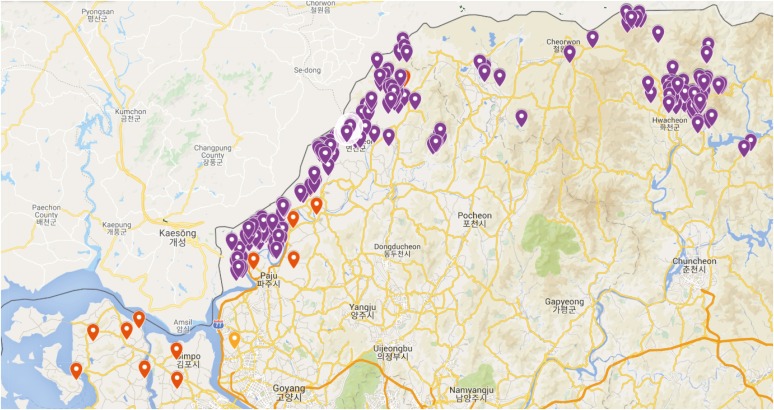
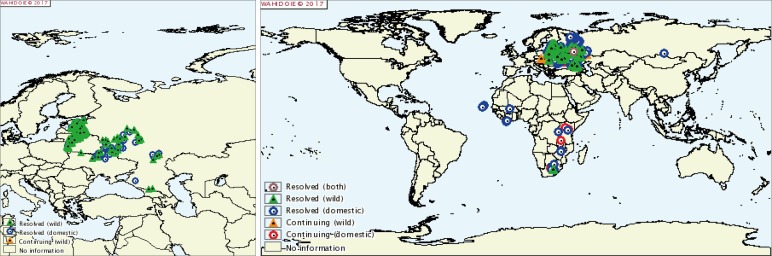
African swine fever (ASF), caused by the ASF virus, a member of the family, is one of the most important diseases in the swine industry due to its clinical and economic impacts. Since the first report of ASF a century ago, ample information has become available, but prevention and treatment measures are still inadequate. Two waves of epizootic outbreaks have occurred worldwide. While the first wave of the epizootic outbreak was controlled in most of the infected areas, the second wave is currently active in the European and Asian continents, causing severe economic losses to the pig industry. There are different patterns of spreading in the outbreaks between those in European and Asian countries. Prevention and control of ASF are very difficult due to the lack of available vaccines and effective therapeutic measures. However, recent outbreaks in South Korea have been successfully controlled on swine farms, although feral pigs are periodically being found to be positive for the ASF virus. Therefore, we would like to share our story regarding the preparation and application of control measures. The success in controlling ASF on farms in South Korea is largely due to the awareness and education of swine farmers and practitioners, the early detection of infected animals, the implementation of strict control policies by the government, and widespread sharing of information among stakeholders. Based on the experience gained from the outbreaks in South Korea, this review describes the current understanding of the ASF virus and its pathogenic mechanisms, epidemiology, and control.
非洲猪瘟(ASF)由非洲猪瘟病毒引起,该病毒属于[此处原文family后面应接具体病毒所属类别,你未提供完整信息]家族,因其对临床和经济的影响,是养猪业最重要的疾病之一。自一个世纪前首次报告非洲猪瘟以来,已有大量信息,但预防和治疗措施仍然不足。全球发生了两波疫情爆发。虽然第一波疫情在大多数感染地区得到了控制,但第二波目前在欧洲和亚洲大陆活跃,给养猪业造成了严重的经济损失。欧洲和亚洲国家疫情爆发的传播模式有所不同。由于缺乏可用疫苗和有效的治疗措施,非洲猪瘟的预防和控制非常困难。然而,韩国最近的疫情在养猪场已成功得到控制,尽管偶尔会发现野猪的非洲猪瘟病毒检测呈阳性。因此,我们想分享我们关于控制措施的准备和应用的经历。韩国养猪场成功控制非洲猪瘟很大程度上归功于养猪农民和从业者的意识和教育、感染动物的早期检测、政府严格控制政策的实施以及利益相关者之间广泛的信息共享。基于从韩国疫情中获得的经验,本综述描述了对非洲猪瘟病毒及其致病机制、流行病学和控制的当前认识。