Key Laboratory of Experimental Marine Biology, Center for Mega-Science, Institute of Oceanology, Chinese Academy of Sciences, Qingdao, 266071, China.
University of Chinese Academy of Sciences, Beijing, 10049, China.
Sci Rep. 2020 Apr 14;10(1):6353. doi: 10.1038/s41598-020-63122-4.
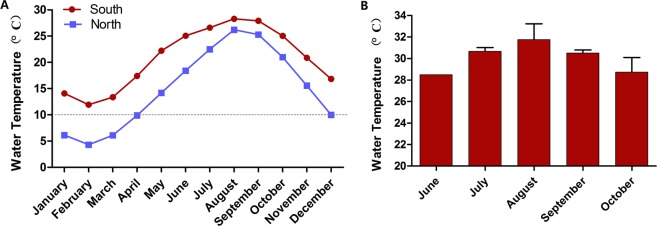
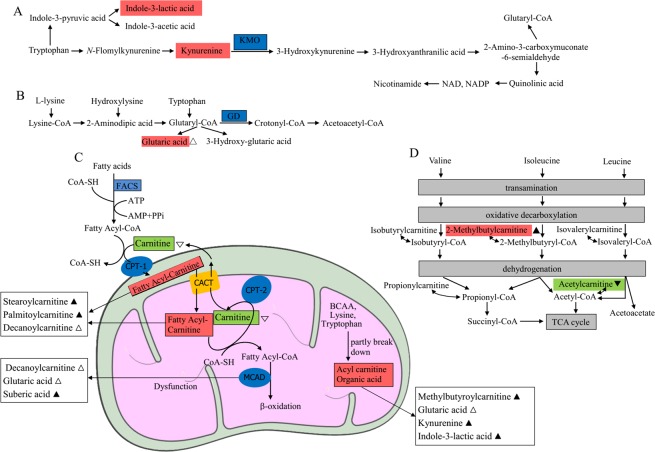
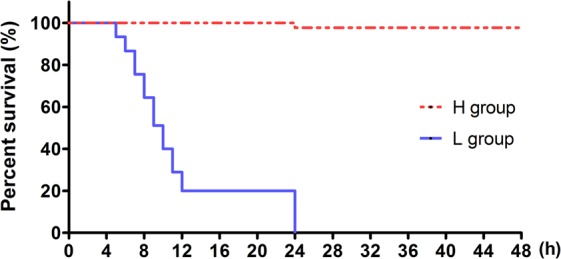
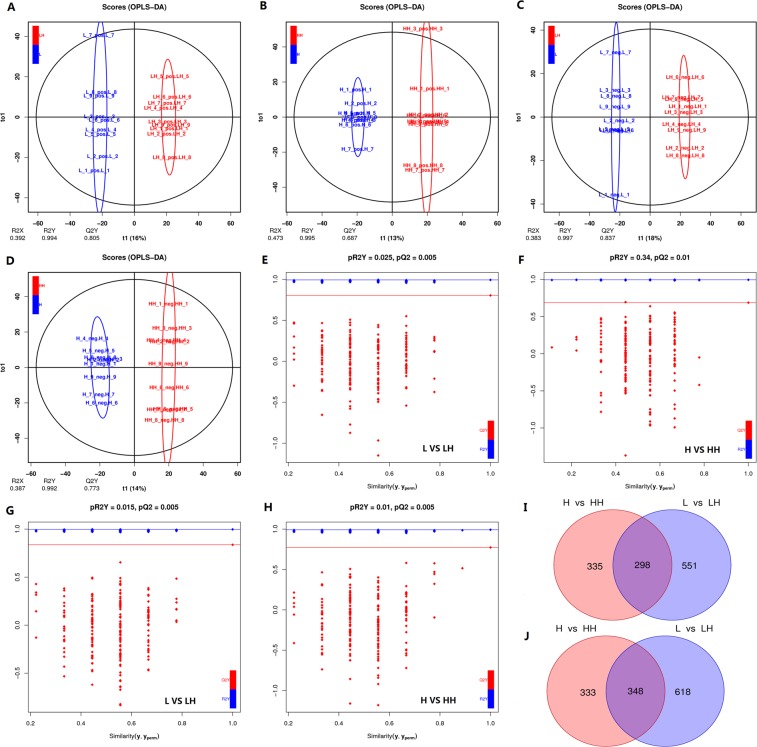
Temperature fluctuation is a key abiotic factor for the growth and survival of Pacific abalone Haliotis discus hannai, particularly during climate change. However, the physiological mechanism underlying the abalones' response to heat stress remains unknown. We sought to understand the metabolic adaptation mechanism of Pacific abalone to heat stress for further analyzing its heat tolerance capacity. For two groups experienced different acclimate temperature (10 °C and 30 °C for 62 days), the Pacific abalone juveniles displayed significantly different survival rates under 31 °C acute heat treatment. A total of 1815 and 1314 differential metabolites were identified from the 10 °C and 30 °C acclimate groups respectively, by comparing mass spectrometry data of the samples before and after heat stimulation. Heat stress led to mitochondrial failure, resulting in incomplete oxidative metabolism of amino acids and fatty acids in the mitochondria, and massive accumulation of unstable metabolic intermediates in cells. The 10 °C acclimated group accumulated more harmful substances after heat stimulation, provoking further stress responses and pathophysiological processes. In comparison, the 30 °C acclimated group showed stronger regulation capacity to produce beneficial substances for metabolic homeostasis. The findings provided insight into the heat response of marine animals, especially concerning mitochondrial metabolism.
温度波动是影响太平洋鲍(Haliotis discus hannai)生长和存活的关键非生物因素,尤其是在气候变化的情况下。然而,鲍对热应激的生理机制仍不清楚。我们试图了解太平洋鲍对热应激的代谢适应机制,以进一步分析其耐热能力。对于经历不同驯化温度(10°C 和 30°C 各 62 天)的两组太平洋鲍幼体,在 31°C 的急性热处理下,它们的存活率表现出显著差异。通过比较热刺激前后样品的质谱数据,分别从 10°C 和 30°C 驯化组中鉴定出 1815 种和 1314 种差异代谢物。热应激导致线粒体功能衰竭,导致线粒体中氨基酸和脂肪酸的不完全氧化代谢,以及细胞内不稳定代谢中间产物的大量积累。热刺激后,10°C 驯化组积累了更多的有害物质,引发了进一步的应激反应和病理生理过程。相比之下,30°C 驯化组显示出更强的调节能力,产生有利于代谢平衡的有益物质。这些发现为海洋动物的热应激反应提供了新的见解,特别是涉及线粒体代谢方面。