Tiryaki Tunc, Condé-Green Alexandra, Cohen Steven R, Canikyan Serli, Kocak Polen
Plastic Surgery Division, Cadogan Clinic, London, UK.
Division of Plastic Surgery, Department of General Surgery, Rutgers New Jersey Medical School, Newark, New Jersey.
Plast Reconstr Surg Glob Open. 2020 Feb 27;8(2):e2652. doi: 10.1097/GOX.0000000000002652. eCollection 2020 Feb.
Adipose stromal vascular fraction (SVF) isolation with enzymatic digestion is the gold standard, but is expensive, having practical and legal concerns. The alternative mechanical SVF isolation methods provide lower cell yields as they employ either centrifugation, emulsification, or digestion steps alone. We combined mechanical processing with buffer incubation and centrifugation steps into an isolation method called "mechanical digestion" and compared the cell yields with that of enzymatic digestion.
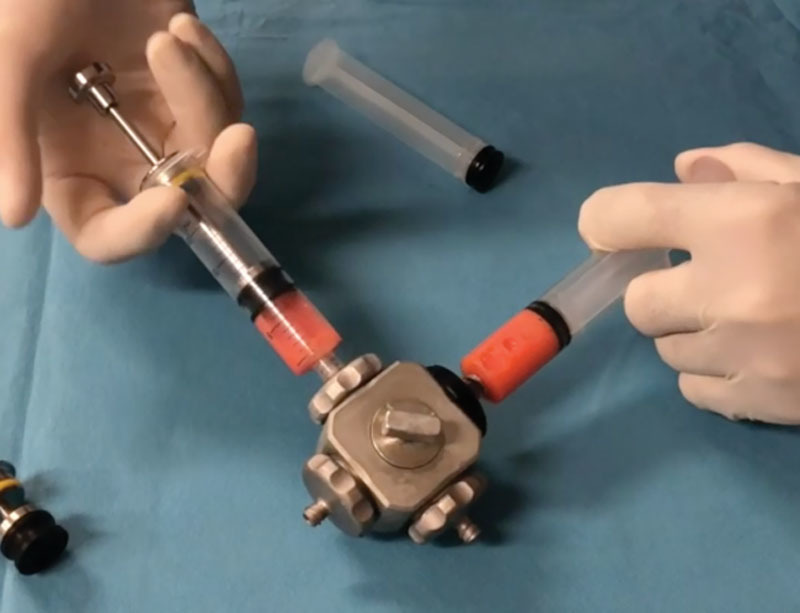
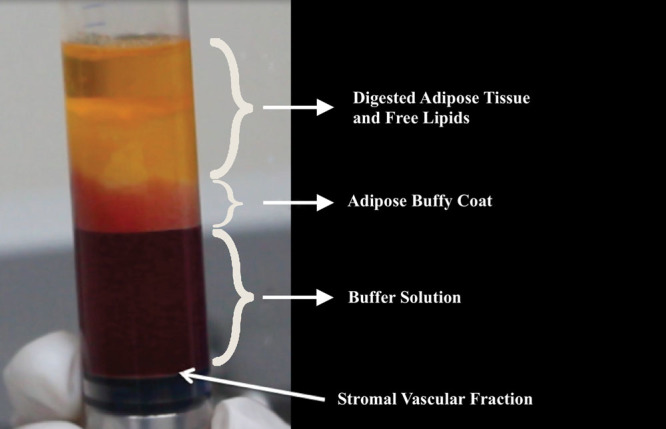
A total of 40-mL lipoaspirate was harvested from 35 women undergoing liposuction and was submitted to conventional enzymatic digestion for SVF isolation or mechanical digestion using a closed unit harnessing 3 ports with blades, followed by buffer incubation and centrifugation. Culture of the SVFs and flow cytometry were performed.
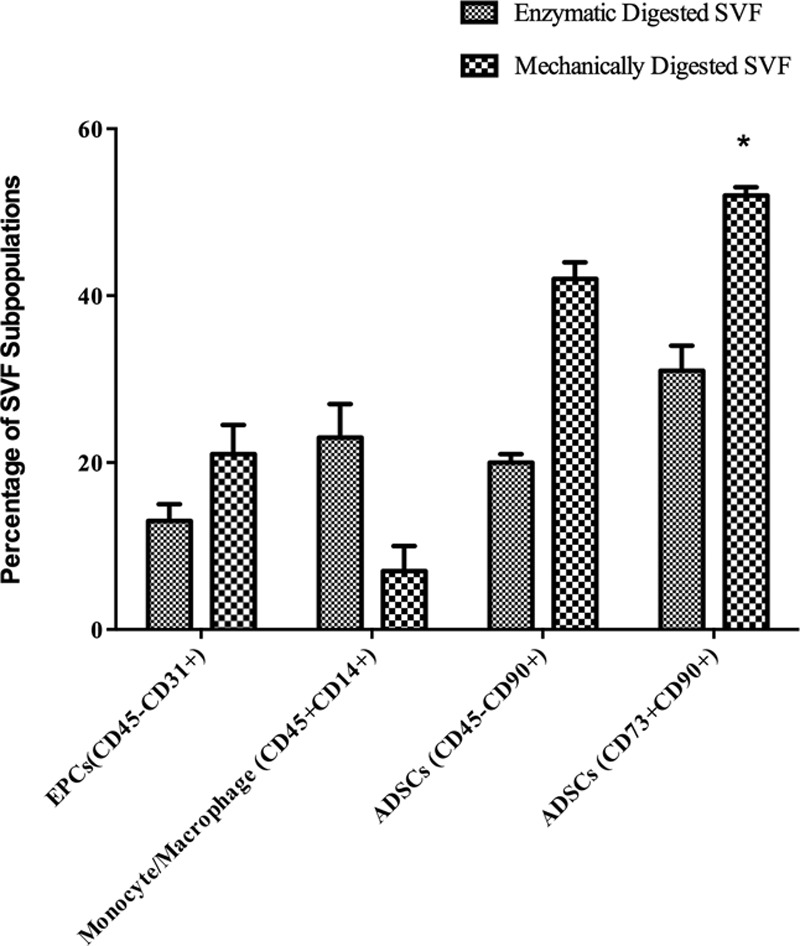
The SVF cell yield obtained by enzymatic digestion was significantly higher 3.38 × 10/mL (±3.63; n = 35) than that obtained by mechanical digestion 1.34 × 10/mL (±1.69; n = 35), = 0.015. The average cell viability was 82.86% ± 10.68 after enzymatic digestion versus 85.86% ± 5.74 after mechanical digestion, which was not significant. Mechanical digested SVF expressed 2-fold higher stem cell surface markers compared with enzymatically digested SVF. Mechanical digestion was less time consuming, cost effective, and did not require a specific laboratory environment.
Mechanically digested SVF was comparable to enzymatically digested SVF in terms of stromal cell composition and viability. With mechanical digestion, we can isolate 30%-50% SVF cells of that isolated with enzymatic digestion. Further studies are warranted to determine the clinical outcomes.
采用酶消化法分离脂肪组织的基质血管成分(SVF)是金标准,但成本高昂,且存在实际操作和法律方面的问题。其他机械性SVF分离方法因仅采用离心、乳化或消化步骤,细胞产量较低。我们将机械处理与缓冲液孵育及离心步骤相结合,形成一种名为“机械消化”的分离方法,并将细胞产量与酶消化法进行比较。
从35名接受抽脂手术的女性身上采集了共40毫升的脂肪抽吸物,将其用于常规酶消化以分离SVF,或使用一个带有3个带刀片端口的封闭装置进行机械消化,随后进行缓冲液孵育和离心。对分离出的SVF进行培养并进行流式细胞术检测。
酶消化法获得的SVF细胞产量为3.38×10⁶/毫升(±3.63;n = 35),显著高于机械消化法获得的产量1.34×10⁶/毫升(±1.69;n = 35),P = 0.015。酶消化后的平均细胞活力为82.86%±10.68,而机械消化后为85.86%±5.74,差异不显著。与酶消化的SVF相比,机械消化的SVF表达的干细胞表面标志物高2倍。机械消化耗时更少、成本效益更高,且不需要特定的实验室环境。
在基质细胞组成和活力方面,机械消化的SVF与酶消化的SVF相当。通过机械消化,我们能够分离出酶消化法所分离SVF细胞数量的30% - 50%。有必要开展进一步研究以确定临床效果。