Department of Cognitive and Brain Sciences, Ben-Gurion University of the Negev, Beer-Sheva, Israel.
Zlotowski Center for Neuroscience, Ben-Gurion University of the Negev, Beer-Sheva, Israel.
Hum Brain Mapp. 2020 Aug 15;41(12):3235-3252. doi: 10.1002/hbm.25011. Epub 2020 Apr 22.
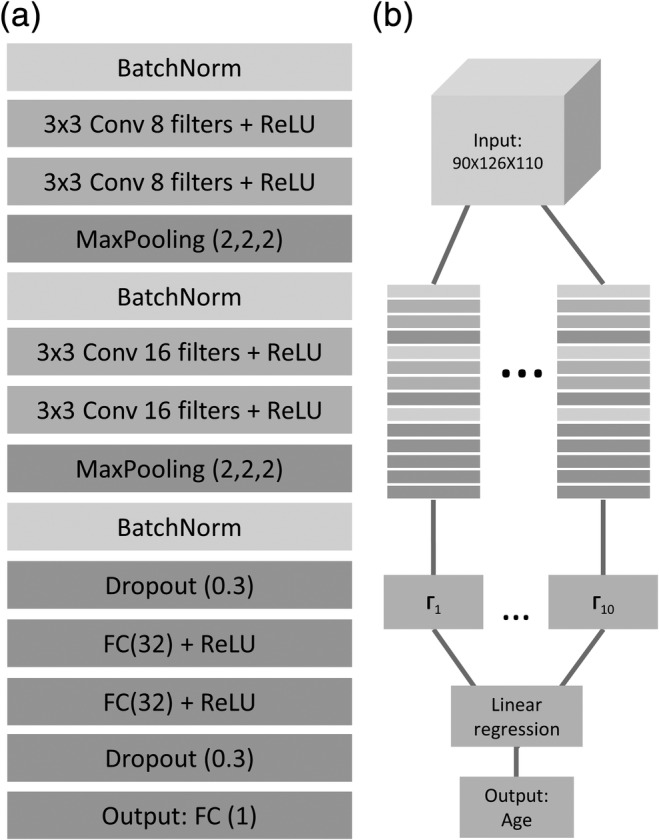
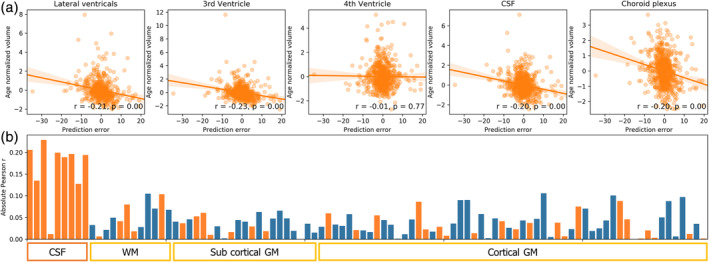
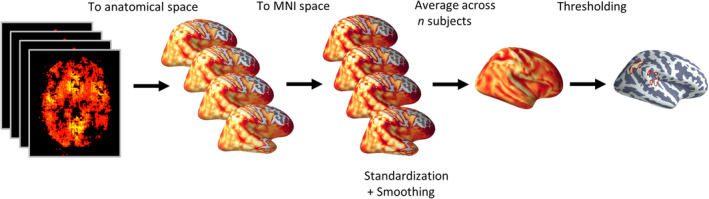
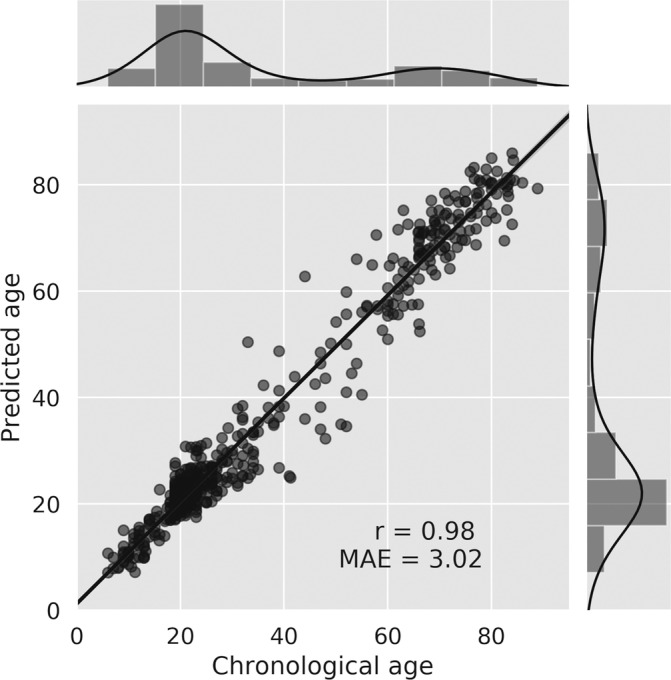
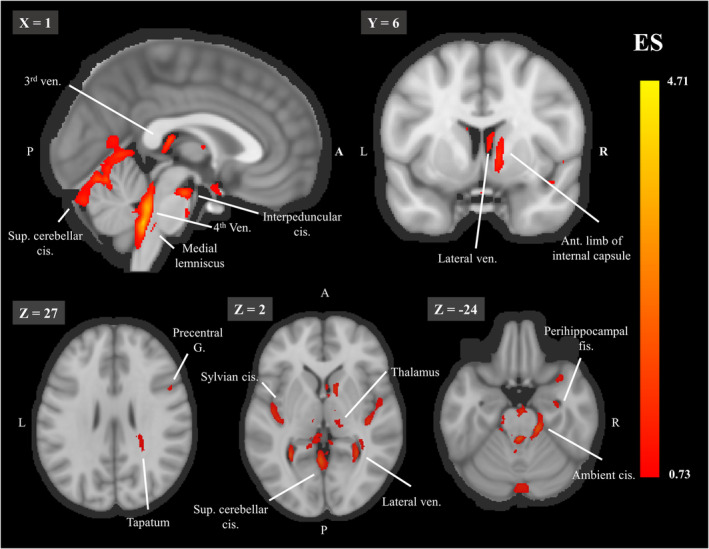
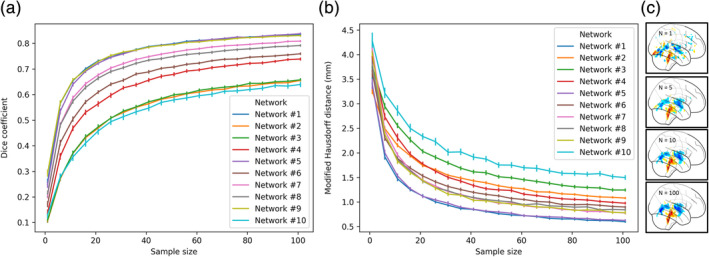
We present a Deep Learning framework for the prediction of chronological age from structural magnetic resonance imaging scans. Previous findings associate increased brain age with neurodegenerative diseases and higher mortality rates. However, the importance of brain age prediction goes beyond serving as biomarkers for neurological disorders. Specifically, utilizing convolutional neural network (CNN) analysis to identify brain regions contributing to the prediction can shed light on the complex multivariate process of brain aging. Previous work examined methods to attribute pixel/voxel-wise contributions to the prediction in a single image, resulting in "explanation maps" that were found noisy and unreliable. To address this problem, we developed an inference scheme for combining these maps across subjects, thus creating a population-based, rather than a subject-specific map. We applied this method to a CNN ensemble trained on predicting subjects' age from raw T1 brain images in a lifespan sample of 10,176 subjects. Evaluating the model on an untouched test set resulted in mean absolute error of 3.07 years and a correlation between chronological and predicted age of r = 0.98. Using the inference method, we revealed that cavities containing cerebrospinal fluid, previously found as general atrophy markers, had the highest contribution for age prediction. Comparing maps derived from different models within the ensemble allowed to assess differences and similarities in brain regions utilized by the model. We showed that this method substantially increased the replicability of explanation maps, converged with results from voxel-based morphometry age studies and highlighted brain regions whose volumetric variability correlated the most with the prediction error.
我们提出了一种深度学习框架,用于从结构磁共振成像扫描中预测年龄。先前的研究结果表明,大脑年龄的增加与神经退行性疾病和更高的死亡率有关。然而,大脑年龄预测的重要性不仅在于作为神经障碍的生物标志物。具体来说,利用卷积神经网络(CNN)分析来识别有助于预测的大脑区域,可以揭示大脑老化这一复杂的多变量过程。以前的工作研究了在单个图像中归因于像素/体素贡献的方法,从而产生了“解释图”,这些图被发现噪声大且不可靠。为了解决这个问题,我们开发了一种跨受试者结合这些图的推理方案,从而创建了基于人群的图谱,而不是基于受试者的图谱。我们将这种方法应用于一个从 10176 名受试者的寿命样本中的原始 T1 脑图像预测受试者年龄的 CNN 集成中进行训练。在一个未触及的测试集中评估该模型,得到的平均绝对误差为 3.07 岁,与实际年龄的相关性为 r = 0.98。使用推理方法,我们发现包含脑脊液的腔,先前被发现是一般萎缩标志物,对年龄预测的贡献最大。比较集合中不同模型的图谱可以评估模型所利用的大脑区域的差异和相似性。我们表明,这种方法大大提高了解释图的可重复性,与基于体素的形态计量学年龄研究的结果一致,并突出了与预测误差相关性最强的大脑区域。