Mangal Utkarsh, Seo Ji-Young, Yu Jaehun, Kwon Jae-Sung, Choi Sung-Hwan
Department of Orthodontics, Institute of Craniofacial Deformity, Yonsei University College of Dentistry, 50-1 Yonsei-ro, Seodaemun-gu, Seoul 03722, Korea.
BK21 PLUS Project, Yonsei University College of Dentistry, Seoul 03722, Korea.
Nanomaterials (Basel). 2020 Apr 26;10(5):827. doi: 10.3390/nano10050827.
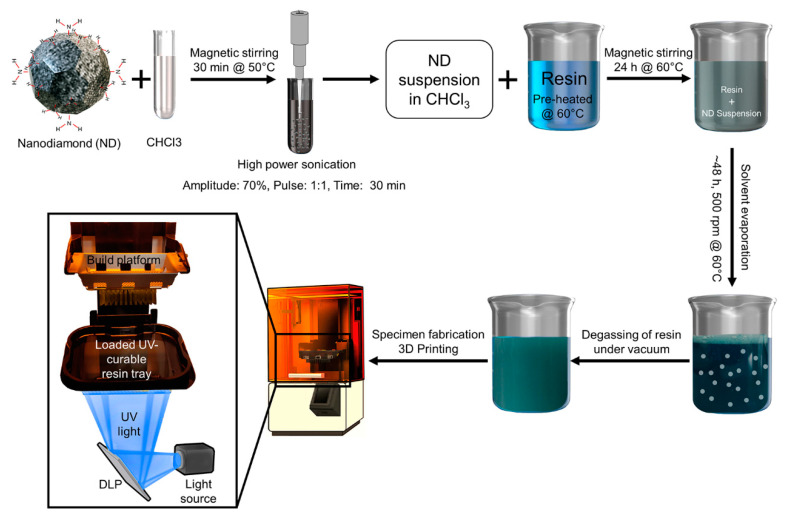
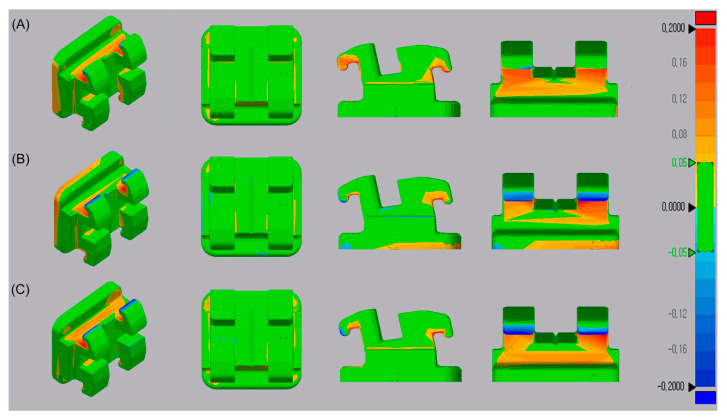
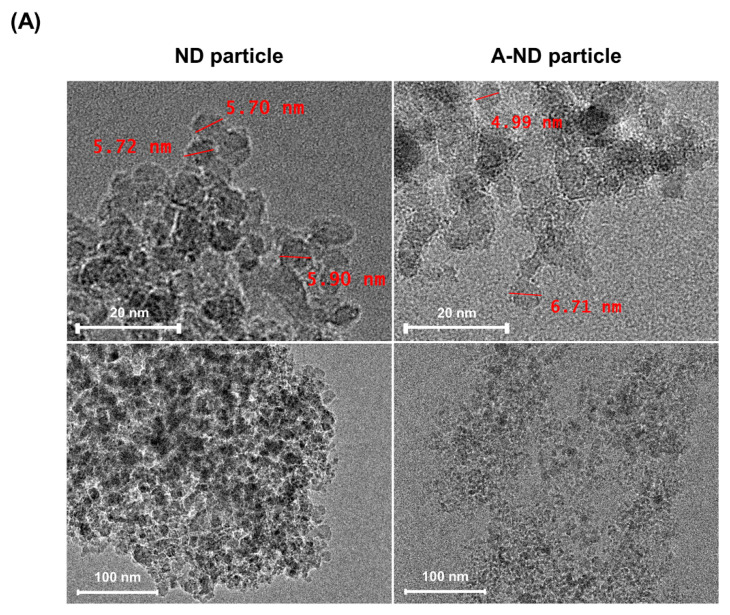
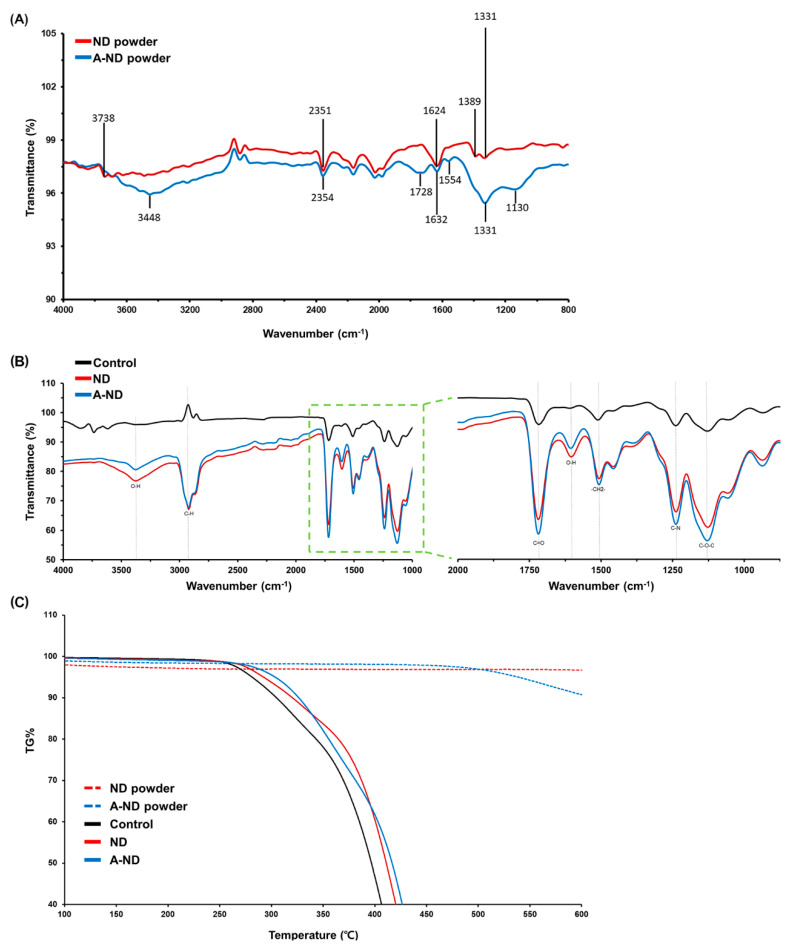
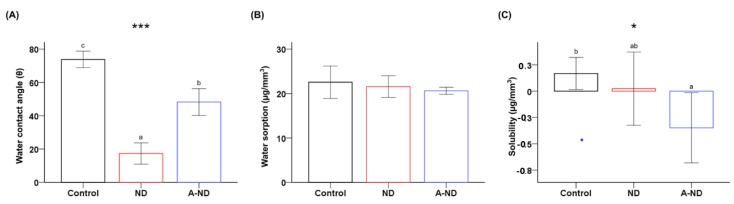
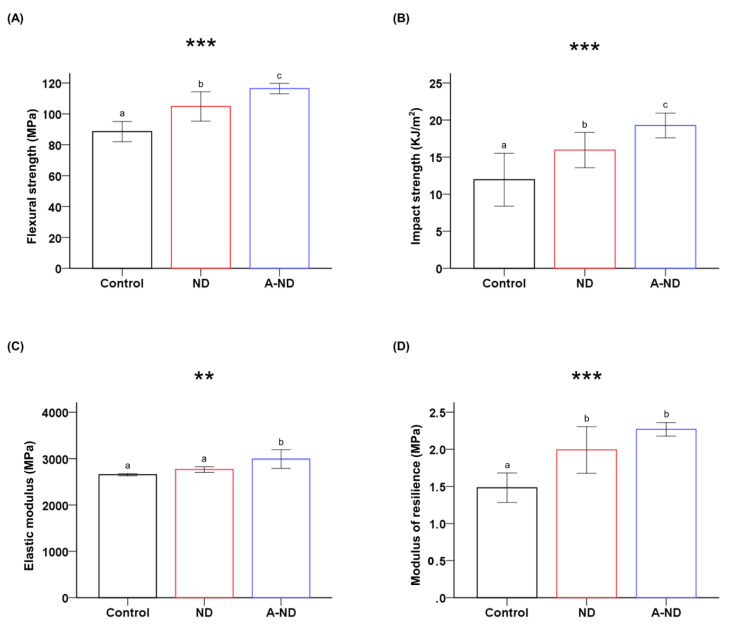
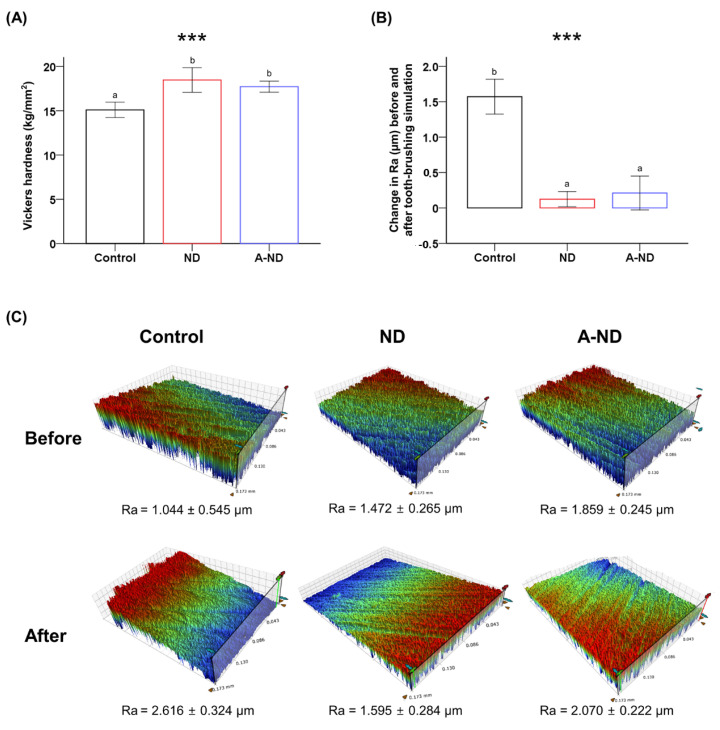
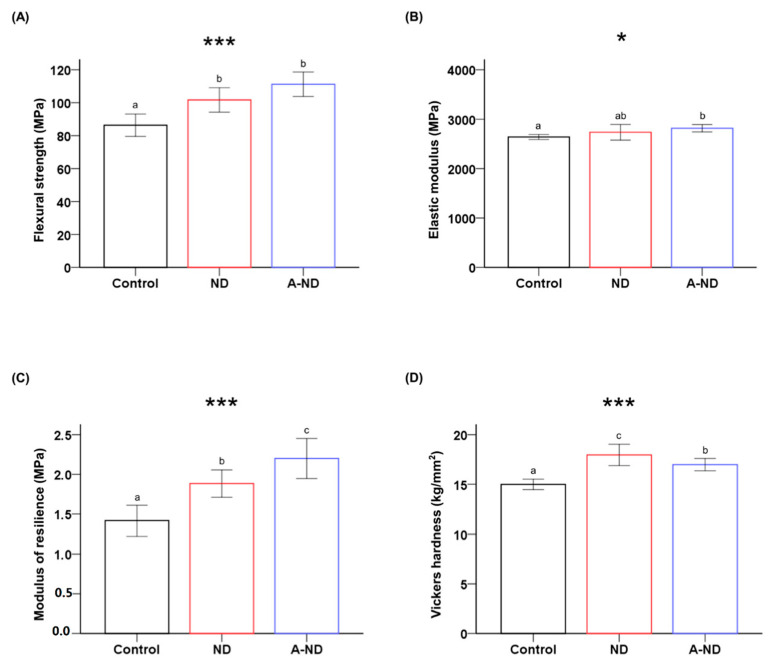
The creation of clinically patient-specific 3D-printed biomedical appliances that can withstand the physical stresses of the complex biological environment is an important objective. To that end, this study aimed to evaluate the efficacy of aminated nanodiamonds (A-NDs) as nanofillers in biological-grade acrylate-based 3D-printed materials. Solution-based mixing was used to incorporate 0.1 wt% purified nanodiamond (NDs) and A-NDs into UV-polymerized poly(methyl methacrylate) (PMMA). The ND and A-ND nanocomposites showed significantly lower water contact angles ( < 0.001) and solubilities ( < 0.05) compared to those of the control. Both nanocomposites showed markedly improved mechanical properties, with the A-ND-containing nanocomposite showing a statistically significant increase in the flexural strength ( < 0.001), elastic modulus ( < 0.01), and impact strength ( < 0.001) compared to the control and ND-containing groups. The Vickers hardness and wear-resistance values of the A-ND-incorporated material were significantly higher ( < 0.001) than those of the control and were comparable to the values observed for the ND-containing group. In addition, trueness analysis was used to verify that 3D-printed orthodontic brackets prepared with the A-ND- and ND-nanocomposites exhibited no significant differences in accuracy. Hence, we conclude that the successful incorporation of 0.1 wt% A-ND in UV-polymerized PMMA resin significantly improves the mechanical properties of the resin for the additive manufacturing of precisive 3D-printed biomedical appliances.
制造能够承受复杂生物环境物理应力的临床患者特异性3D打印生物医学器械是一个重要目标。为此,本研究旨在评估胺化纳米金刚石(A-NDs)作为纳米填料在生物级丙烯酸酯基3D打印材料中的功效。采用基于溶液的混合方法,将0.1 wt%的纯化纳米金刚石(NDs)和A-NDs加入到紫外线聚合的聚甲基丙烯酸甲酯(PMMA)中。与对照组相比,ND和A-ND纳米复合材料的水接触角(<0.001)和溶解度(<0.05)显著降低。两种纳米复合材料的机械性能均有显著改善,与对照组和含ND组相比,含A-ND的纳米复合材料的弯曲强度(<0.001)、弹性模量(<0.01)和冲击强度(<0.001)有统计学显著增加。含A-ND材料的维氏硬度和耐磨性值显著高于对照组(<0.001),与含ND组观察到的值相当。此外,采用精度分析来验证用A-ND和ND纳米复合材料制备的3D打印正畸托槽在精度上没有显著差异。因此,我们得出结论,在紫外线聚合的PMMA树脂中成功加入0.1 wt%的A-ND可显著改善树脂的机械性能,用于精密3D打印生物医学器械的增材制造。