Jimi Shiro, Jaguparov Alexandr, Nurkesh Ayan, Sultankulov Bolat, Saparov Arman
Central Laboratory for Pathology and Morphology, Faculty of Medicine, Fukuoka University, Fukuoka, Japan.
Department of Medicine, School of Medicine, Nazarbayev University, Nur-Sultan, Kazakhstan.
Front Bioeng Biotechnol. 2020 Apr 17;8:345. doi: 10.3389/fbioe.2020.00345. eCollection 2020.
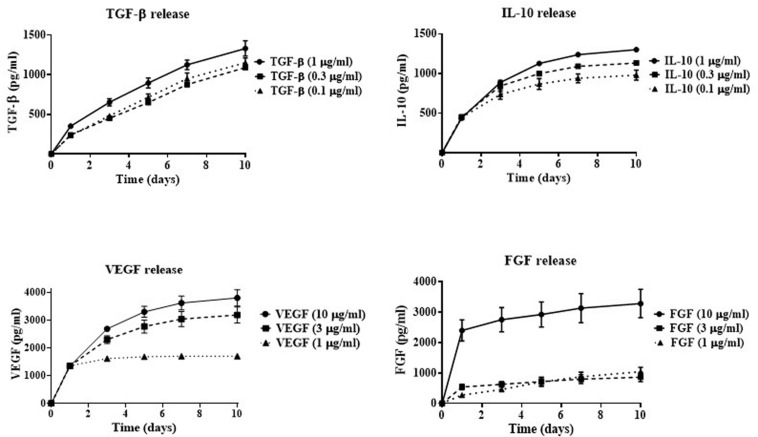
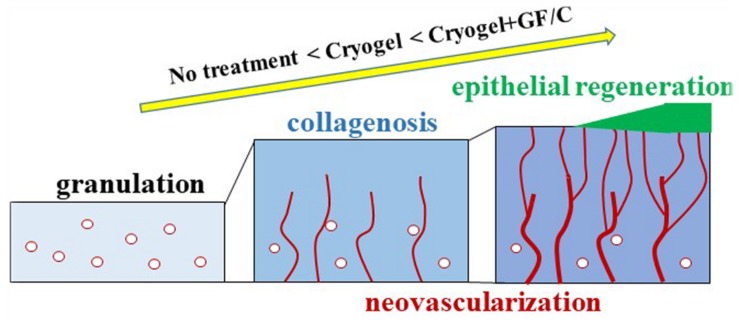
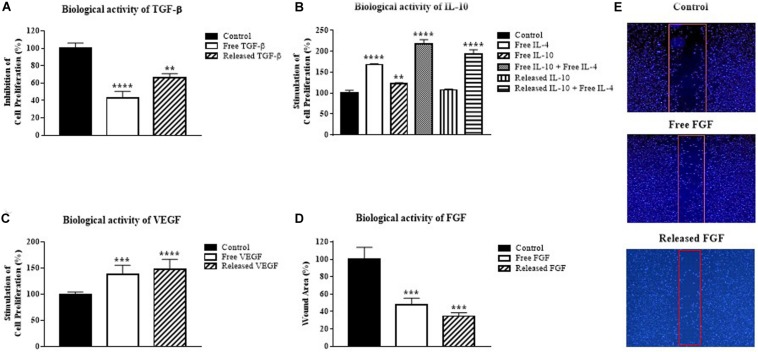
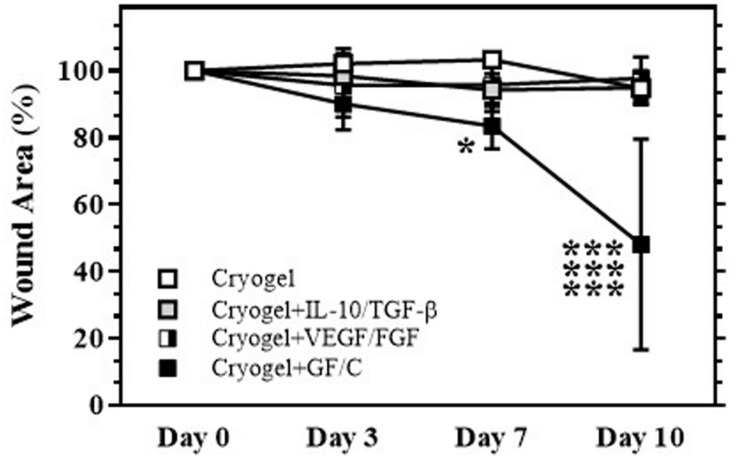
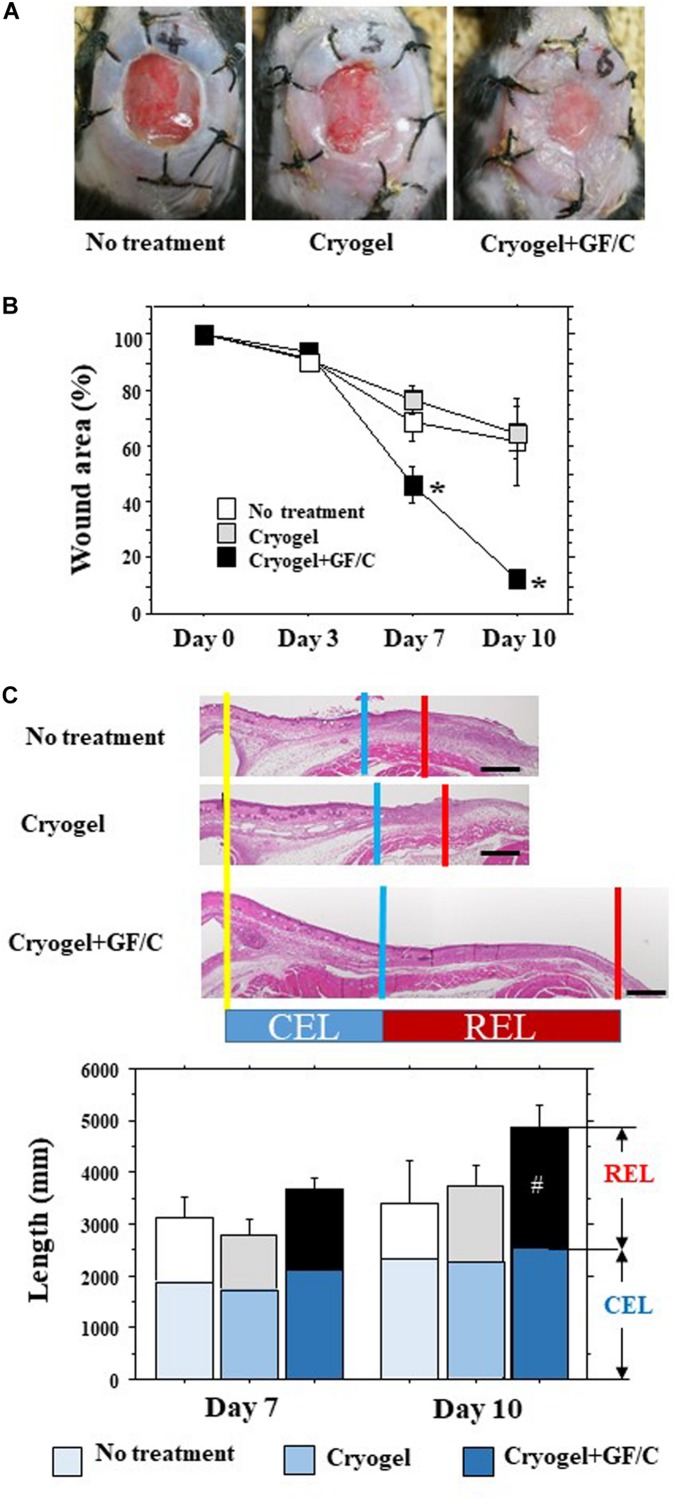
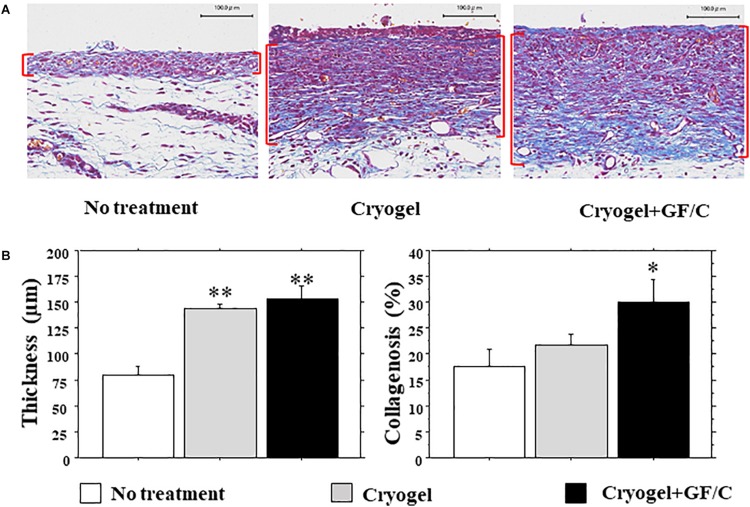
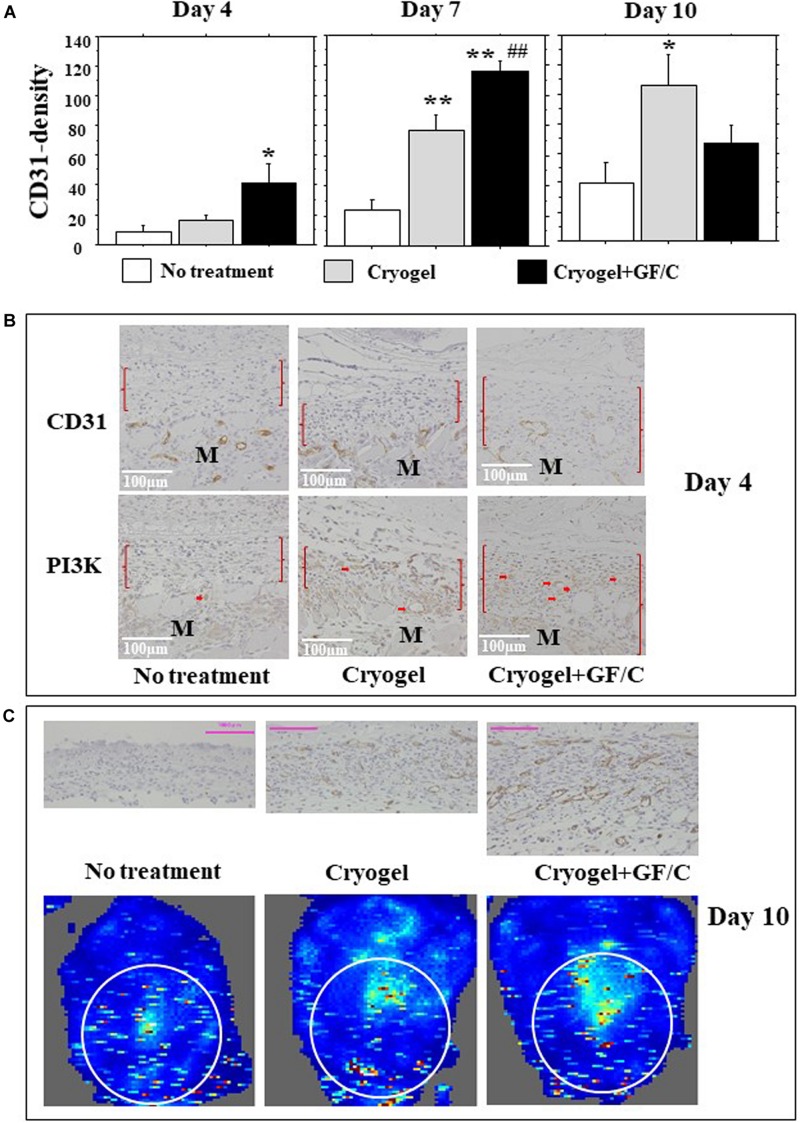
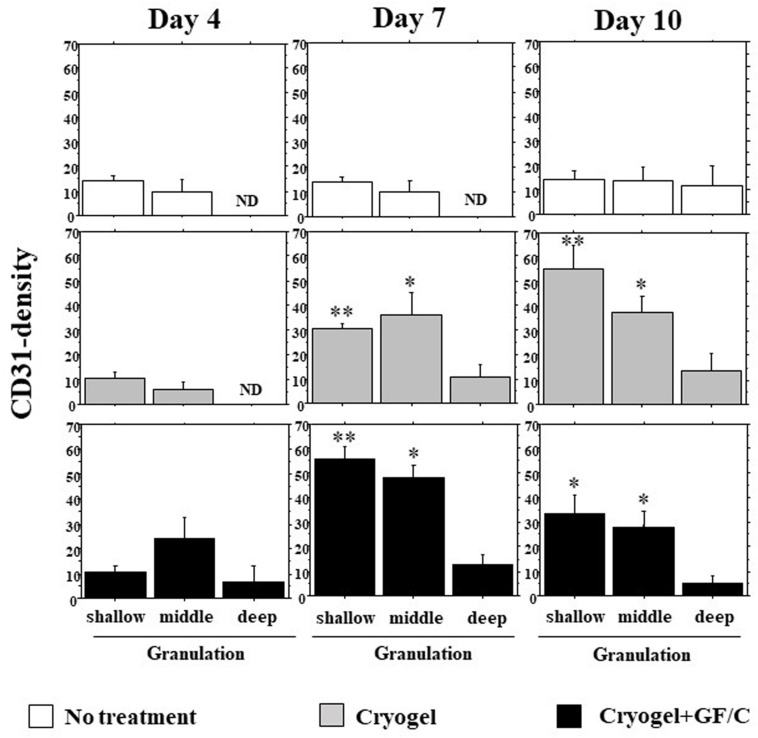
Growth factors and cytokines that are secreted by cells play a crucial role in the complex physiological reaction to tissue injury. The ability to spatially and temporally control their actions to maximize regenerative benefits and minimize side effects will help accelerate wound healing and improve tissue regeneration. In this study, the sequential targeted delivery of growth factor/cytokine combinations with regulatory functions on inflammation and tissue regeneration was examined using an internal splint wound healing model. Four examined growth factors and cytokines were effectively incorporated into a novel chitosan-based cryogel, which offered a controlled and sustained release of all factors while maintaining their biological activities. The cryogels incorporated with inflammation modulatory factors (IL-10 and TGF-β) and with wound healing factors (VEGF and FGF) were placed on the wound surface on day 0 and day 3, respectively, after wound initiation. Although wound area gradually decreased in all groups over time, the area in the cryogel group with growth factor/cytokine combinations was significantly reduced starting on day 7 and reached about 10% on day 10, as compared to 60-65% in the control groups. Sequential delivery of inflammation modulatory and wound healing factors enhanced granulation tissue formation, as well as functional neovascularization, leading to regenerative epithelialization. Collectively, the chitosan-based cryogel can serve as a controlled release system for sequential delivery of several growth factors and cytokines to accelerate tissue repair and regeneration.
细胞分泌的生长因子和细胞因子在对组织损伤的复杂生理反应中起着关键作用。在空间和时间上控制它们的作用以最大化再生效益并最小化副作用的能力,将有助于加速伤口愈合和改善组织再生。在本研究中,使用内部夹板伤口愈合模型,研究了对炎症和组织再生具有调节功能的生长因子/细胞因子组合的顺序靶向递送。四种检测的生长因子和细胞因子被有效地整合到一种新型的基于壳聚糖的冷冻凝胶中,该冷冻凝胶能在保持所有因子生物活性的同时实现所有因子的可控和持续释放。分别在伤口形成后的第0天和第3天,将含有炎症调节因子(IL-10和TGF-β)和伤口愈合因子(VEGF和FGF)的冷冻凝胶置于伤口表面。尽管所有组的伤口面积随时间逐渐减小,但与对照组60-65%的伤口面积相比,含有生长因子/细胞因子组合的冷冻凝胶组的伤口面积从第7天开始显著减小,在第10天达到约10%。炎症调节因子和伤口愈合因子的顺序递送增强了肉芽组织形成以及功能性新血管形成,从而导致再生上皮形成。总的来说,基于壳聚糖的冷冻凝胶可作为一种控释系统,用于顺序递送多种生长因子和细胞因子,以加速组织修复和再生。