MMH Laboratories, Electrical Engineering, Computer Electrical Mathematical Science and Engineering Division, King Abdullah University of Science and Technology (KAUST), Thuwal 23955-6900, Saudi Arabia.
EECS, University of California, Berkeley, California 94720, United States.
ACS Nano. 2020 Jun 23;14(6):7659-7665. doi: 10.1021/acsnano.0c03976. Epub 2020 May 22.
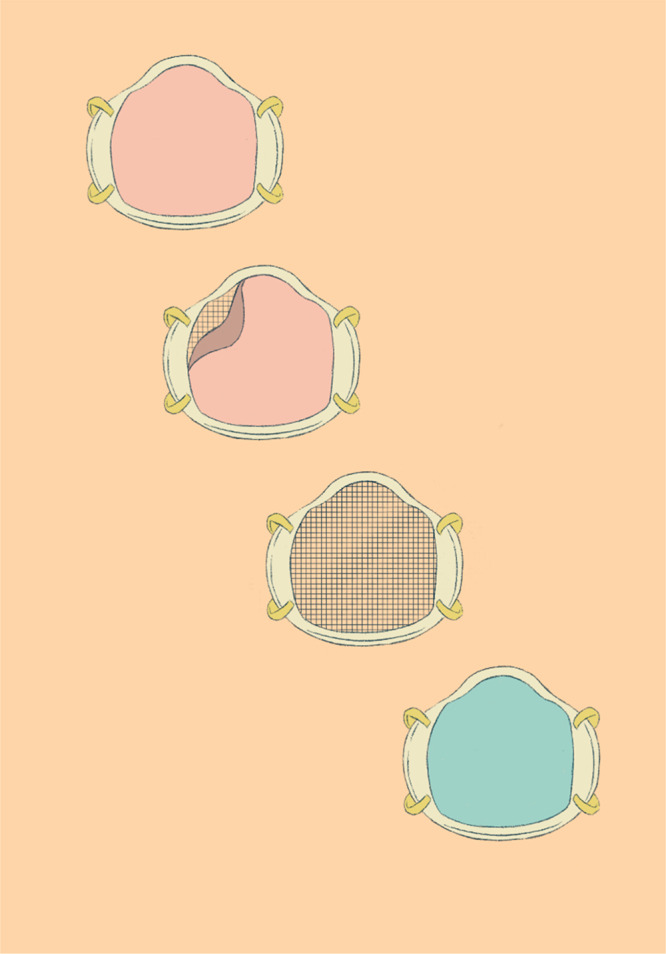
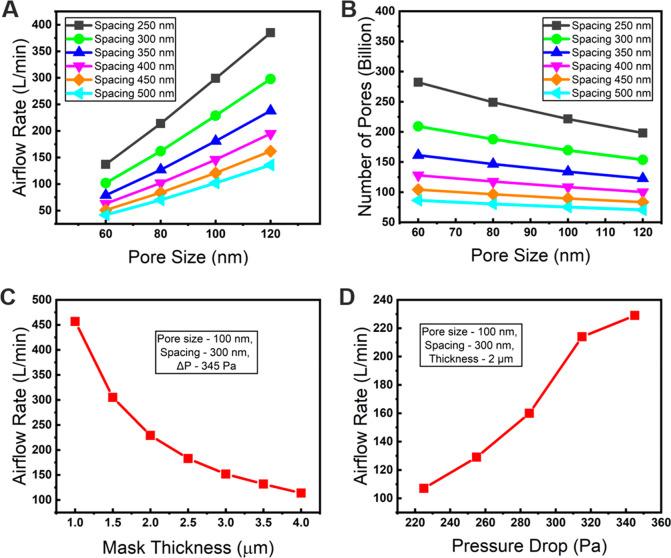
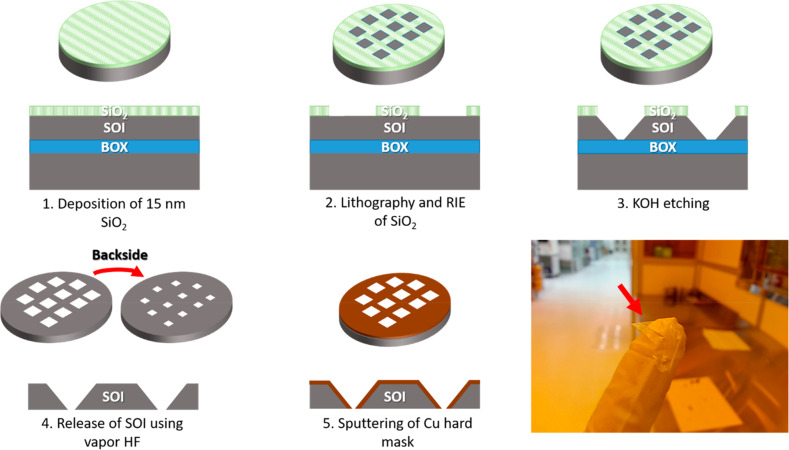
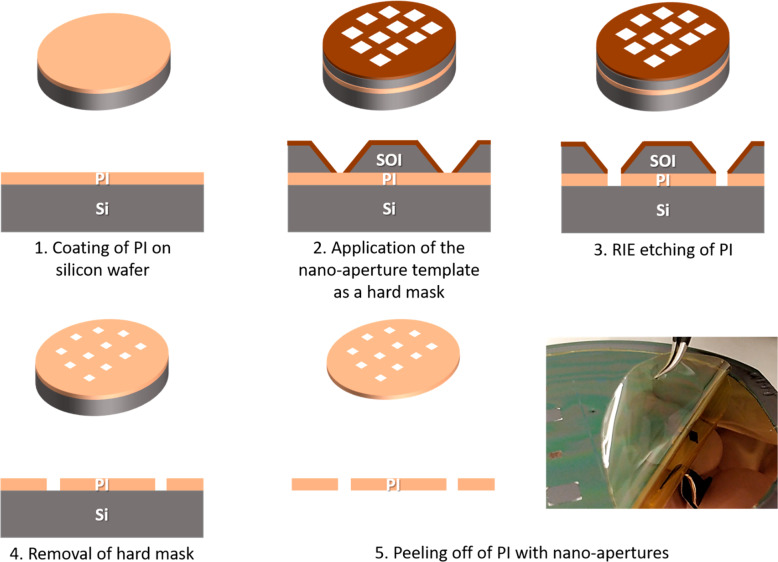
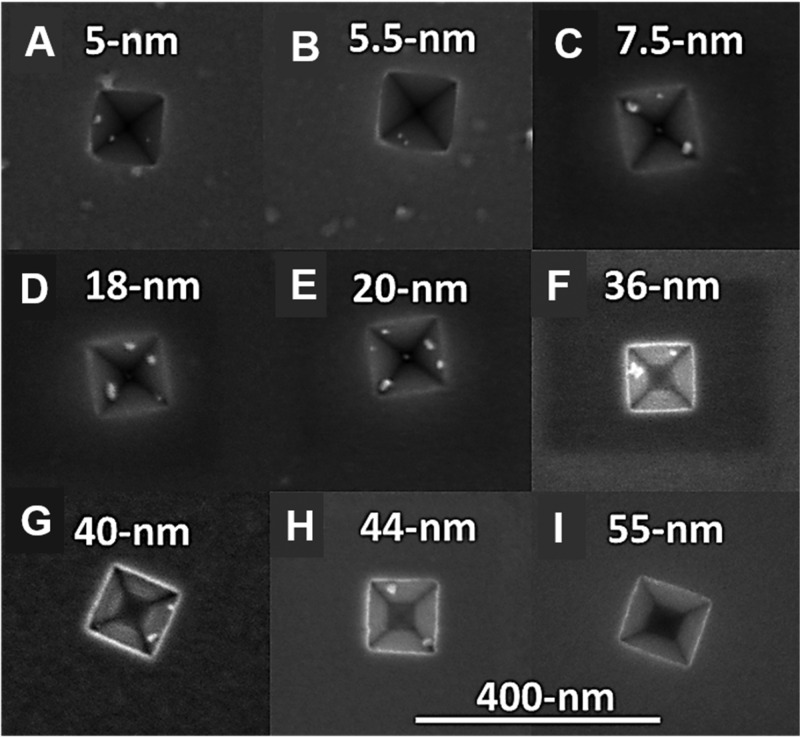
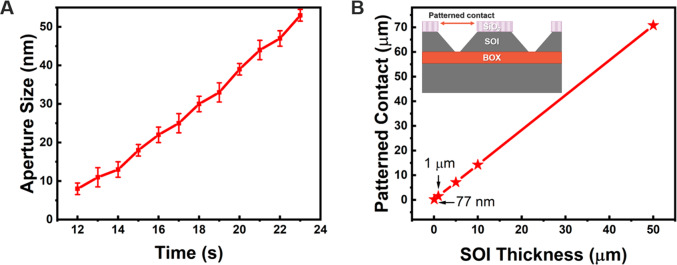
Since the outbreak of the severe respiratory disease caused by the novel coronavirus (COVID-19), the use of face masks has become ubiquitous worldwide to control the rapid spread of this pandemic. As a result, the world is currently facing a face mask shortage, and some countries have placed limits on the number of masks that can be bought by each person. Although the surgical grade N95 mask provides the highest level of protection currently available, its filtration efficiency for sub-300 nm particles is around 85% due to its wider pore size (∼300 nm). Because the COVID-19 virus shows a diameter of around 65-125 nm, there is a need for developing more efficient masks. To overcome these issues, we demonstrate the development of a flexible, nanoporous membrane to achieve a reusable N95 mask with a replaceable membrane and enhanced filtration efficiency. We first developed a flexible nanoporous Si-based template on a silicon-on-insulator wafer using KOH etching and then used the template as a hard mask during a reactive ion etching process to transfer the patterns onto a flexible and lightweight (<0.12 g) polymeric membrane. Pores with sizes down to 5 nm were achieved with a narrow distribution. Theoretical calculations show that airflow rates above 85 L/min are possible through the mask, which confirms its breathability over a wide range of pore sizes, densities, membrane thicknesses, and pressure drops. Finally, the membrane is intrinsically hydrophobic, which contributes to antifouling and self-cleaning as a result of droplets rolling and sliding on the inclined mask area.
自新型冠状病毒(COVID-19)引发的严重呼吸道疾病爆发以来,为了控制这一流行病的迅速传播,全世界都普遍使用口罩。因此,目前世界面临着口罩短缺的问题,一些国家对每人可购买的口罩数量进行了限制。虽然医用级 N95 口罩提供了目前可用的最高防护水平,但由于其孔径较大(约 300nm),其对亚 300nm 颗粒的过滤效率约为 85%。由于 COVID-19 病毒的直径约为 65-125nm,因此需要开发更高效的口罩。为了解决这些问题,我们展示了一种灵活的纳米多孔膜的开发,以实现具有可更换膜和增强过滤效率的可重复使用的 N95 口罩。我们首先使用 KOH 刻蚀在绝缘体上硅晶片上开发了一种灵活的纳米多孔 Si 基模板,然后在反应离子刻蚀过程中使用该模板作为硬掩模,将图案转移到灵活且轻便的(<0.12g)聚合物膜上。实现了尺寸小至 5nm 的窄分布孔。理论计算表明,通过口罩的空气流量率超过 85L/min,这证实了其在广泛的孔径、密度、膜厚度和压降范围内的透气性。最后,该膜本质上是疏水的,这有助于防污和自清洁,因为液滴在倾斜的口罩区域上滚动和滑动。