Department of Biomedical Engineering, University of California, Davis, Davis, CA, 95616, USA.
School of Chemical and Biomedical Engineering, Nanyang Technological University, 70 Nanyang Drive, Block N1.3, Singapore, 637457, Singapore.
Nat Commun. 2020 Jun 19;11(1):3138. doi: 10.1038/s41467-020-16900-7.
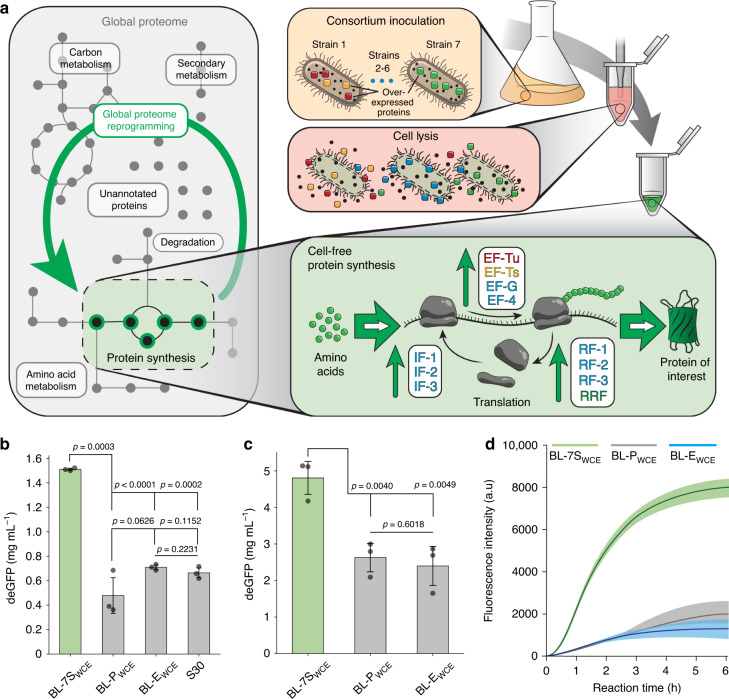
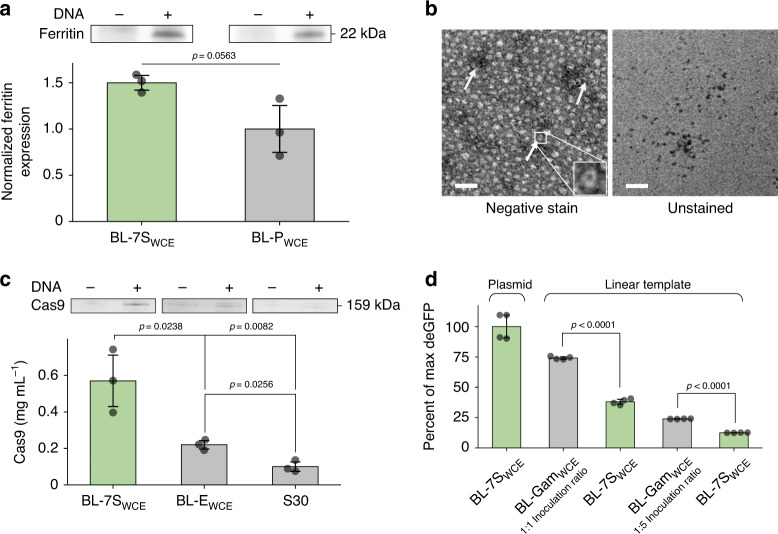
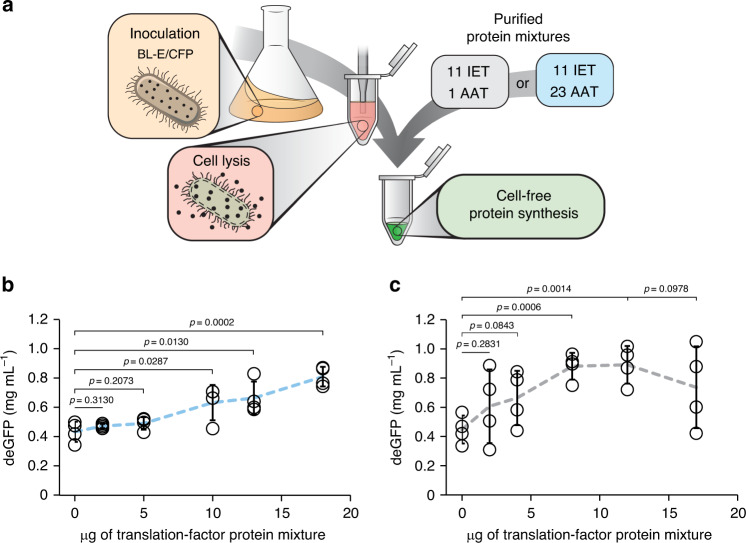
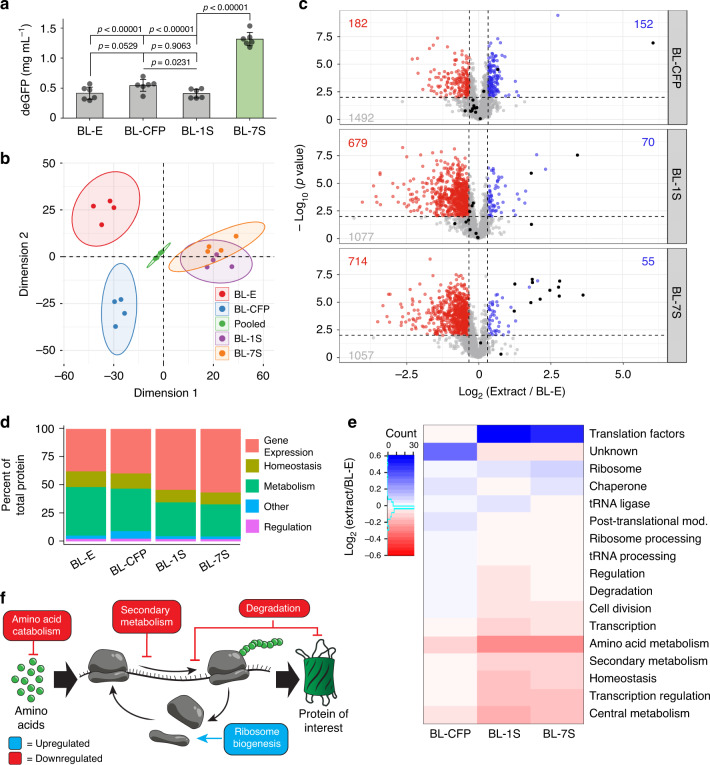
Synthetic biology has focused on engineering genetic modules that operate orthogonally from the host cells. A synthetic biological module, however, can be designed to reprogram the host proteome, which in turn enhances the function of the synthetic module. Here, we apply this holistic synthetic biology concept to the engineering of cell-free systems by exploiting the crosstalk between metabolic networks in cells, leading to a protein environment more favorable for protein synthesis. Specifically, we show that local modules expressing translation machinery can reprogram the bacterial proteome, changing the expression levels of more than 700 proteins. The resultant feedback generates a cell-free system that can synthesize fluorescent reporters, protein nanocages, and the gene-editing nuclease Cas9, with up to 5-fold higher expression level than classical cell-free systems. Our work demonstrates a holistic approach that integrates synthetic and systems biology concepts to achieve outcomes not possible by only local, orthogonal circuits.
合成生物学专注于工程遗传模块,使其与宿主细胞正交运作。然而,合成生物学模块可以被设计来重新编程宿主蛋白质组,这反过来又增强了合成模块的功能。在这里,我们通过利用细胞代谢网络之间的串扰,将这种整体合成生物学概念应用于无细胞系统的工程中,从而产生更有利于蛋白质合成的蛋白质环境。具体来说,我们表明,表达翻译机制的局部模块可以重新编程细菌蛋白质组,改变 700 多种蛋白质的表达水平。由此产生的反馈生成了一种无细胞系统,可以合成荧光报告基因、蛋白质纳米笼和基因编辑核酸酶 Cas9,其表达水平比经典无细胞系统高 5 倍。我们的工作展示了一种整体方法,它集成了合成生物学和系统生物学的概念,以实现仅通过局部、正交电路不可能实现的结果。