Department of Materials Science and Engineering, Massachusetts Institute of Technology, Cambridge, MA, USA.
Research Laboratory of Electronics, Massachusetts Institute of Technology, Cambridge, MA, USA.
Nat Nanotechnol. 2020 Aug;15(8):690-697. doi: 10.1038/s41565-020-0701-x. Epub 2020 Jun 29.
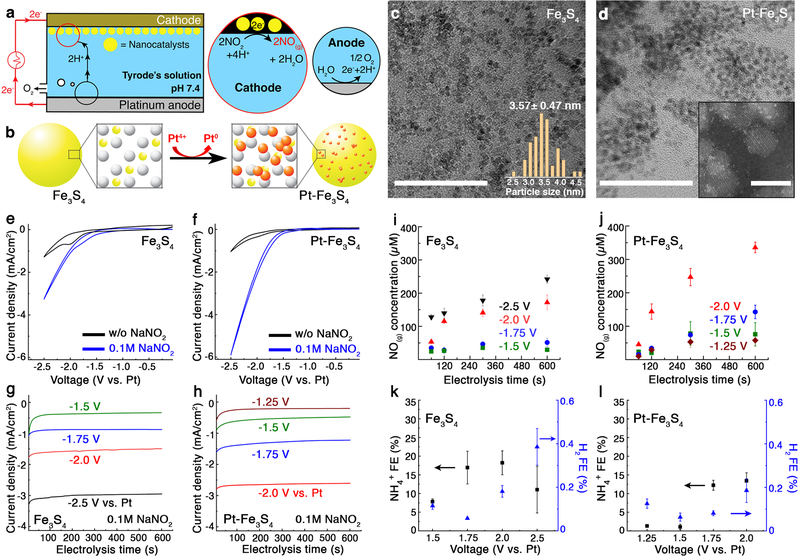
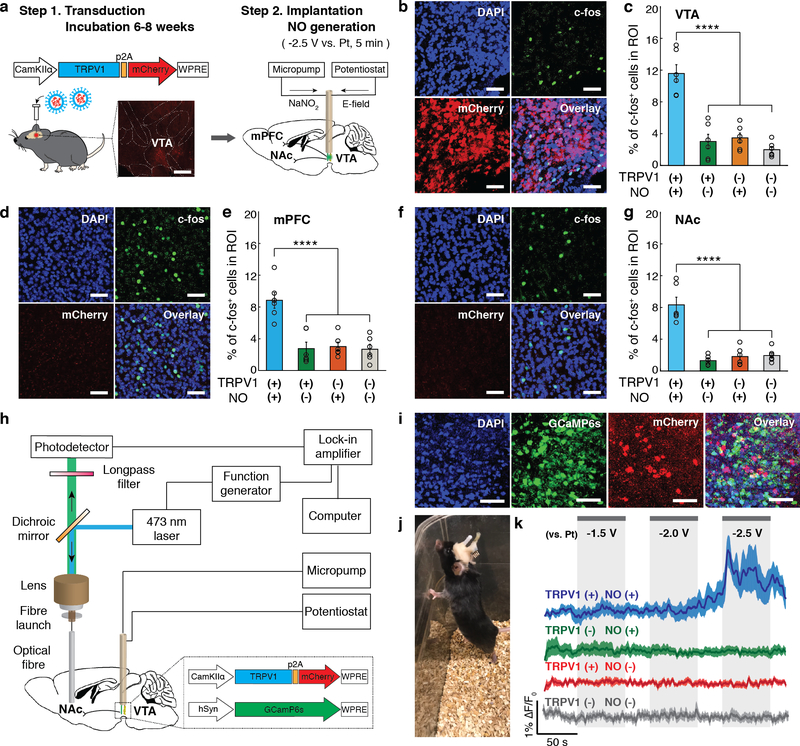
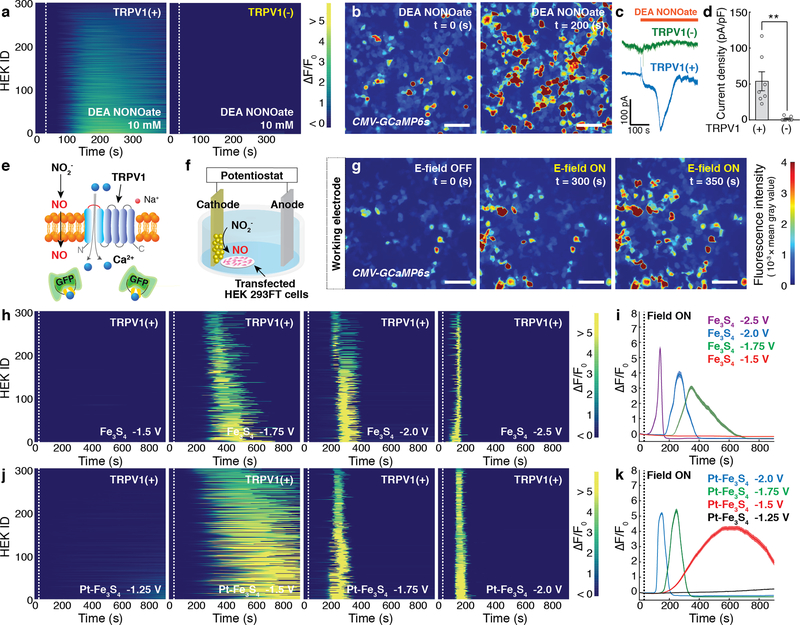
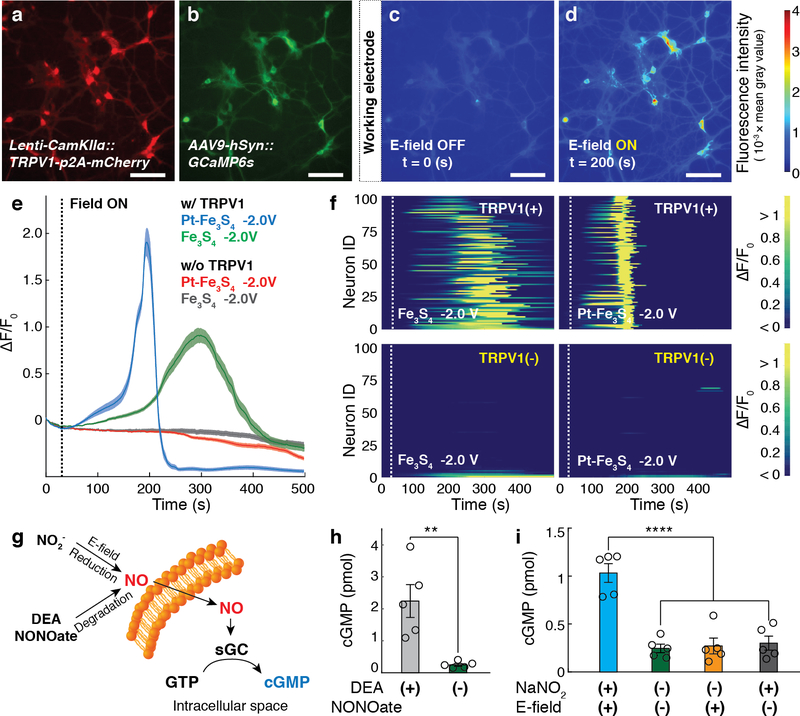
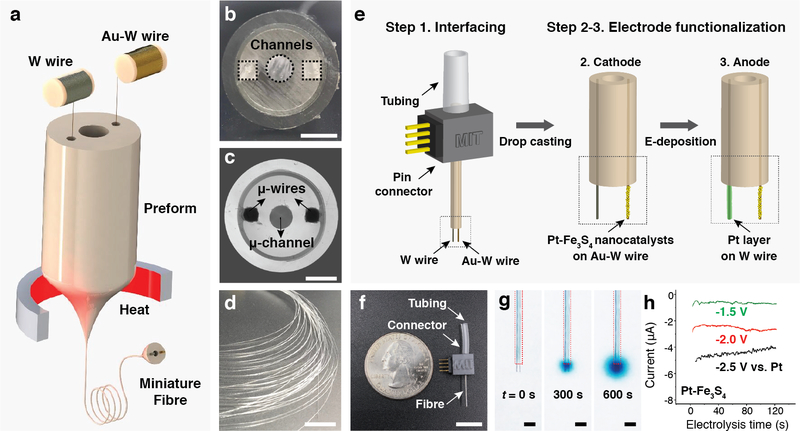
Understanding the function of nitric oxide, a lipophilic messenger in physiological processes across nervous, cardiovascular and immune systems, is currently impeded by the dearth of tools to deliver this gaseous molecule in situ to specific cells. To address this need, we have developed iron sulfide nanoclusters that catalyse nitric oxide generation from benign sodium nitrite in the presence of modest electric fields. Locally generated nitric oxide activates the nitric oxide-sensitive cation channel, transient receptor potential vanilloid family member 1 (TRPV1), and the latency of TRPV1-mediated Ca responses can be controlled by varying the applied voltage. Integrating these electrocatalytic nanoclusters with multimaterial fibres allows nitric oxide-mediated neuronal interrogation in vivo. The in situ generation of nitric oxide in the ventral tegmental area with the electrocatalytic fibres evoked neuronal excitation in the targeted brain region and its excitatory projections. This nitric oxide generation platform may advance mechanistic studies of the role of nitric oxide in the nervous system and other organs.
理解一氧化氮(一种亲脂性信使分子)在神经系统、心血管系统和免疫系统等生理过程中的功能,目前受到缺乏将这种气态分子原位递送到特定细胞的工具的阻碍。为了解决这一需求,我们开发了硫化亚铁纳米簇,在适度电场存在的情况下,它们可以催化从无毒的亚硝酸钠生成一氧化氮。局部生成的一氧化氮激活了一氧化氮敏感的阳离子通道,香草素受体家族成员 1(TRPV1),并且通过改变施加的电压可以控制 TRPV1 介导的 Ca 反应的潜伏期。将这些电催化纳米簇与多材料纤维集成在一起,可以在体内进行一氧化氮介导的神经元检测。用电催化纤维在腹侧被盖区原位生成一氧化氮,可诱发靶向脑区及其兴奋性投射的神经元兴奋。这种一氧化氮生成平台可能会促进对一氧化氮在神经系统和其他器官中作用的机制研究。