Department of Biomedical Engineering, Melbourne School of Engineering, University of Melbourne, Parkville, VIC 3010, Australia.
Department for Biomaterials, Faculty of Engineering Science, University of Bayreuth, Prof. Rüdiger Bormann Str. 1, Bayreuth 95447, Germany.
Int J Nanomedicine. 2020 Jun 17;15:4275-4288. doi: 10.2147/IJN.S255833. eCollection 2020.
Selenium nanoparticles (Se NPs) are promising antibacterial agents to tackle the growing problem of antimicrobial resistance. The aim of this study was to fabricate Se NPs with a net positive charge to enhance their antibacterial efficacy.
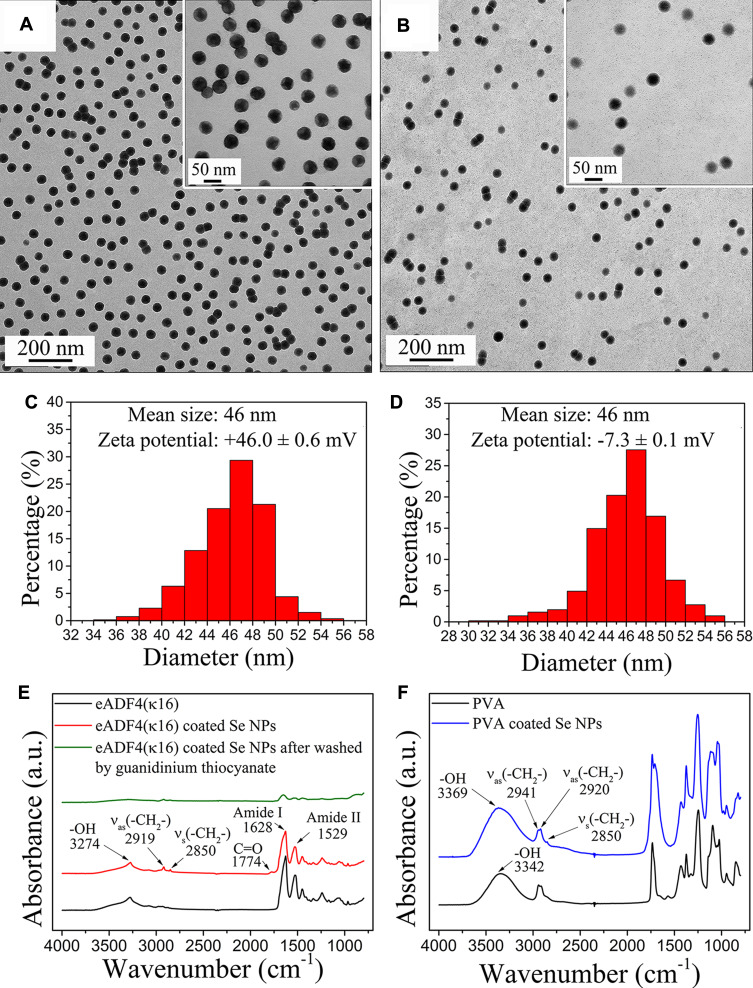
Se NPs were coated with a positively charged protein - recombinant spider silk protein eADF4(κ16) - to give them a net positive surface charge. Their cytotoxicity and antibacterial activity were investigated, with negatively charged polyvinyl alcohol coated Se NPs as a control. Besides, these eADF4(κ16)-coated Se NPs were immobilized on the spider silk films, and the antibacterial activity of these films was investigated.
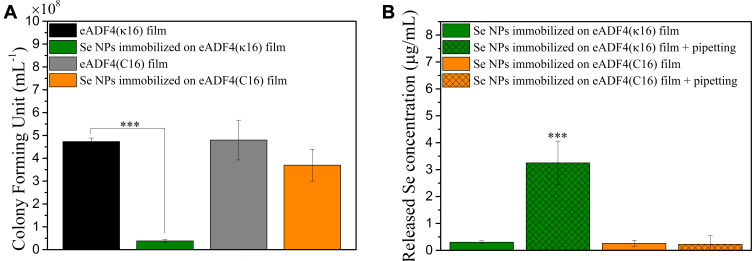
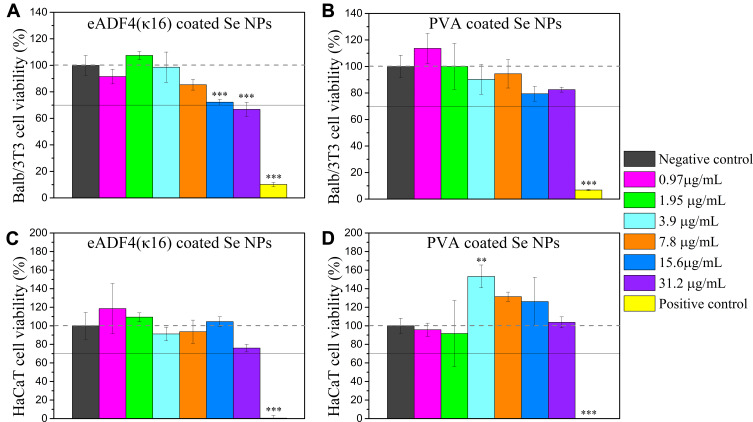
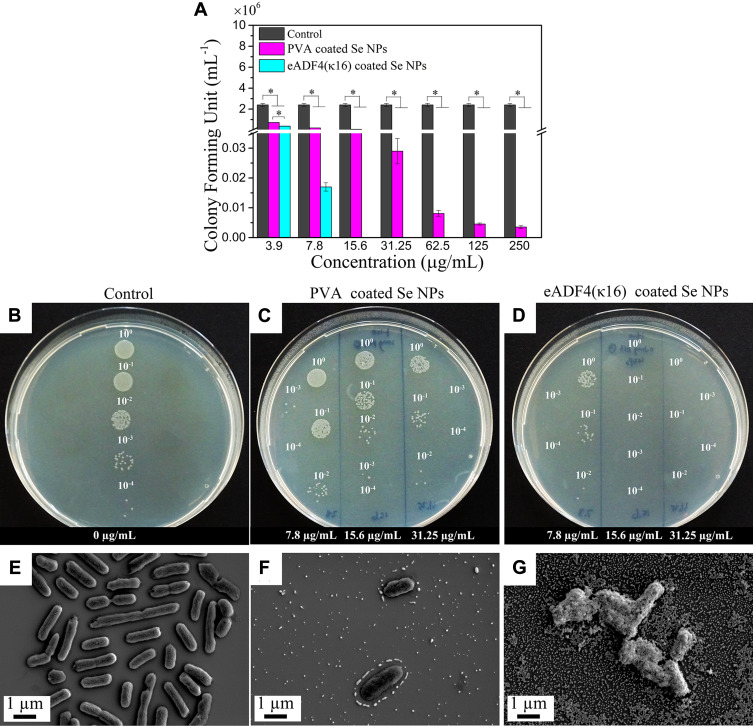
Compared to the negatively charged polyvinyl alcohol coated Se NPs, the positively charged eADF4(κ16)-coated Se NPs demonstrated a much higher bactericidal efficacy against the Gram-negative bacteria , with a minimum bactericidal concentration (MBC) approximately 50 times lower than that of negatively charged Se NPs. Cytotoxicity testing showed that the eADF4(κ16)-coated Se NPs are safe to both Balb/3T3 mouse embryo fibroblasts and HaCaT human skin keratinocytes up to 31 µg/mL, which is much higher than the MBC of these particles against (8 ± 1 µg/mL). In addition, antibacterial coatings were created by immobilising the eADF4(κ16)-coated Se NPs on positively charged spider silk films and these were shown to retain good bactericidal efficacy and overcome the issue of low particle stability in culture broth. It was found that these Se NPs needed to be released from the film surface in order to exert their antibacterial effects and this release can be regulated by the surface charge of the film, such as the change of the spider silk protein used.
Overall, eADF4(κ16)-coated Se NPs are promising new antibacterial agents against life-threatening bacteria.
硒纳米颗粒(Se NPs)是一种很有前途的抗菌剂,可以解决日益严重的抗菌药物耐药问题。本研究的目的是制备带正电荷的 Se NPs,以提高其抗菌效果。
用带正电荷的蛋白质 - 重组蜘蛛丝蛋白 eADF4(κ16)对 Se NPs 进行涂层处理,使其表面带正电荷。研究了它们的细胞毒性和抗菌活性,并以带负电荷的聚乙烯醇涂层 Se NPs 作为对照。此外,还将这些 eADF4(κ16)涂层的 Se NPs 固定在蜘蛛丝膜上,研究了这些膜的抗菌活性。
与带负电荷的聚乙烯醇涂层 Se NPs 相比,带正电荷的 eADF4(κ16)涂层 Se NPs 对革兰氏阴性菌的杀菌效果要高得多,最小杀菌浓度(MBC)约低 50 倍。细胞毒性试验表明,eADF4(κ16)涂层的 Se NPs 在 31 µg/mL 以下对 Balb/3T3 小鼠胚胎成纤维细胞和 HaCaT 人皮肤角质形成细胞是安全的,这远高于这些颗粒对(8 ± 1 µg/mL)的 MBC。此外,通过将 eADF4(κ16)涂层的 Se NPs 固定在带正电荷的蜘蛛丝膜上,制备了抗菌涂层,结果表明这些涂层仍具有良好的杀菌效果,并克服了在培养液中颗粒稳定性低的问题。研究发现,这些 Se NPs 需要从膜表面释放出来才能发挥其抗菌作用,而这种释放可以通过膜的表面电荷来调节,例如使用的蜘蛛丝蛋白的变化。
总之,eADF4(κ16)涂层的 Se NPs 是一种很有前途的针对危及生命的细菌的新型抗菌剂。