Department of Pharmaceutical Biosciences, Uppsala University, P.O. Box 591, 751 24, Uppsala, Sweden.
Merck & Co. Inc, Kenilworth, NJ, USA.
J Pharmacokinet Pharmacodyn. 2020 Oct;47(5):461-471. doi: 10.1007/s10928-020-09697-x. Epub 2020 Jul 2.
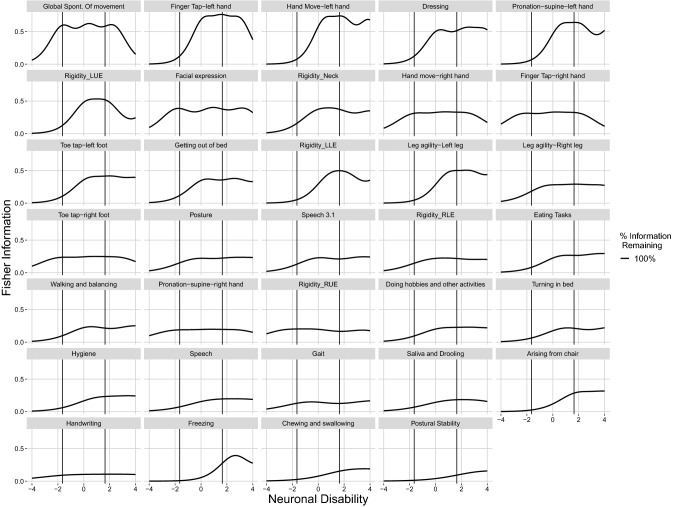
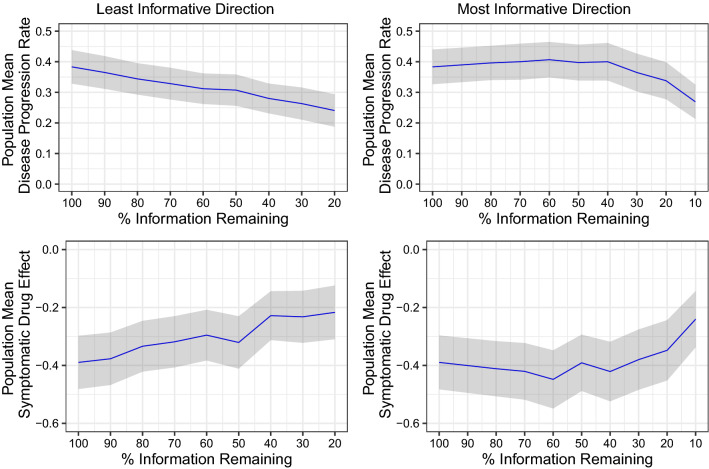
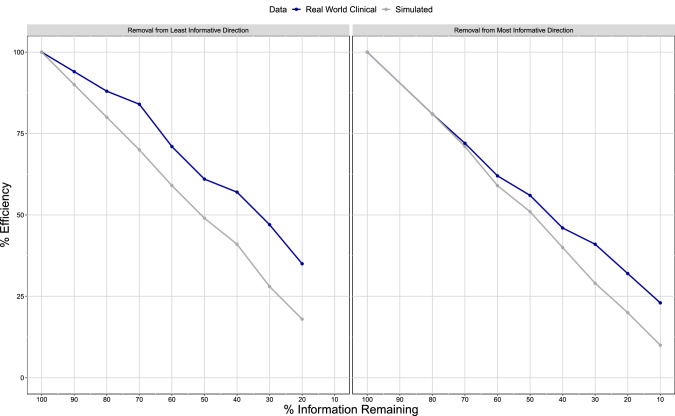
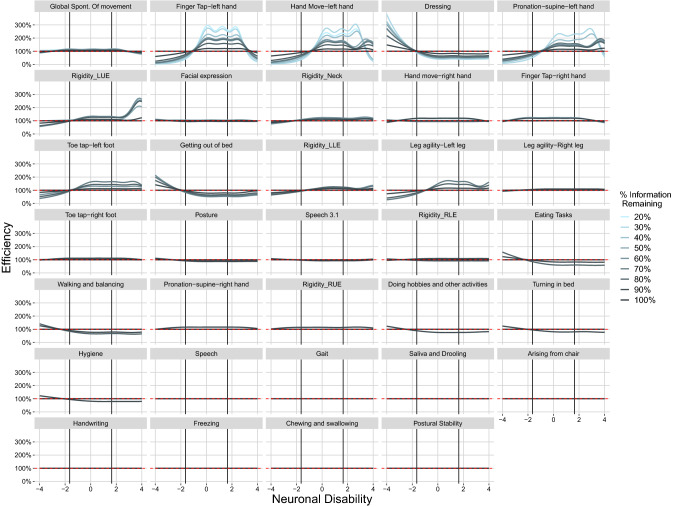
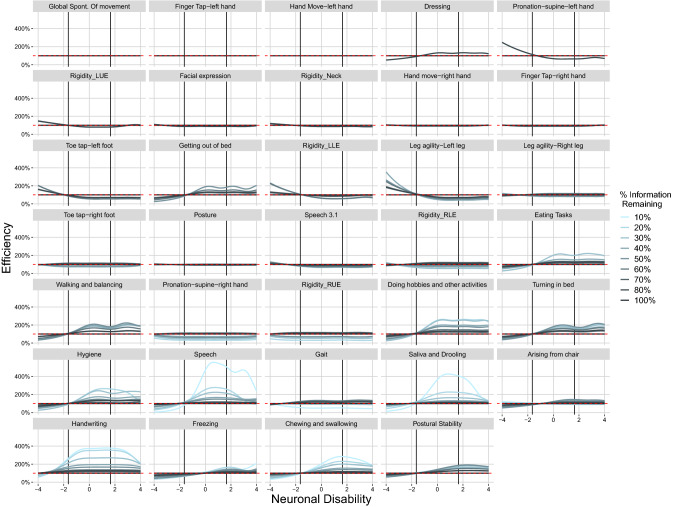
This work evaluates the performance of longitudinal item response (IR) theory models in shortened assessments using an existing model for part II and III of the MDS-UPDRS score. Based on the item information content, the assessment was reduced by removal of items in multiple increments and the models' ability to recover the item characteristics of the remaining items at each level was evaluated. This evaluation was done for both simulated and real data. The metric of comparison in both cases was the item information function. For real data, the impact of shortening on the estimated disease progression and drug effect was also studied. In the simulated data setting, the item characteristics did not differ between the full and the shortened assessments down to the lowest level of information remaining; indicating a considerable independence between items. In contrast when reducing the assessment in a real data setting, a substantial change in item information was observed for some of the items. Disease progression and drug effect estimates also decreased in the reduced assessments. These changes indicate a shift in the measured construct of the shortened assessment and warrant caution when comparing results from a partial assessment with results from the full assessment.
本研究采用 MDS-UPDRS 评分的第二部分和第三部分现有的模型,评估了在缩短评估中使用纵向项目反应(IR)理论模型的性能。根据项目的信息含量,通过逐步删除项目来减少评估,并评估模型在每个水平上恢复剩余项目特征的能力。这两种情况都使用项目信息函数进行比较。对于真实数据,还研究了缩短对估计疾病进展和药物效果的影响。在模拟数据设置中,直到最低信息水平,完整和缩短评估之间的项目特征没有差异;这表明项目之间具有相当大的独立性。相比之下,在实际数据设置中减少评估时,一些项目的项目信息发生了实质性变化。减少评估的疾病进展和药物效果估计也降低了。这些变化表明缩短评估的测量结构发生了转变,因此在将部分评估的结果与完整评估的结果进行比较时应谨慎。