Center for Biomedical Imaging, Ecole Polytechnique Fédérale de Lausanne, EPFL ENT-R CIBM-AIT, Station 6, 1015, Lausanne, Switzerland.
Centre for Medical Image Computing and Department of Computer Science, University College London, London, UK.
J Neurosci Methods. 2020 Oct 1;344:108861. doi: 10.1016/j.jneumeth.2020.108861. Epub 2020 Jul 18.
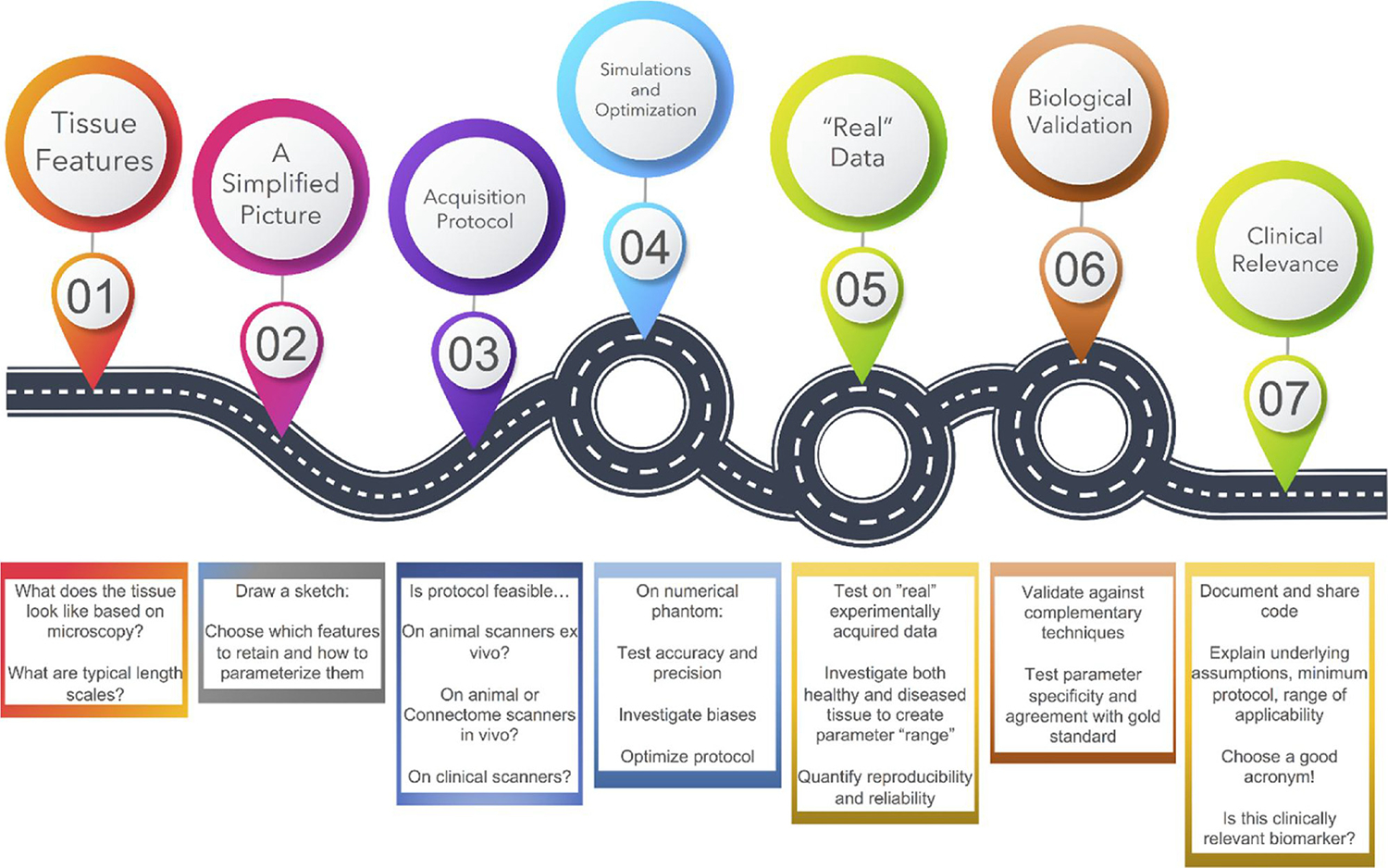
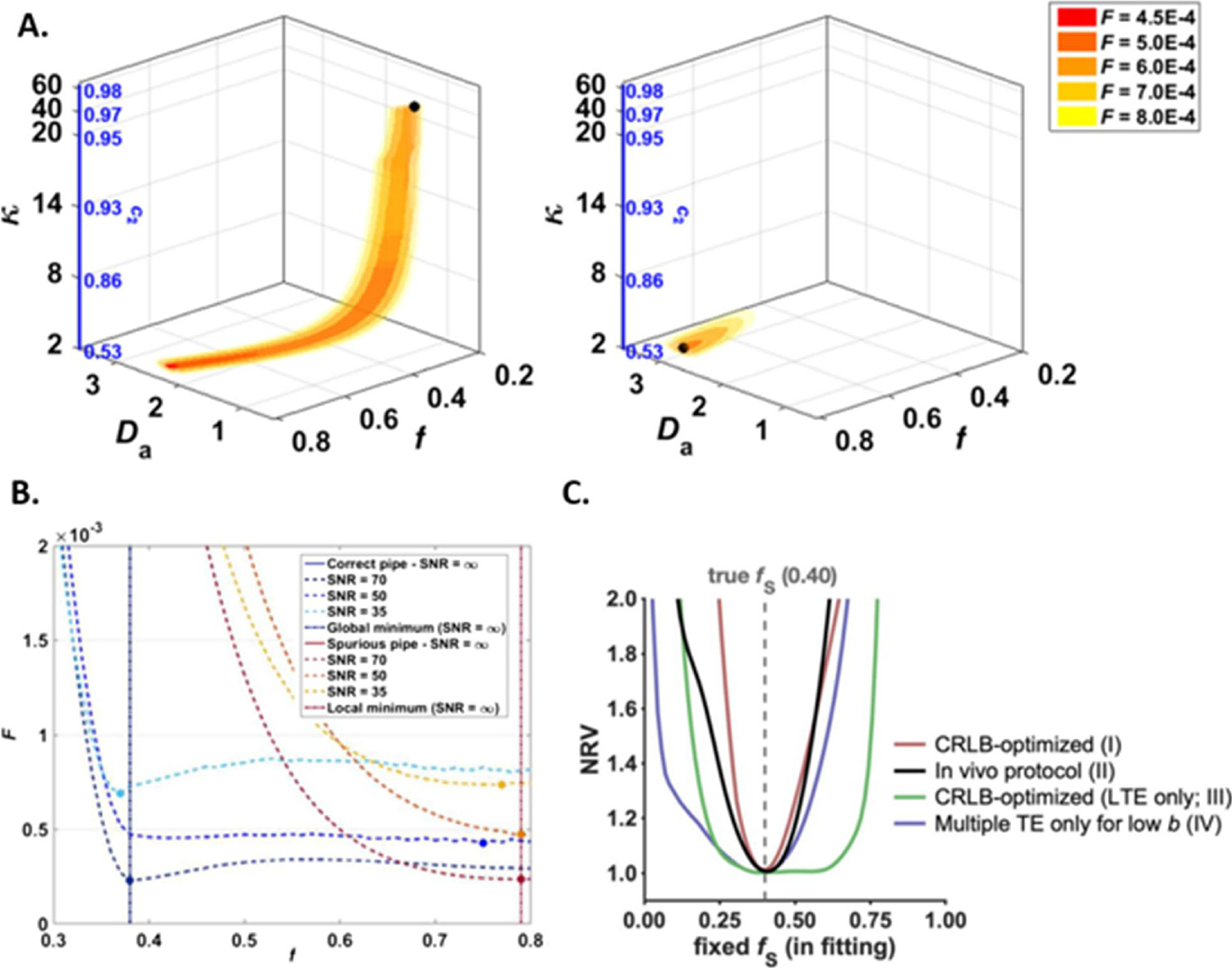
The biophysical modeling efforts in diffusion MRI have grown considerably over the past 25 years. In this review, we dwell on the various challenges along the journey of bringing a biophysical model from initial design to clinical implementation, identifying both hurdles that have been already overcome and outstanding issues. First, we describe the critical initial task of selecting which features of tissue microstructure can be estimated using a model and which acquisition protocol needs to be implemented to make the estimation possible. The model performance should necessarily be tested in realistic numerical simulations and in experimental data - adapting the fitting strategy accordingly, and parameter estimates should be validated against complementary techniques, when/if available. Secondly, the model performance and validity should be explored in pathological conditions, and, if appropriate, dedicated models for pathology should be developed. We build on examples from tumors, ischemia and demyelinating diseases. We then discuss the challenges associated with clinical translation and added value. Finally, we single out four major unresolved challenges that are related to: the availability of a microstructural ground truth, the validation of model parameters which cannot be accessed with complementary techniques, the development of a generalized standard model for any brain region and pathology, and the seamless communication between different parties involved in the development and application of biophysical models of diffusion.
在过去的 25 年中,扩散磁共振成像中的生物物理建模工作取得了相当大的进展。在这篇综述中,我们详细讨论了将生物物理模型从最初的设计到临床实施过程中所面临的各种挑战,既包括已经克服的障碍,也包括尚未解决的问题。首先,我们描述了选择使用模型来估计组织微结构的哪些特征以及需要实施哪种采集方案才能实现估计的关键初始任务。模型性能必须在现实的数值模拟和实验数据中进行测试——相应地调整拟合策略,并且在可用时,应根据互补技术对参数估计进行验证。其次,应在病理条件下探索模型性能和有效性,如果合适,应开发针对病理学的专用模型。我们以肿瘤、缺血和脱髓鞘疾病为例进行了讨论。然后,我们讨论了与临床转化和附加值相关的挑战。最后,我们挑出了四个尚未解决的主要挑战,这些挑战与以下方面有关:微观结构真实值的可用性、无法通过互补技术获取的模型参数的验证、为任何脑区和病理学开发通用标准模型、以及在扩散生物物理模型的开发和应用中涉及的不同方之间的无缝沟通。