Charles-de-Sá Luiz, Gontijo-de-Amorim Natale, Sbarbati Andrea, Benati Donatella, Bernardi Paolo, Borojevic Radovan, Carias Rosana Bizon Vieira, Rigotti Gino
Postgraduate Program in Surgical Science, Federal University of Rio de Janeiro-CCS-Bloco C, Avenida Carlos Chagas Filho, 373, Ilha do Fundão, Rio de Janeiro, RJ 21941-902, Brazil.
Dipartamento di Scienze Neurologiche e del Movimento, Sezione di Anatomia e Istologia della Universitá degli Studi di Verona, Strada Le Grazie 8, Verona 37134, Italy.
Stem Cells Int. 2020 Jul 16;2020:2032359. doi: 10.1155/2020/2032359. eCollection 2020.
Stem cells from adipose tissue (ADSCs) and platelet-rich plasma (PRP) are innovative modalities that arise due to their regenerative potential.
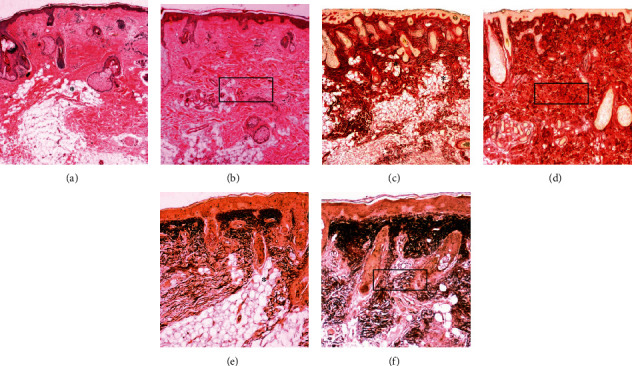
The aim of this study was to characterize possible histological changes induced by PRP and ADSC therapies in photoaged skin.
A prospective randomized study involving 20 healthy individuals, showing skin aging. They underwent two therapeutic protocols (protocol 1: PRP; protocol 2: ADSCs). Biopsies were obtained before and after treatment (4 months).
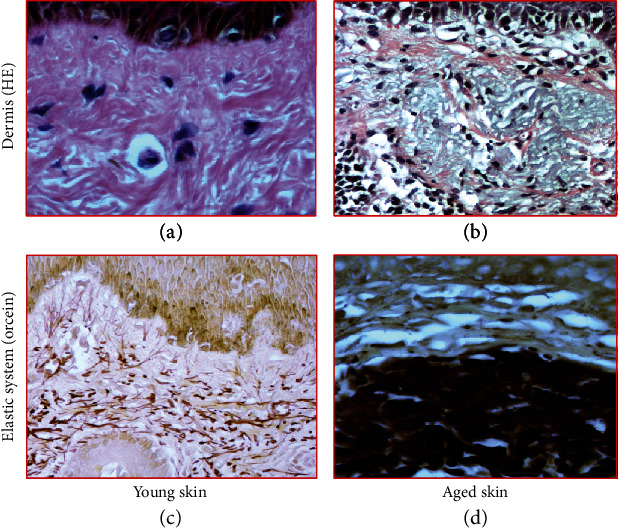
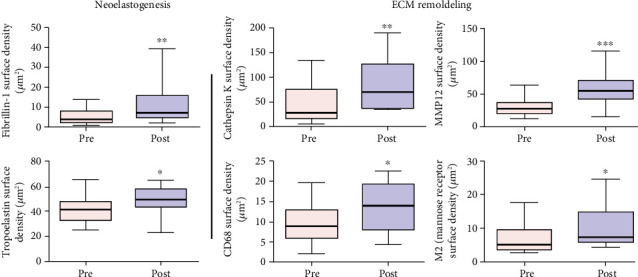
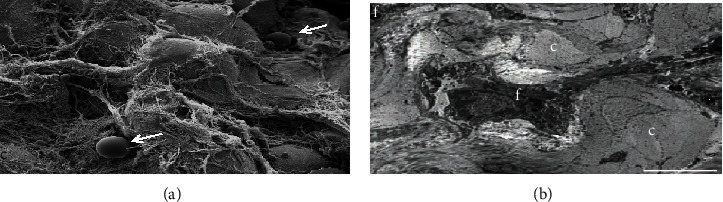
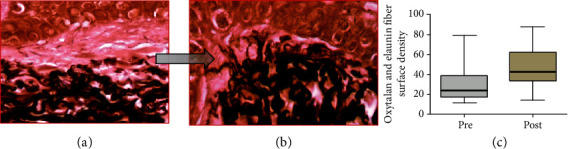
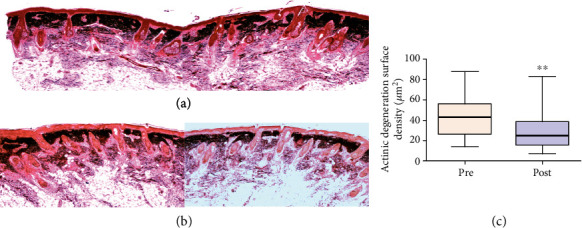
PRP protocol showed unwanted changes in the reticular dermis, mainly due to the deposition of a horizontal layer of collagen (fibrosis) and elastic fibers tightly linked. Structural analyses revealed infiltration of mononuclear cells and depot of fibrotic material in the reticular dermis. The ADSC protocol leads to neoelastogenesis with increase of tropoelastin and fibrillin. There was an improvement of solar elastosis inducing an increment of macrophage polarization and matrix proteinases. These last effects are probably related to the increase of elastinolysis and the remodeling of the dermis.
The PRP promoted an inflammatory process with an increase of reticular dermis thickness with a fibrotic aspect. On the other hand, ADSC therapy is a promising modality with an important antiaging effect on photoaged human skin.
脂肪组织来源的干细胞(ADSCs)和富血小板血浆(PRP)因其再生潜力而成为创新的治疗方式。
本研究旨在描述PRP和ADSC疗法在光老化皮肤中引起的可能的组织学变化。
一项前瞻性随机研究,纳入20名表现出皮肤老化的健康个体。他们接受了两种治疗方案(方案1:PRP;方案2:ADSCs)。在治疗前和治疗后(4个月)获取活检样本。
PRP方案显示网状真皮出现不良变化,主要是由于一层水平排列的胶原蛋白(纤维化)沉积以及弹性纤维紧密相连。结构分析显示网状真皮中有单核细胞浸润和纤维化物质沉积。ADSC方案导致新弹性蛋白生成,原弹性蛋白和原纤维蛋白增加。日光性弹性组织变性有所改善,巨噬细胞极化和基质蛋白酶增加。这些最终效应可能与弹性蛋白分解增加和真皮重塑有关。
PRP促进了炎症过程,网状真皮厚度增加并呈现纤维化。另一方面,ADSC疗法是一种有前景的治疗方式,对光老化的人体皮肤具有重要的抗衰老作用。