Li Yanping, Xie Tengfei, Pang Rui, Wu Qingping, Zhang Jumei, Lei Tao, Xue Liang, Wu Haoming, Wang Juan, Ding Yu, Chen Moutong, Wu Shi, Zeng Haiyan, Zhang Youxiong, Wei Xianhu
College of Food Science, South China Agricultural University, Guangzhou, China.
Guangdong Institute of Microbiology, State Key Laboratory of Applied Microbiology Southern China, Guangdong Provincial Key Laboratory of Microbial Safety and Health, Guangdong Academy of Sciences, Guangzhou, China.
Front Microbiol. 2020 Jul 16;11:1670. doi: 10.3389/fmicb.2020.01670. eCollection 2020.
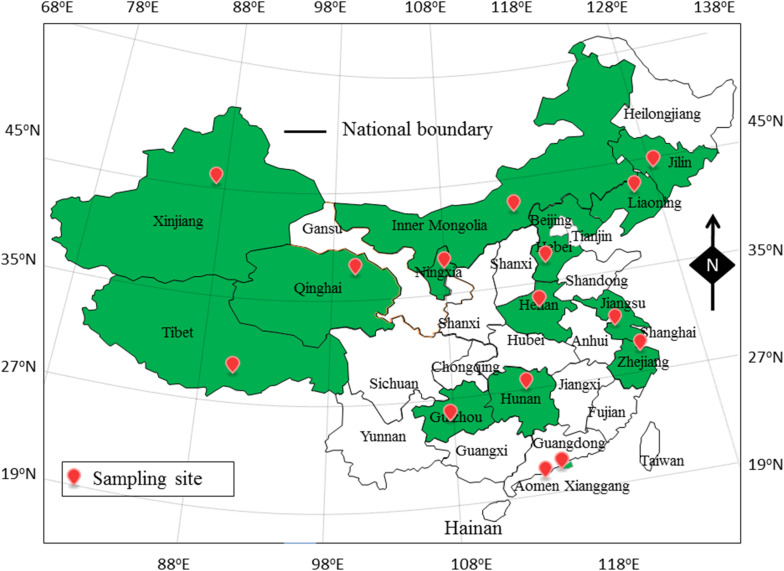
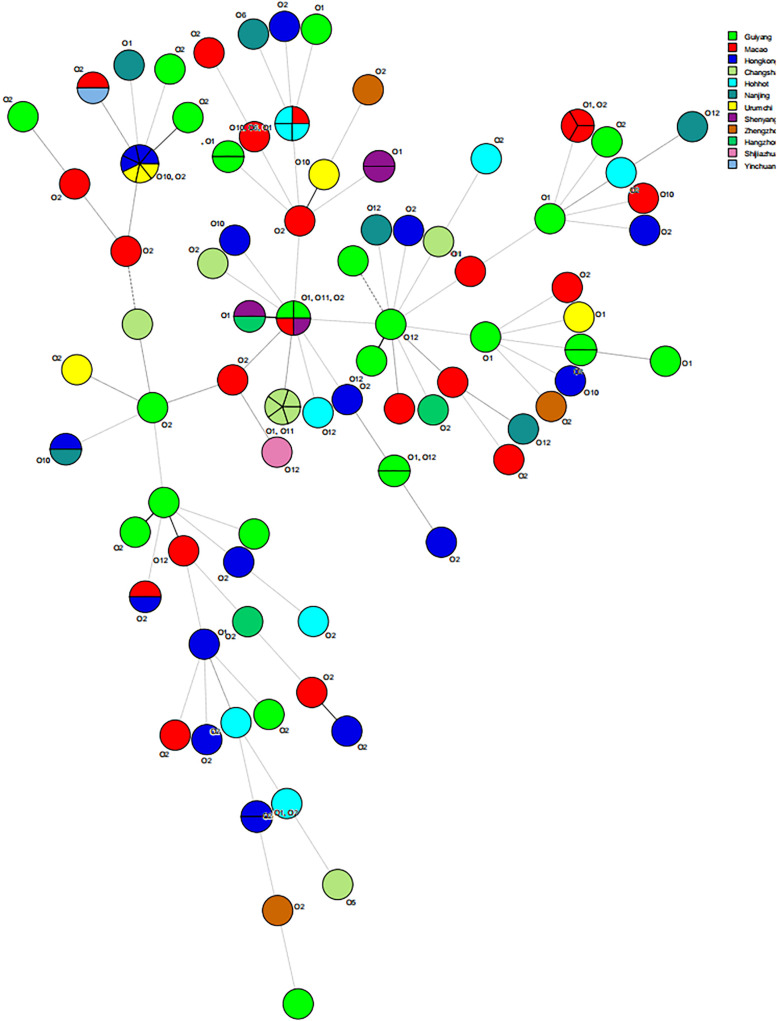
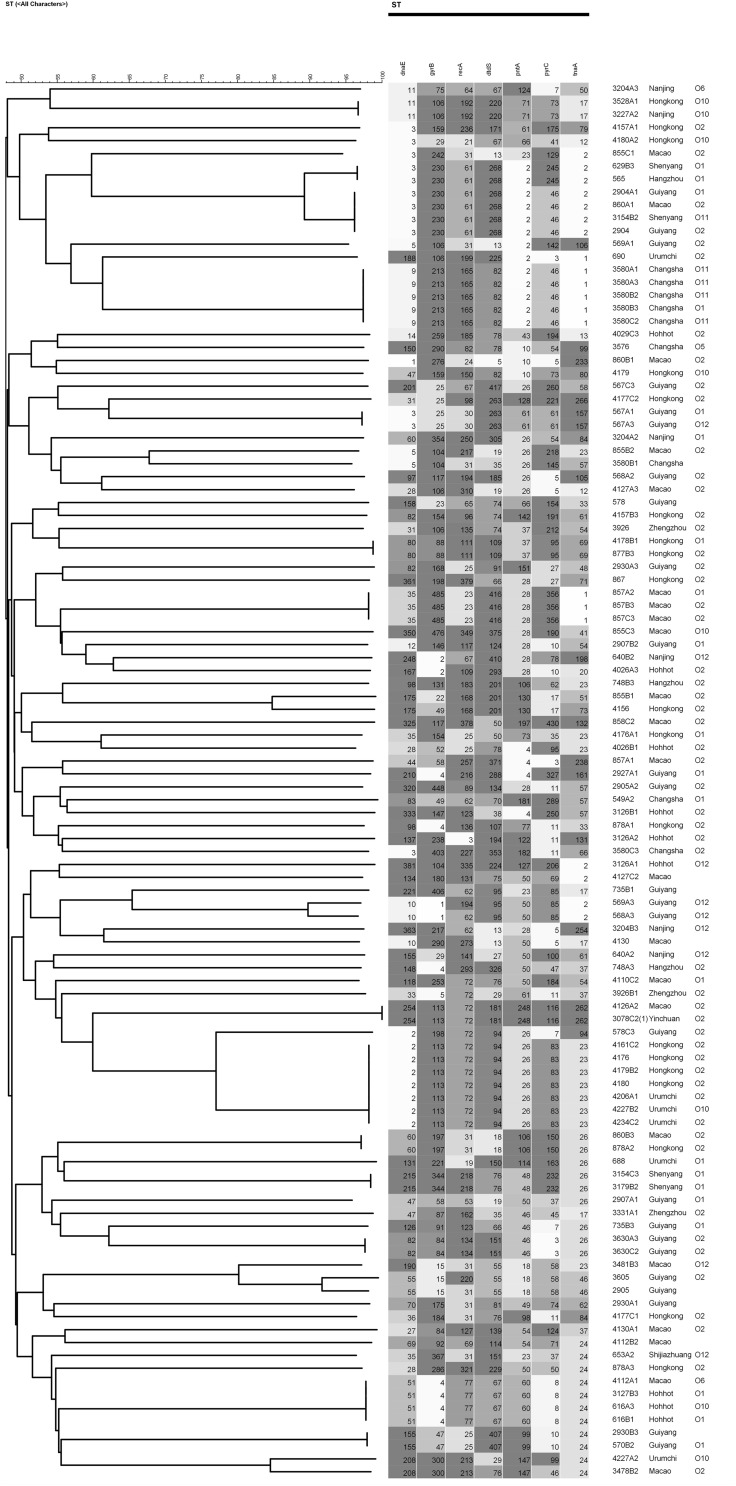
is a marine and estuarine bacterium that leads to damage of aquatic industry by foodborne outbreaks and possesses an enormous threat to food safety as well as human health worldwide. In the current study, we investigated 905 food samples (ready-to-eat foods, fish, and shrimp) from 15 provinces in China, and aimed to determine prevalence, biological characteristics and genetic diversity of presumptive isolates. Firstly, 14.17% of 240 fish samples, 15.34% of 365 shrimp samples and 3.67% of 300 RTE food samples were positive for potential . Secondly, 69 food samples (14.87%) collected in summer were positive for target isolates, while the rate of positive sample of 441 food samples in winter reached 7.26%. Thirdly, we purified 202 strains for further research. And antimicrobial susceptibility results of strains tested revealed that the highest resistance rate was observed for ampicillin (79.20%). At the same time, 148 (73.27%) of all isolates were classified and defined as multi-drug resistant foodborne bacteria. The results of PCR assay showed that the isolates being positive for the , or both genes, were up to 9.90%, 19.80% or 3.96%. Besides, multiplex PCR test showed that the isolates carrying O2 serogroup were the most prevalent. Furthermore, sequence types (STs) of 108 isolates were obtained via multi-locus sequence typing. Not only 82 STs were detected, but also 41 of which were updated in the MLST database. Thus, our findings significantly demonstrated the high contamination rates of in fish and shrimp and it may possess potential threat for consumer health. We also provided up-to-date dissemination of antibiotic-resistant which is important to ensure the high efficacy in the treatment of human and aquatic products infections. Lastly, with the identification of 82 STs including 41 novel STs, this study significantly revealed the high genetic diversity among . All of our research improved our understanding on microbiological risk assessment in ready-to-eat foods, fish, and shrimp.
是一种海洋和河口细菌,通过食源性疾病暴发导致水产养殖业受损,并对全球食品安全以及人类健康构成巨大威胁。在本研究中,我们调查了来自中国15个省份的905份食品样本(即食食品、鱼类和虾类),旨在确定推定分离株的流行率、生物学特性和遗传多样性。首先,240份鱼类样本中有14.17%、365份虾类样本中有15.34%以及300份即食食品样本中有3.67%的潜在样本呈阳性。其次,夏季采集的69份食品样本(14.87%)的目标分离株呈阳性,而冬季441份食品样本的阳性样本率达到7.26%。第三,我们纯化了202株菌株用于进一步研究。对菌株进行的药敏试验结果显示,氨苄西林的耐药率最高(79.20%)。同时,所有分离株中有148株(73.27%)被分类并定义为多重耐药食源性细菌。PCR检测结果表明,对 、 或两个基因呈阳性的分离株分别高达9.90%、19.80%或3.96%。此外,多重PCR检测显示携带O2血清群的分离株最为普遍。此外,通过多位点序列分型获得了108株分离株的序列类型(STs)。不仅检测到82种STs,其中41种在MLST数据库中得到更新。因此,我们的研究结果显著表明鱼类和虾类中 污染率很高,可能对消费者健康构成潜在威胁。我们还提供了关于抗生素耐药 的最新传播情况,这对于确保治疗人类和水产品感染的高效性很重要。最后,通过鉴定包括41种新STs在内的82种STs,本研究显著揭示了 之间的高遗传多样性。我们所有的研究都增进了我们对即食食品、鱼类和虾类微生物风险评估的理解。