Xie Tengfei, Xu Xiaoke, Wu Qingping, Zhang Jumei, Cheng Jianheng
School of Bioscience and Bioengineering, South China University of TechnologyGuangzhou, China; Guangdong Institute of Microbiology, State Key Laboratory of Applied Microbiology Southern China: Guangdong Provincial Key Laboratory of Microbial Culture Collection and Application, Guangdong Open Laboratory of Applied MicrobiologyGuangzhou, China.
Guangdong Institute of Microbiology, State Key Laboratory of Applied Microbiology Southern China: Guangdong Provincial Key Laboratory of Microbial Culture Collection and Application, Guangdong Open Laboratory of Applied Microbiology Guangzhou, China.
Front Microbiol. 2016 Apr 21;7:549. doi: 10.3389/fmicb.2016.00549. eCollection 2016.
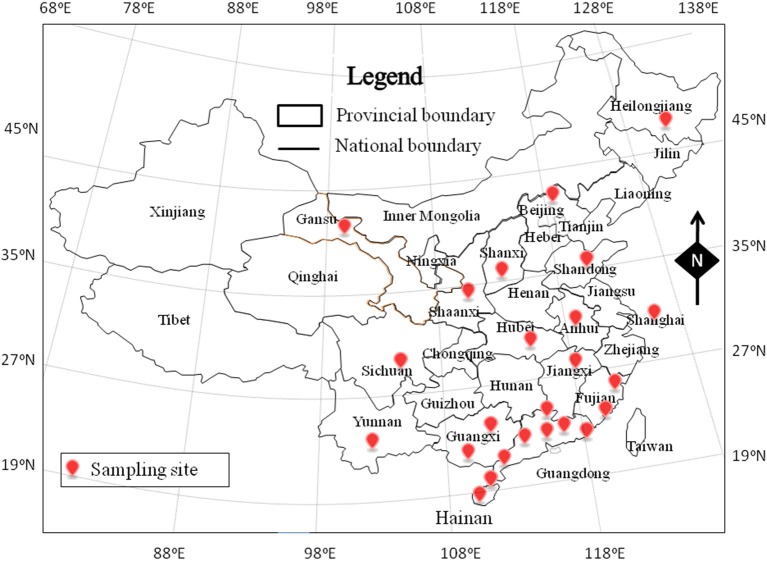
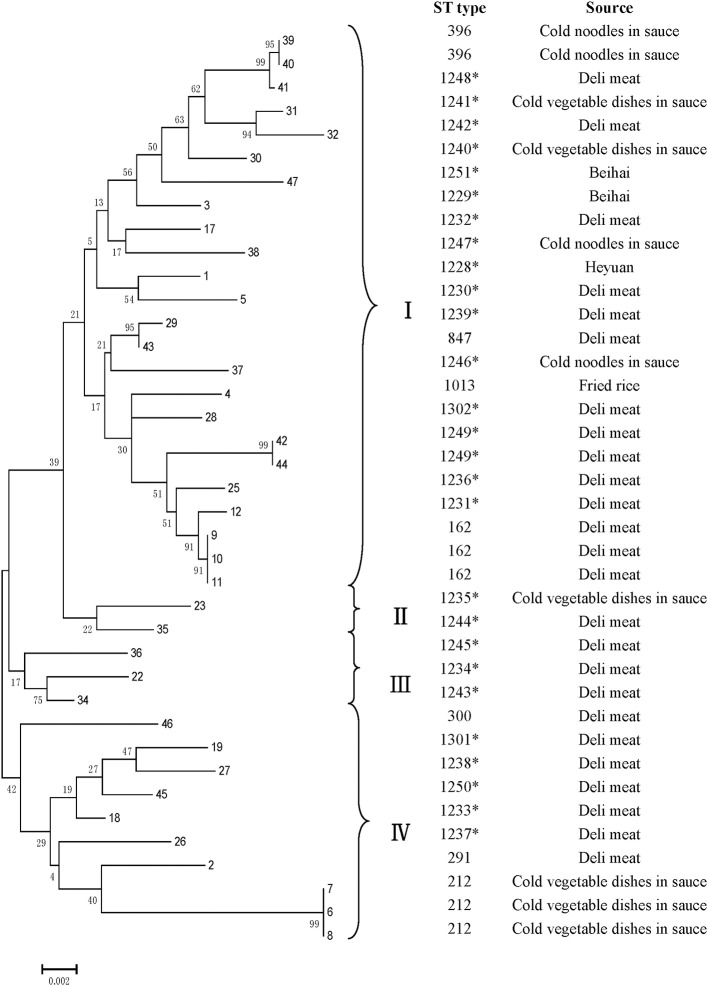
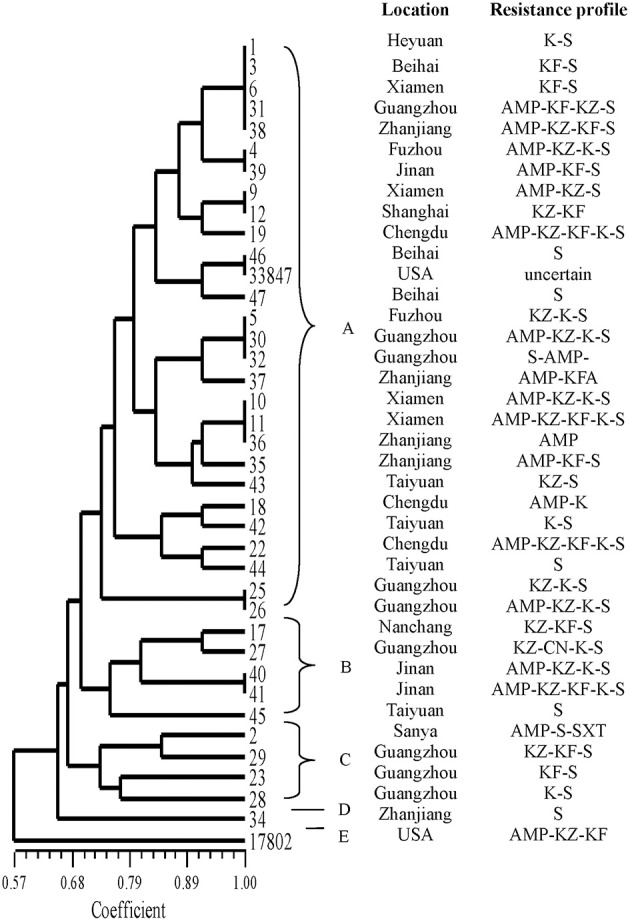
Vibrio parahaemolyticus is the leading cause of foodborne outbreaks, particularly outbreaks associated with consumption of fish and shellfish, and represents a major threat to human health worldwide. This bacterium harbors two main virulence factors: the thermostable direct hemolysin (TDH) and TDH-related hemolysin (TRH). Additionally, various serotypes have been identified. The extensive use of antibiotics is a contributing factor to the increasing incidence of antimicrobial-resistant V. parahaemolyticus. In the current study, we aimed to determine the incidence and features of V. parahaemolyticus in ready-to-eat (RTE) foods in China. We found 39 V. parahaemolyticus strains on Chinese RTE foods through investigation of 511 RTE foods samples from 24 cities in China. All isolates were analyzed for the presence of tdh and trh gene by PCR, serotyping was performed using multiplex PCR, antibiotic susceptibility analysis was carried out using the disk diffusion method, and molecular typing was performed using enterobacterial repetitive intergenic consensus sequence PCR (ERIC-PCR) typing and multilocus sequence typing (MLST). The results showed that none of the isolates were positive for tdh and trh. Most of the isolates (33.3%) were serotype O2. Antimicrobial susceptibility results indicated that most strains were resistant to streptomycin (89.7%), cefazolin (51.3%), and ampicillin (51.3%). The isolates were grouped into five clusters by ERIC-PCR and four clusters by MLST. We updated 10 novel loci and 33 sequence types (STs) in the MLST database. Thus, our findings demonstrated the presence of V. parahaemolyticus in Chinese RTE foods, provided insights into the dissemination of antibiotic-resistant strains, and improved our knowledge of methods of microbiological risk assessment in RTE foods.
副溶血性弧菌是食源性疾病暴发的主要原因,尤其是与食用鱼类和贝类相关的暴发,对全球人类健康构成重大威胁。这种细菌具有两种主要毒力因子:耐热直接溶血素(TDH)和TDH相关溶血素(TRH)。此外,已鉴定出多种血清型。抗生素的广泛使用是耐抗菌性副溶血性弧菌发病率增加的一个促成因素。在本研究中,我们旨在确定中国即食(RTE)食品中副溶血性弧菌的发病率和特征。通过对来自中国24个城市的511份即食食品样本进行调查,我们在中国即食食品中发现了39株副溶血性弧菌菌株。通过PCR分析所有分离株中tdh和trh基因的存在情况,使用多重PCR进行血清分型,使用纸片扩散法进行抗生素敏感性分析,并使用肠杆菌重复基因间共识序列PCR(ERIC-PCR)分型和多位点序列分型(MLST)进行分子分型。结果表明,所有分离株的tdh和trh均为阴性。大多数分离株(33.3%)为O2血清型。抗生素敏感性结果表明,大多数菌株对链霉素(89.7%)、头孢唑林(51.3%)和氨苄青霉素(51.3%)耐药。通过ERIC-PCR将分离株分为五个簇,通过MLST分为四个簇。我们在MLST数据库中更新了10个新位点和33个序列类型(STs)。因此,我们的研究结果证明了中国即食食品中存在副溶血性弧菌,深入了解了耐抗生素菌株的传播情况,并增进了我们对即食食品微生物风险评估方法的认识。