Department of Statistics, Faculty of Mathematics and Natural Sciences, Universitas Syiah Kuala, Banda Aceh, 23111 Indonesia.
Graduate School of Mathematics and Applied Sciences, Universitas Syiah Kuala, Banda Aceh, 23111 Indonesia.
Glob Health Res Policy. 2020 Aug 5;5:38. doi: 10.1186/s41256-020-00163-2. eCollection 2020.
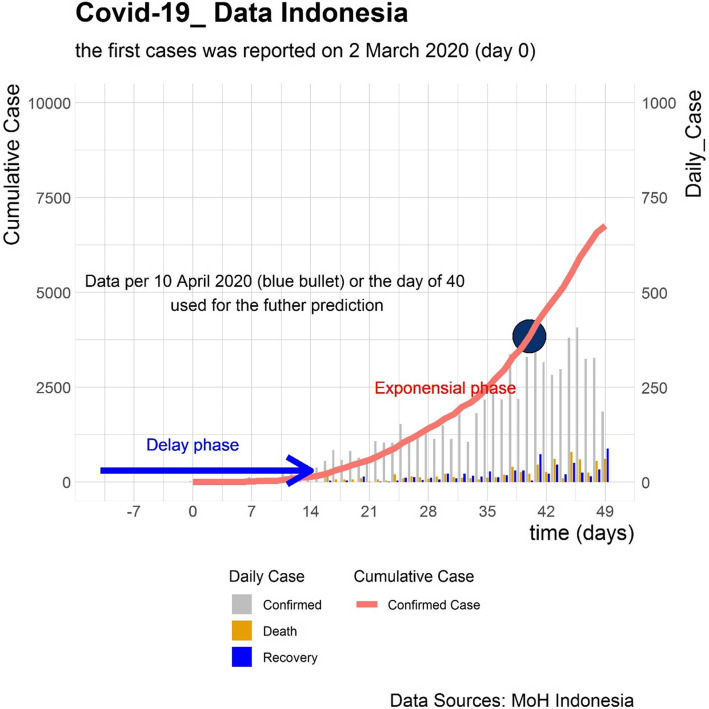
Understanding the pattern of COVID-19 infection progression is critical for health policymakers. Reaching the exponential peak of cases, flattening the curve, and treating all of the active cases are the keys to success in reducing outbreak transmission. The objective of this study was to determine the most effective model for predicting the peak of COVID-19 in Indonesia, using a deterministic model.
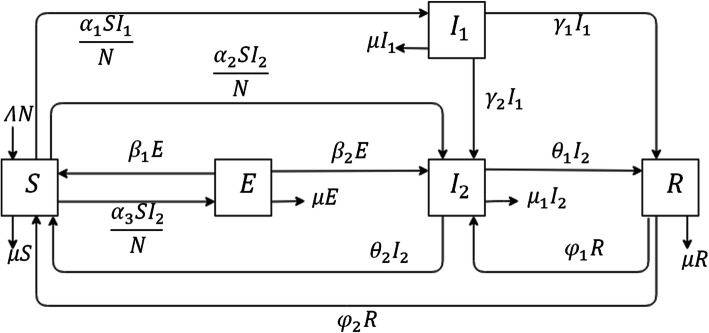
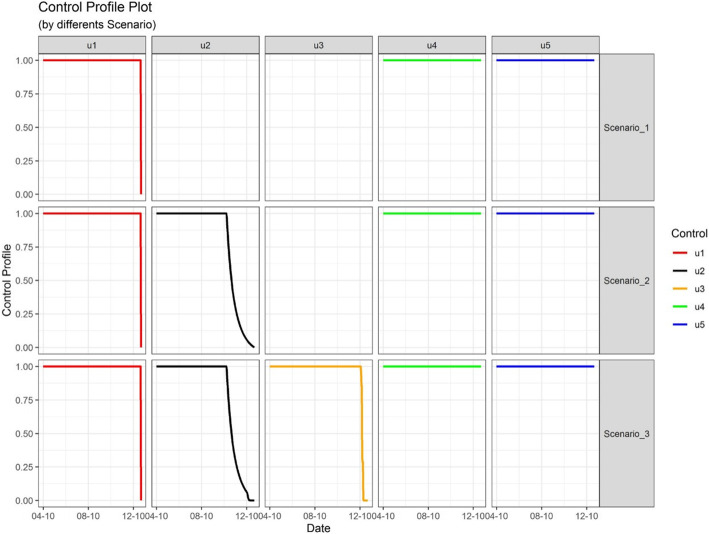
The SEI2RS model considers five strategies for control, namely: large-scale social restriction ( ), contact tracing ( ), mass testing ( ) case detection and treatment ( ), and the wearing of face masks ( ) Three scenarios were developed, each differentiated by the controls. The model used April 10, 2020, and December 31, 2020, as the initial and final times.
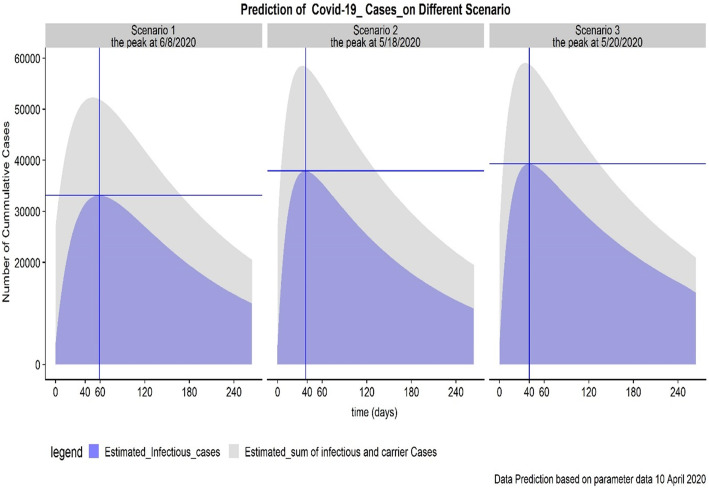
The simulation results indicated that the peak of COVID-19 cases for scenarios 1, 2, and 3 occur on the 59th day with 33,151 cases, on the 38th day with 37,908 cases, and on the 40th day with 39,305 cases. For all of the scenarios, the decline phase shows a slow downward slope and about 8000 cases of COVID-19 still active by the end of 2020.
The study concludes that scenario 2, which consists of large-scale social restriction (), contact tracing (), case detection and treatment (), and the wearing of face masks (), is the most rational scenario to control COVID-19 spreading in Indonesia.
了解 COVID-19 感染进展的模式对于卫生政策制定者至关重要。达到病例的指数峰值、使曲线变平以及治疗所有活动病例是减少疫情传播成功的关键。本研究的目的是使用确定性模型确定预测印度尼西亚 COVID-19 峰值的最有效模型。
SEI2RS 模型考虑了五种控制策略,即:大规模社会限制()、接触者追踪()、大规模检测()、病例发现和治疗()以及佩戴口罩()。开发了三种情景,每种情景都通过控制措施进行了区分。该模型使用 2020 年 4 月 10 日和 2020 年 12 月 31 日作为初始和最终时间。
模拟结果表明,情景 1、2 和 3 的 COVID-19 病例峰值分别出现在第 59 天,有 33,151 例,第 38 天,有 37,908 例,第 40 天,有 39,305 例。对于所有情景,下降阶段显示出缓慢的下降趋势,到 2020 年底仍有大约 8000 例 COVID-19 活跃病例。
研究得出的结论是,情景 2,即大规模社会限制()、接触者追踪()、病例发现和治疗()以及佩戴口罩(),是控制印度尼西亚 COVID-19 传播的最合理情景。