Institute of Cell Biology, National Academy of Sciences of Ukraine, 79005 Lviv, Ukraine.
Department of Biology and Chemistry, Drohobych Ivan Franko State Pedagogical University, 82100 Drohobych, Ukraine.
Sensors (Basel). 2020 Aug 12;20(16):4509. doi: 10.3390/s20164509.
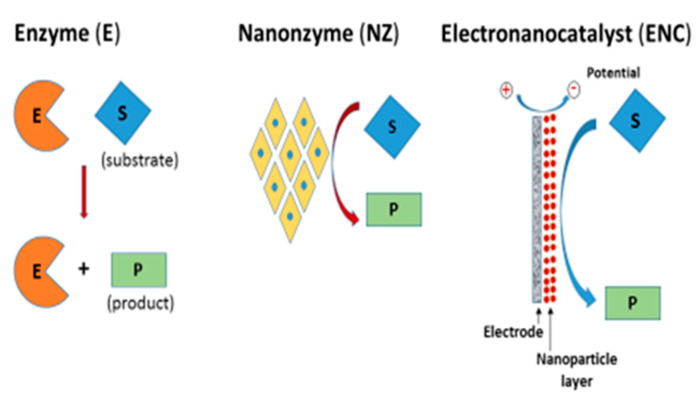
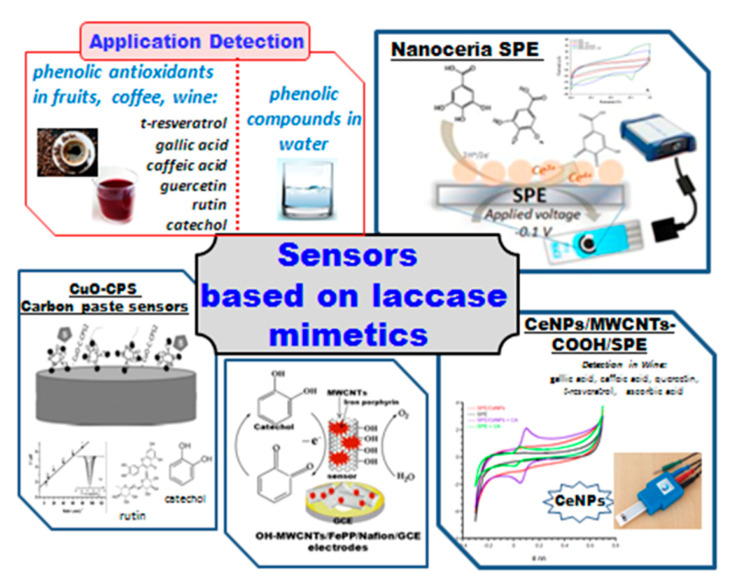
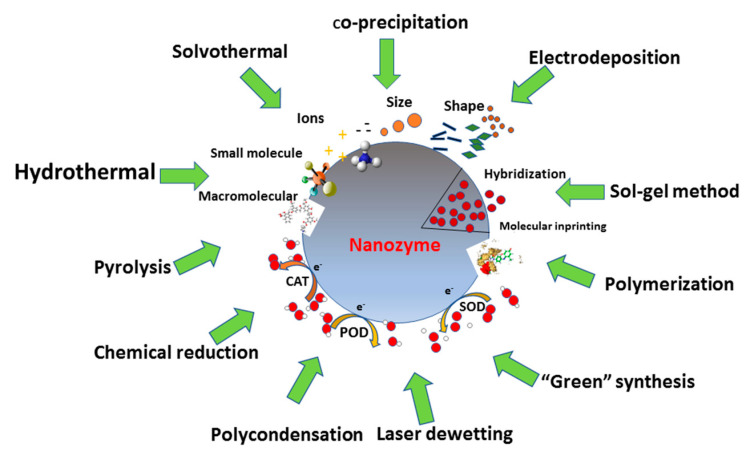
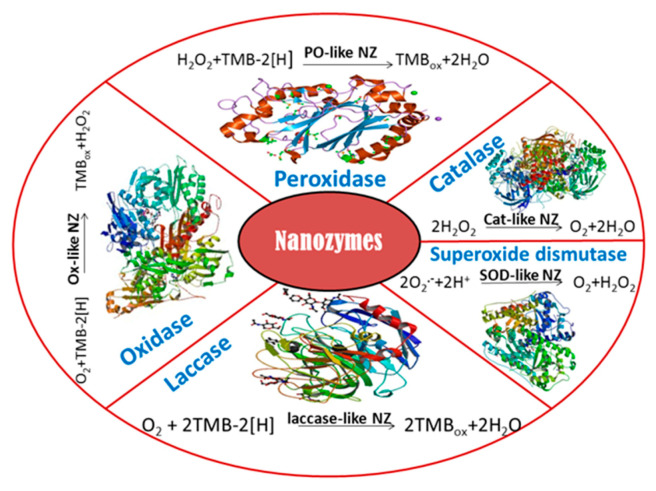
The current review is devoted to nanozymes, i.e., nanostructured artificial enzymes which mimic the catalytic properties of natural enzymes. Use of the term "nanozyme" in the literature as indicating an enzyme is not always justified. For example, it is used inappropriately for nanomaterials bound with electrodes that possess catalytic activity only when applying an electric potential. If the enzyme-like activity of such a material is not proven in solution (without applying the potential), such a catalyst should be named an "electronanocatalyst", not a nanozyme. This paper presents a review of the classification of the nanozymes, their advantages vs. natural enzymes, and potential practical applications. Special attention is paid to nanozyme synthesis methods (hydrothermal and solvothermal, chemical reduction, sol-gel method, co-precipitation, polymerization/polycondensation, electrochemical deposition). The catalytic performance of nanozymes is characterized, a critical point of view on catalytic parameters of nanozymes described in scientific papers is presented and typical mistakes are analyzed. The central part of the review relates to characterization of nanozymes which mimic natural enzymes with analytical importance ("nanoperoxidase", "nanooxidases", "nanolaccase") and their use in the construction of electro-chemical (bio)sensors ("nanosensors").
本文综述了纳米酶,即模仿天然酶催化特性的纳米结构人工酶。在文献中使用“纳米酶”一词来表示酶并不总是合理的。例如,当施加电势时,具有催化活性的与电极结合的纳米材料被不恰当地使用,而当不在溶液中(不施加电势)时,这种材料的酶样活性则无法证明,因此这样的催化剂应被命名为“电子纳米催化剂”,而不是纳米酶。本文综述了纳米酶的分类、它们与天然酶的优势以及潜在的实际应用。特别关注纳米酶的合成方法(水热和溶剂热、化学还原、溶胶-凝胶法、共沉淀、聚合/缩聚、电化学沉积)。对纳米酶的催化性能进行了表征,提出了对科学文献中纳米酶催化参数的关键观点,并分析了典型错误。综述的中心部分涉及具有分析重要性的天然酶模拟纳米酶的表征(“纳米过氧化物酶”、“纳米氧化酶”、“纳米漆酶”)及其在电化学(生物)传感器构建中的应用(“纳米传感器”)。