College of Agriculture "Luiz de Queiroz", University of São Paulo (USP), Piracicaba, SP, Brazil.
Laboratory of Mass Spectrometry Applied To Natural Products Chemistry, Department of Chemistry, Faculty of Philosophy, Sciences and Letters of Ribeirão Preto (FFCLRP), University of São Paulo (USP), Ribeirão Preto, SP, Brazil.
Sci Rep. 2020 Aug 17;10(1):13870. doi: 10.1038/s41598-020-69786-2.
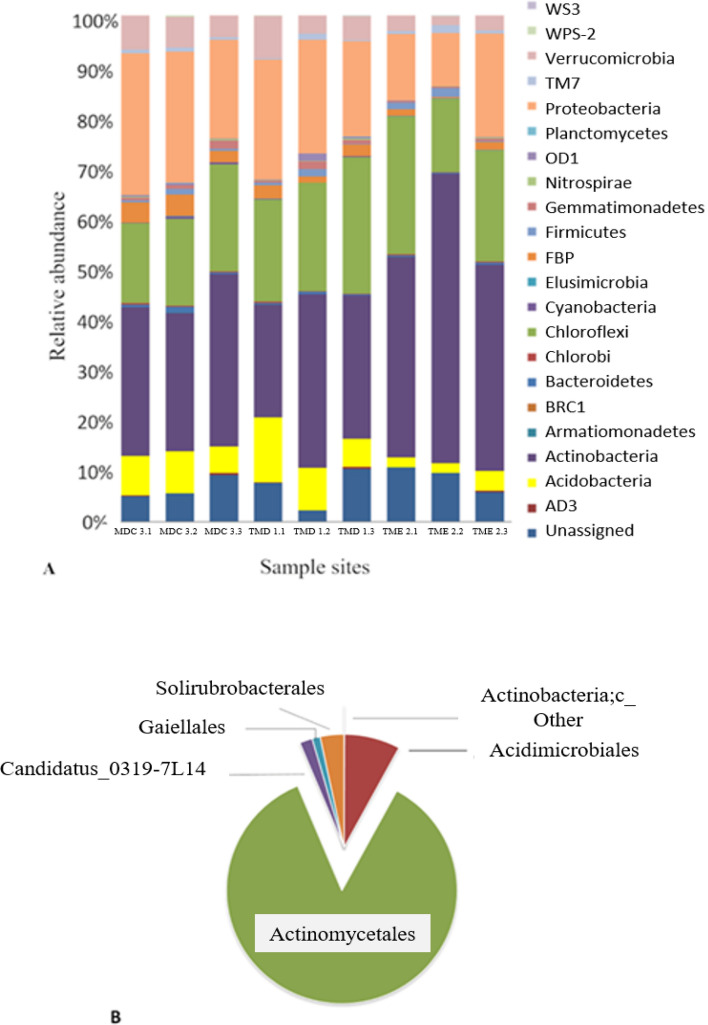
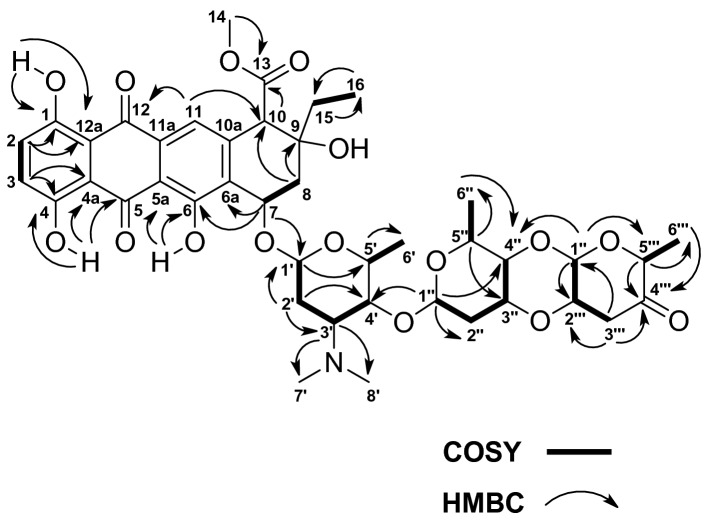
Although many advances have been achieved to treat aggressive tumours, cancer remains a leading cause of death and a public health problem worldwide. Among the main approaches for the discovery of new bioactive agents, the prospect of microbial secondary metabolites represents an effective source for the development of drug leads. In this study, we investigated the actinobacterial diversity associated with an endemic Antarctic species, Deschampsia antarctica, by integrated culture-dependent and culture-independent methods and acknowledged this niche as a reservoir of bioactive strains for the production of antitumour compounds. The 16S rRNA-based analysis showed the predominance of the Actinomycetales order, a well-known group of bioactive metabolite producers belonging to the Actinobacteria phylum. Cultivation techniques were applied, and 72 psychrotolerant Actinobacteria strains belonging to the genera Actinoplanes, Arthrobacter, Kribbella, Mycobacterium, Nocardia, Pilimelia, Pseudarthrobacter, Rhodococcus, Streptacidiphilus, Streptomyces and Tsukamurella were identified. The secondary metabolites were screened, and 17 isolates were identified as promising antitumour compound producers. However, the bio-guided assay showed a pronounced antiproliferative activity for the crude extracts of Streptomyces sp. CMAA 1527 and Streptomyces sp. CMAA 1653. The TGI and LC values revealed the potential of these natural products to control the proliferation of breast (MCF-7), glioblastoma (U251), lung/non-small (NCI-H460) and kidney (786-0) human cancer cell lines. Cinerubin B and actinomycin V were the predominant compounds identified in Streptomyces sp. CMAA 1527 and Streptomyces sp. CMAA 1653, respectively. Our results suggest that the rhizosphere of D. antarctica represents a prominent reservoir of bioactive actinobacteria strains and reveals it as an important environment for potential antitumour agents.
尽管在治疗侵袭性肿瘤方面取得了许多进展,但癌症仍然是全球范围内导致死亡的主要原因和公共卫生问题。在发现新的生物活性物质的主要方法中,微生物次生代谢产物的前景代表了开发药物先导物的有效来源。在这项研究中,我们通过综合依赖培养和非依赖培养的方法研究了与地方性南极物种 Deschampsia antarctica 相关的放线菌多样性,并承认这个生态位是产生抗肿瘤化合物的生物活性菌株的储库。基于 16S rRNA 的分析表明,Actinomycetales 目占主导地位,该目是一类已知的生物活性代谢产物产生菌,属于放线菌门。应用了培养技术,鉴定出了 72 株属于放线菌属、节杆菌属、克里贝拉属、分枝杆菌属、诺卡氏菌属、皮利美拉属、假诺卡氏菌属、红球菌属、链霉菌属、链微菌属和土生古菌属的耐冷放线菌菌株。筛选了次生代谢产物,鉴定出 17 株具有潜在抗肿瘤化合物产生能力的菌株。然而,生物导向测定显示出 Streptomyces sp. CMAA 1527 和 Streptomyces sp. CMAA 1653 粗提物具有明显的抗增殖活性。TGI 和 LC 值表明这些天然产物具有控制乳腺癌(MCF-7)、神经胶质瘤(U251)、肺癌/非小细胞(NCI-H460)和肾癌(786-0)人癌细胞系增殖的潜力。在 Streptomyces sp. CMAA 1527 和 Streptomyces sp. CMAA 1653 中分别鉴定出了主要化合物为堇青霉素 B 和放线菌素 V。我们的研究结果表明,D. antarctica 的根际代表了具有生物活性的放线菌菌株的重要储库,并揭示了它是潜在抗肿瘤剂的重要环境。