Yu Xinhua
Division of Epidemiology, Biostatistics and Environmental Health, School of Public Health, University of Memphis, USA.
One Health. 2020 Dec;10:100160. doi: 10.1016/j.onehlt.2020.100160. Epub 2020 Aug 22.
After more than six months into the coronavirus disease (COVID-19) pandemic, as of August 10, 2020, over 734,664 people had died worldwide. The current study aims to evaluate how mitigating interventions affected the epidemic process in the 30 largest metropolitan areas in the US and whether temperature played a role in the epidemic process.
Publicly available data for the time series of COVID-19 cases and deaths and weather were analyzed at the metropolitan level. The time-varying reproductive numbers (R) based on retrospective moving average were used to explore the trends. Student tests were used to compare temperature and peak R cross-sectionally.
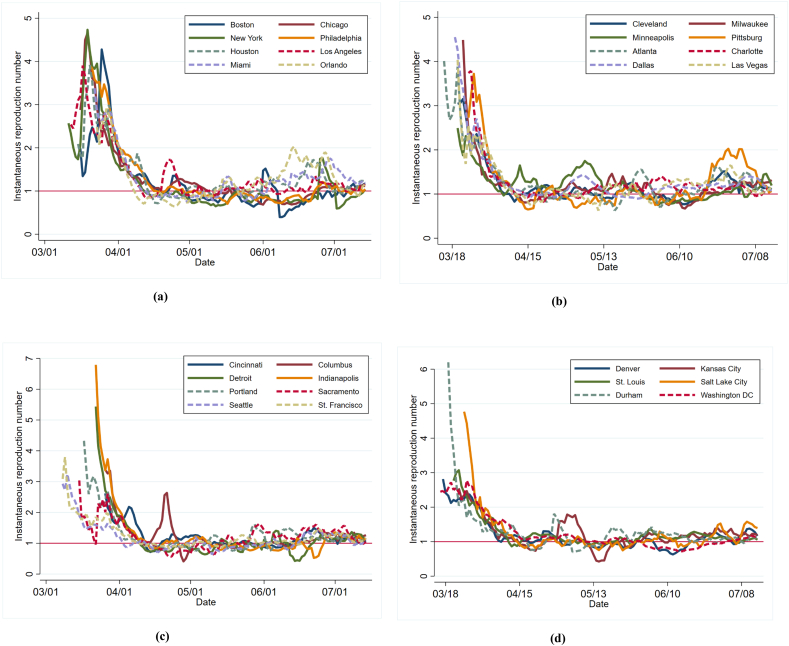
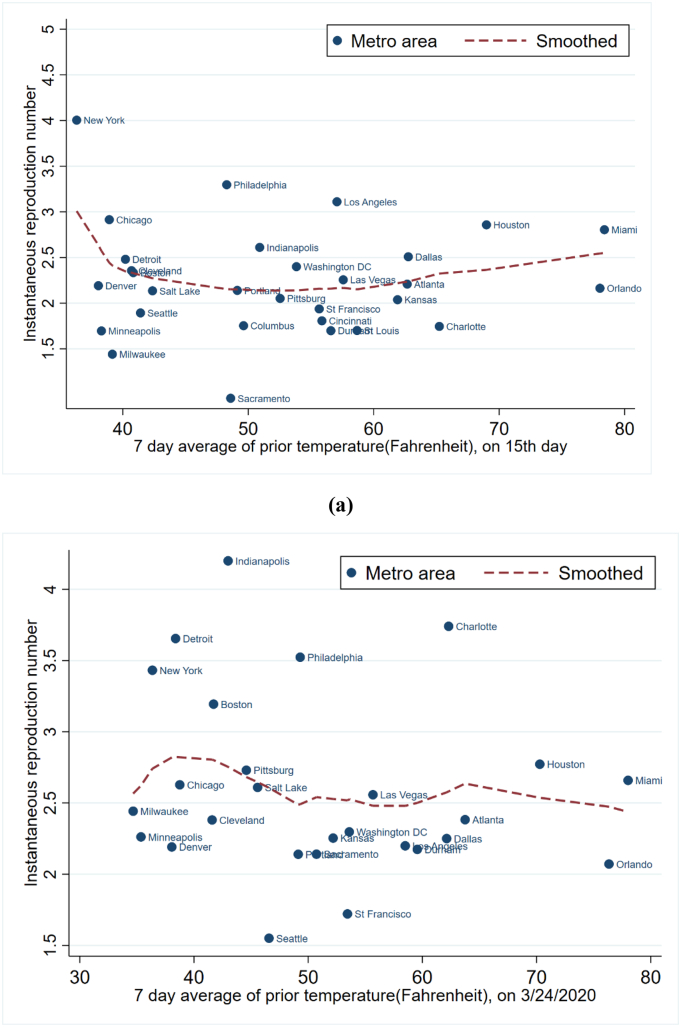
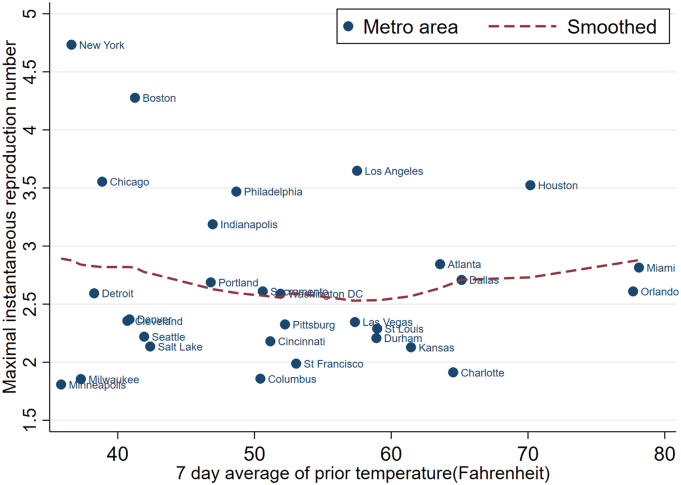
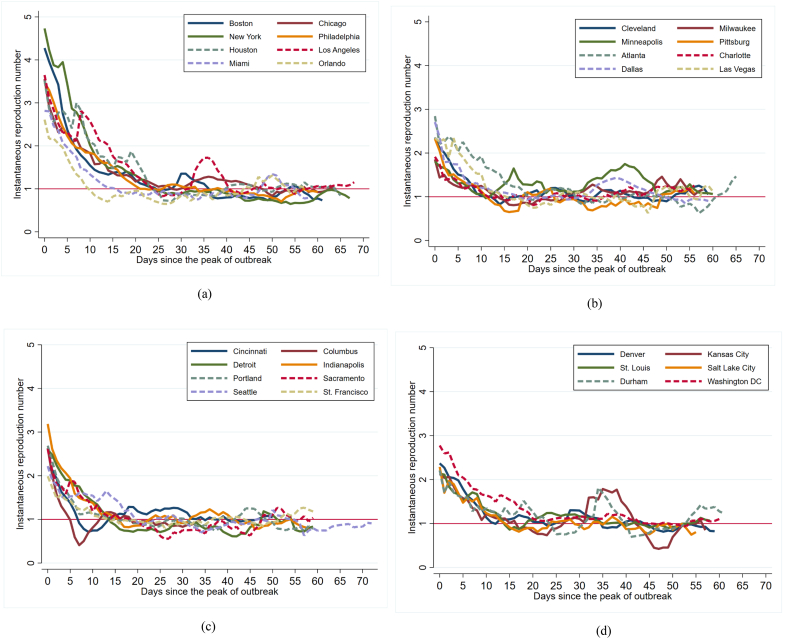
We found that virus transmissibility, measured by instantaneous reproduction number (R), had declined since the end of March for all areas and almost all of them reached a R of 1 or below after April 15, 2020. The timing of the main decline was concurrent with the implementation of mitigating interventions. However, the Rs remained around 1 for most areas since then and there were some small and short rebounds in some areas, suggesting a persistent epidemic in those areas when interventions were relaxed. Cities with warm temperature also tended to have a lower peak R than that of cities with cold temperature. However, they were not statistically significant and large geographic variations existed.
Aggressive interventions might have mitigated the current pandemic of COVID-19, while temperature might have weak effects on the virus transmission. We may need to prepare for a possible return of the coronavirus outbreak.
截至2020年8月10日,新型冠状病毒肺炎(COVID-19)大流行已持续六个多月,全球死亡人数超过734,664人。本研究旨在评估缓解措施如何影响美国30个最大都市圈的疫情发展过程,以及温度在疫情发展过程中是否发挥了作用。
在都市圈层面分析了公开可得的COVID-19病例和死亡时间序列数据以及天气数据。使用基于回顾性移动平均值的时变繁殖数(R)来探究趋势。采用学生检验对温度和R峰值进行横断面比较。
我们发现,自3月底以来,所有地区以瞬时繁殖数(R)衡量的病毒传播力均有所下降,并且几乎所有地区在2020年4月15日之后R值都降至1或以下。主要下降时间与缓解措施的实施同步。然而,此后大多数地区的R值仍维持在1左右,一些地区出现了一些小幅度的短期反弹,这表明在措施放松时这些地区疫情持续存在。温度较高的城市其R峰值往往也低于温度较低的城市。然而,差异无统计学意义,且存在较大的地理差异。
积极的干预措施可能减轻了当前COVID-19大流行,而温度可能对病毒传播影响较弱。我们可能需要为冠状病毒疫情的可能卷土重来做好准备。