Abdelaziz Sahar, Al Yousef Hanan M, Al-Qahtani Ali S, Hassan Wafaa H B, Fantoukh Omer I, El-Sayed May A
Department of Pharmacognosy, Faculty of Pharmacy, Zagazig University, Zagazig, Egypt.
Pharmacognosy Department, College of Pharmacy, King Saud University, Saudi Arabia.
Saudi Pharm J. 2020 Sep;28(9):1129-1137. doi: 10.1016/j.jsps.2020.08.001. Epub 2020 Aug 6.
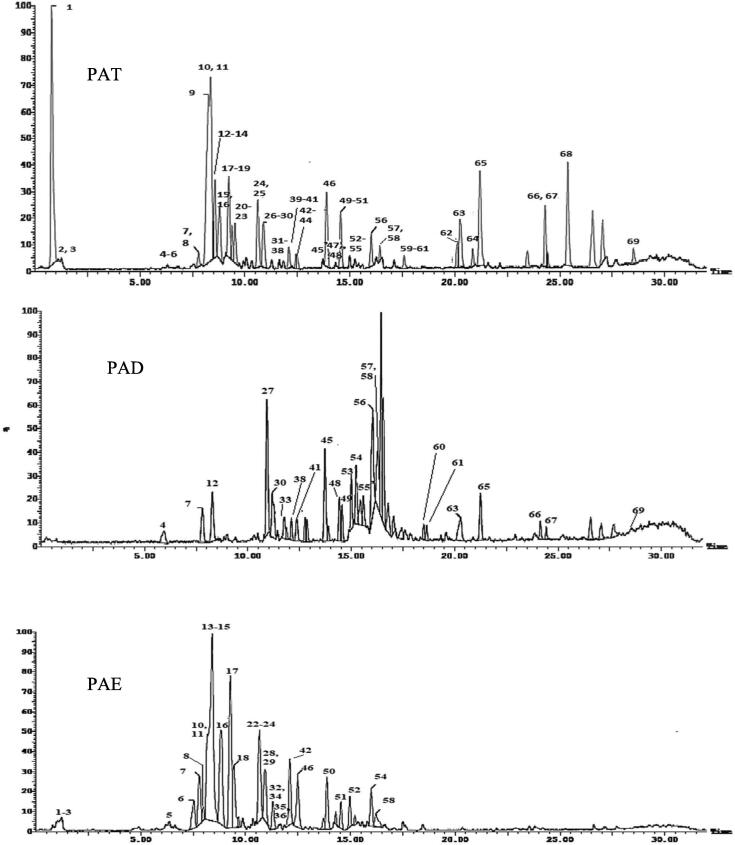
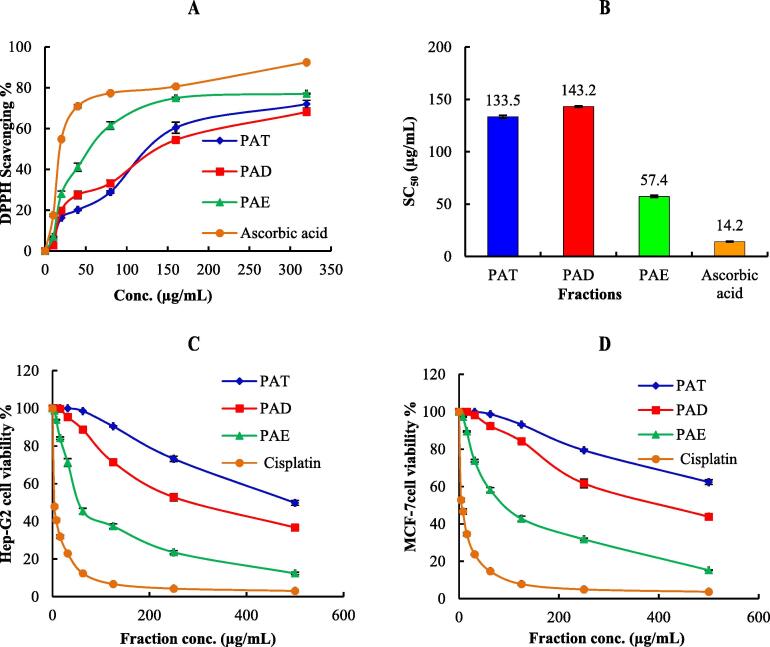
L. growing in Saudi Arabia was investigated for its phytochemical profile, antioxidant, and cytotoxic properties. UPLC-ESI-MS/MS was employed as a powerful technique for the characterization of secondary metabolites from a hydroalcoholic extract, dichloromethane, and ethyl acetate fractions of L. aerial parts. Sixty-nine compounds (flavonoids, anthocyanins, phenolics and fatty acids) were detected and characterized; flavonoids were the abundant components in the analyzed samples. The dichloromethane fraction was rich in phenolics as vanillic acid hexoside, flavonols as 3,7-dimthylquercetin, and flavones as 3'-hydroxymelanettin. However, the ethyl acetate fraction was rich in flavonoid--glycosides as luteolin-8--β-D-glucoside (orientin) and apigenin-8--glucoside (vitexin), flavonoid- , -diglycosides such as luteolin 7--[6''-dihydrogalloyl]-glucosyl-8--pentosyl-(1 → 2)-glucoside and 2''--rhamnosyl isoorientin. These compounds were identified for the first time in dichloromethane and ethyl acetate fractions of Saudi L. Additionally, all the samples were assessed for antioxidant activity using DPPH radical scavenging method and for cytotoxic activity through MTT assay. Accordingly, the most active fraction was the ethyl acetate which showed the highest antioxidant activity (SC = 57.4 ± 1.2 μg/mL) compared with the positive control, ascorbic acid (SC = 12.4 ± 0.5 μg/mL) and moderate cytotoxicity against HepG-2 (hepatocellular carcinoma) and MCF-7 (breast carcinoma) cell lines with IC = 56.9 ± 3.1 and 95.8 ± 3.8 μg/mL, respectively compared with cisplatin (IC = 3.67 ± 0.22 and 5.71 ± 0.57 μg/mL, respectively for both cell lines). The antioxidant and cytotoxic activities may be attributed to the presence of high percentage of phenolic compounds and hydroxylated flavonoids detected in ethyl acetate fraction using UPLS-ESI-MS/MS.
对生长在沙特阿拉伯的某植物进行了植物化学特征、抗氧化和细胞毒性特性研究。超高效液相色谱-电喷雾串联质谱(UPLC-ESI-MS/MS)被用作一种强大的技术,用于表征该植物地上部分水醇提取物、二氯甲烷和乙酸乙酯馏分中的次生代谢产物。检测并鉴定了69种化合物(黄酮类、花青素、酚类和脂肪酸);黄酮类是分析样品中的主要成分。二氯甲烷馏分富含酚类,如香草酸己糖苷,黄酮醇如3,7-二甲基槲皮素,黄酮如3'-羟基黑麦草亭。然而,乙酸乙酯馏分富含黄酮糖苷,如木犀草素-8-β-D-葡萄糖苷(荭草素)和芹菜素-8-葡萄糖苷(牡荆素),黄酮-、-二糖苷,如木犀草素7-[6''-二氢没食子酰基]-葡萄糖基-8-戊糖基-(1→2)-葡萄糖苷和2''-鼠李糖基异荭草素。这些化合物首次在沙特某植物的二氯甲烷和乙酸乙酯馏分中被鉴定出来。此外,所有样品均采用DPPH自由基清除法评估抗氧化活性,并通过MTT法评估细胞毒性活性。因此,活性最高的馏分是乙酸乙酯,与阳性对照抗坏血酸(SC = 12.4±0.5μg/mL)相比,其显示出最高的抗氧化活性(SC = 57.4±1.2μg/mL),并且对HepG-2(肝癌)和MCF-7(乳腺癌)细胞系具有中等细胞毒性,IC分别为56.9±3.1和95.8±3.8μg/mL,而顺铂对这两种细胞系的IC分别为3.67±0.22和5.71±0.57μg/mL。抗氧化和细胞毒性活性可能归因于使用UPLS-ESI-MS/MS在乙酸乙酯馏分中检测到的高比例酚类化合物和羟基化黄酮类化合物。