Chopra Alka, Ali Syed Azmal, Bathla Shveta, Rawat Preeti, Vohra Vikas, Kumar Sudarshan, Mohanty Ashok Kumar
Proteomics and Cell Biology Lab, Animal Biotechnology Center, National Dairy Research Institute, Karnal, India.
Yale University School of Medicine, New Haven, CT, United States.
Front Nutr. 2020 Sep 11;7:150. doi: 10.3389/fnut.2020.00150. eCollection 2020.
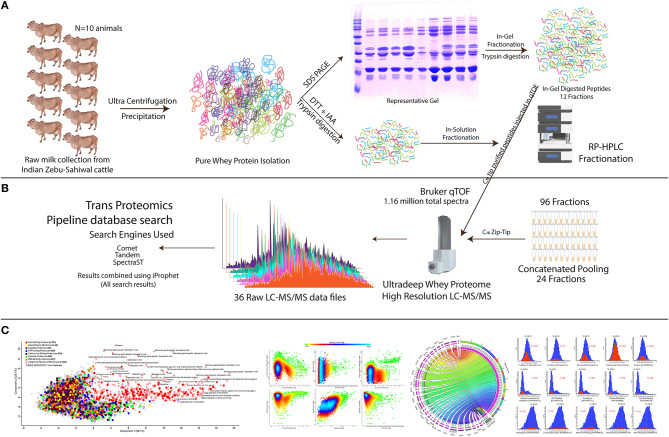
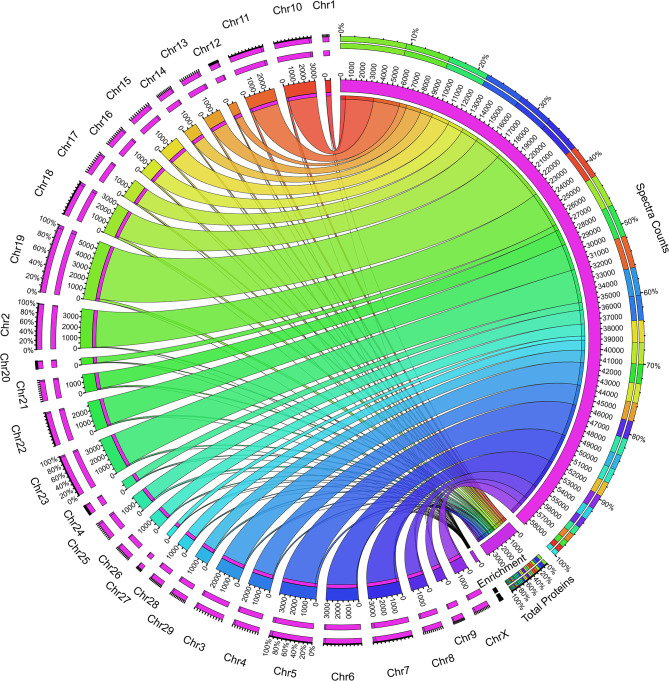
Milk serves as a mode of protection to neonate through transferring the host defense proteins from mother to offspring. It also guards the mammary gland against various types of infections. Along with the presence of six vital proteins, bovine milk (whey) contains a massive class of minor proteins, not all of which have been comprehensively reported. In this study, we performed an LC-MS/MS-based ultra-deep identification of the milk whey proteome of Indian zebu () cattle. Three independent search engines that are Comet, Tandem, and Mascot-based analysis resulted in the discovery of over 6,210 non-redundant proteins commonly identified. Genome-wise mapping revealed that chromosome 1 showed a minimum expression of 14 proteins, whereas chromosome 19 expressed 250 maximum proteins in milk whey. These results demonstrate that milk proteome in cattle is quite complicated, and minor milk fractions play a significant role in host defense.
乳汁通过将宿主防御蛋白从母体传递给后代,为新生儿提供一种保护方式。它还能保护乳腺免受各种类型的感染。除了六种重要蛋白质外,牛乳(乳清)还含有大量的次要蛋白质,并非所有这些蛋白质都有全面的报道。在本研究中,我们基于液相色谱-串联质谱(LC-MS/MS)对印度瘤牛的乳清蛋白质组进行了超深度鉴定。基于Comet、Tandem和 Mascot的三种独立搜索引擎分析,发现了超过6210种共同鉴定出的非冗余蛋白质。全基因组图谱显示,1号染色体上乳清蛋白的表达最少,为14种,而19号染色体上表达最多,为250种。这些结果表明,瘤牛的乳蛋白质组相当复杂,少量的乳成分在宿主防御中起着重要作用。