Library of Marine Samples, Korea Institute of Ocean Science & Technology, Geoje, Korea.
Department of Oceanography, Pukyong National University, Busan, Korea.
Mol Ecol. 2021 Jan;30(1):207-221. doi: 10.1111/mec.15714. Epub 2020 Nov 14.
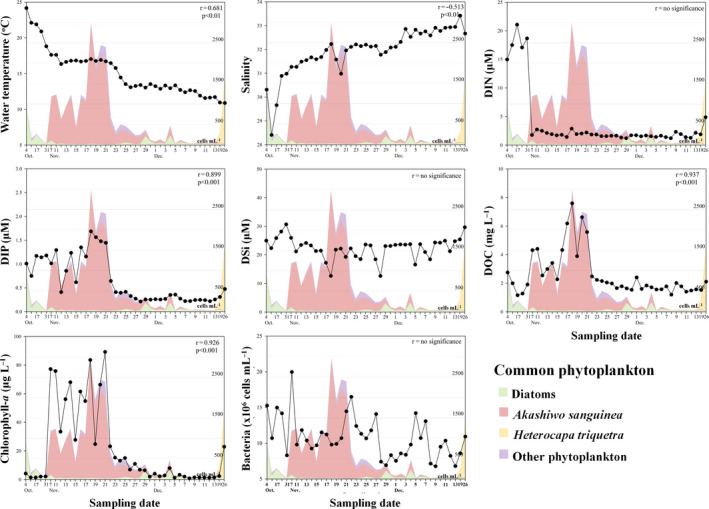
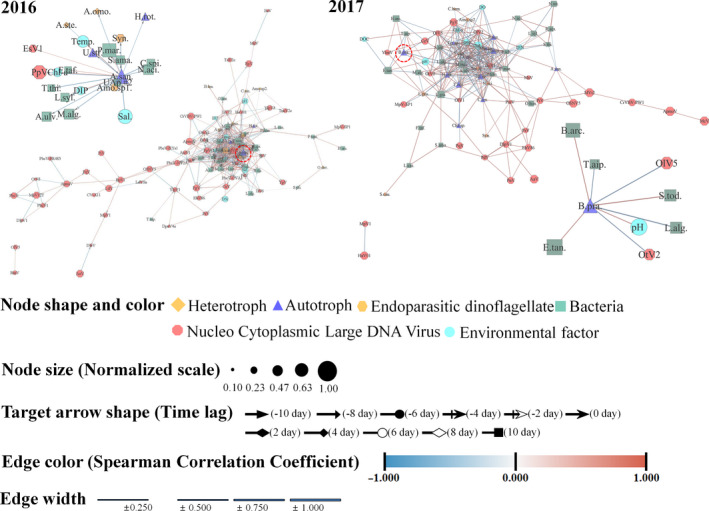
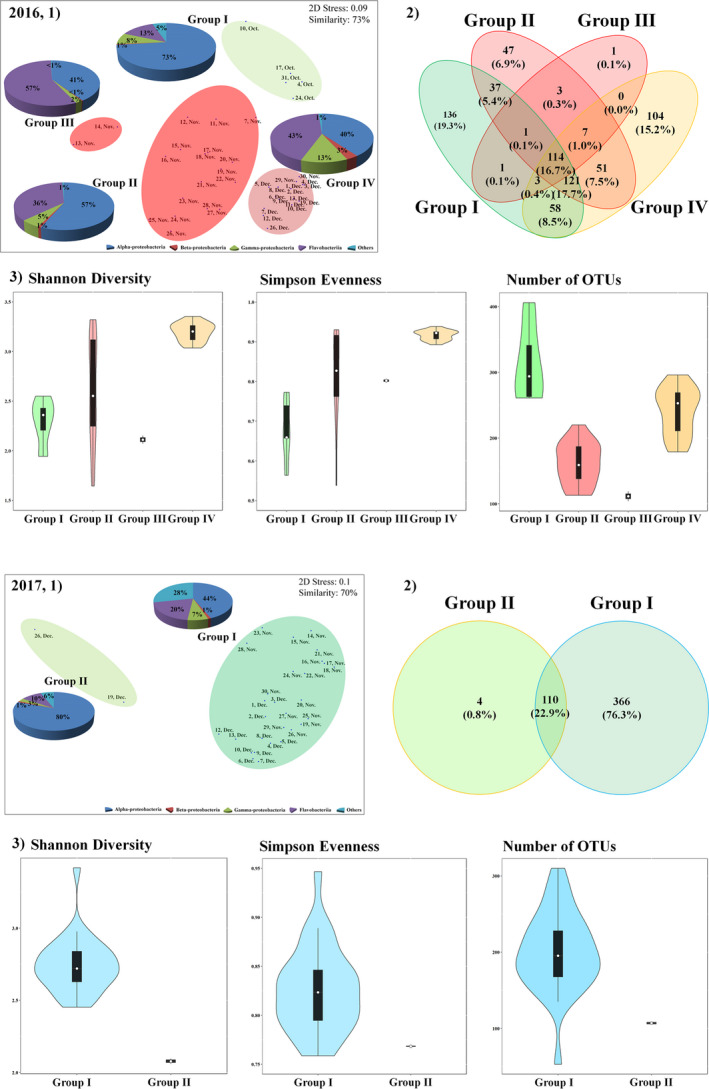
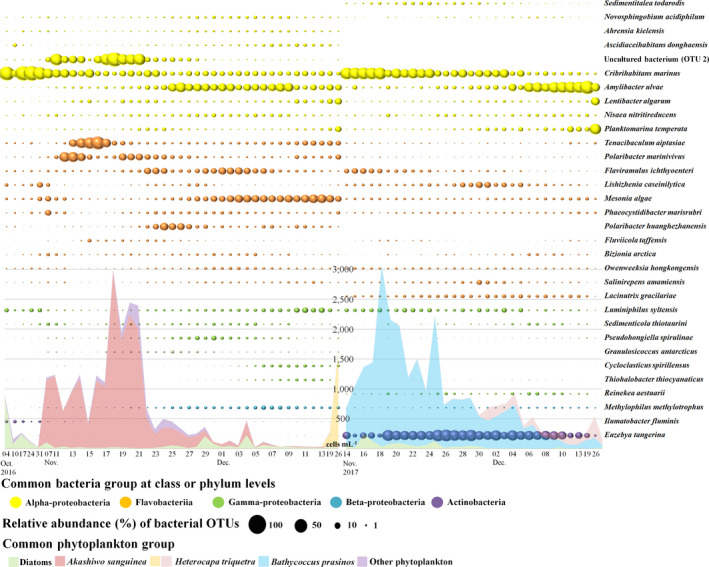
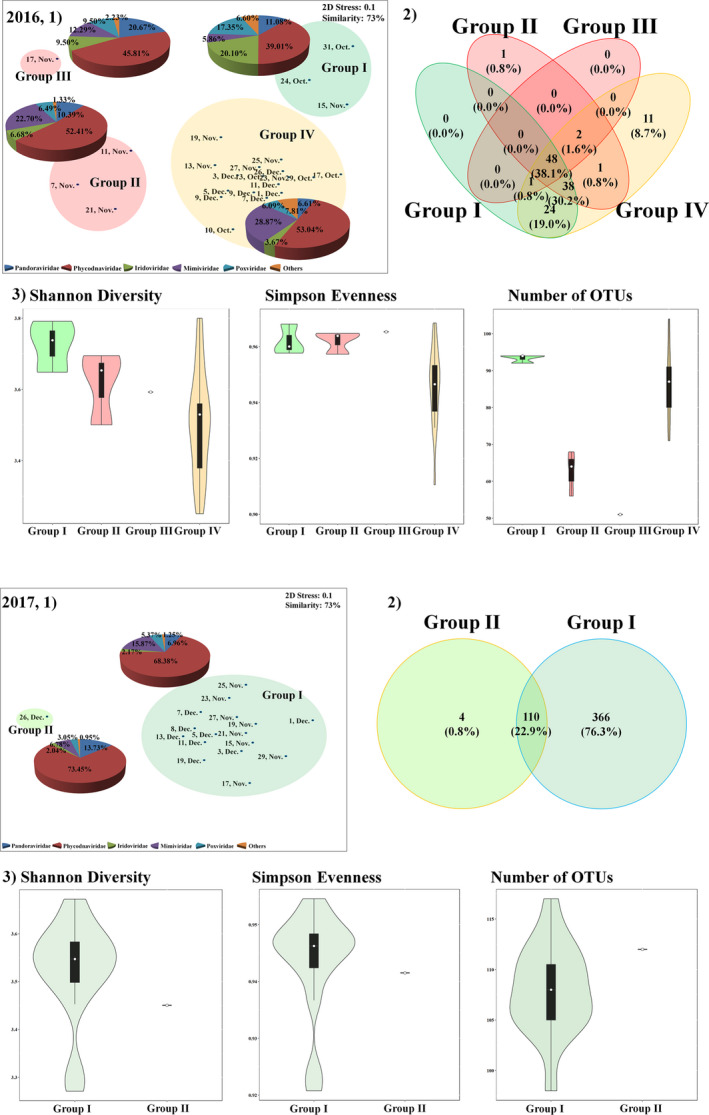
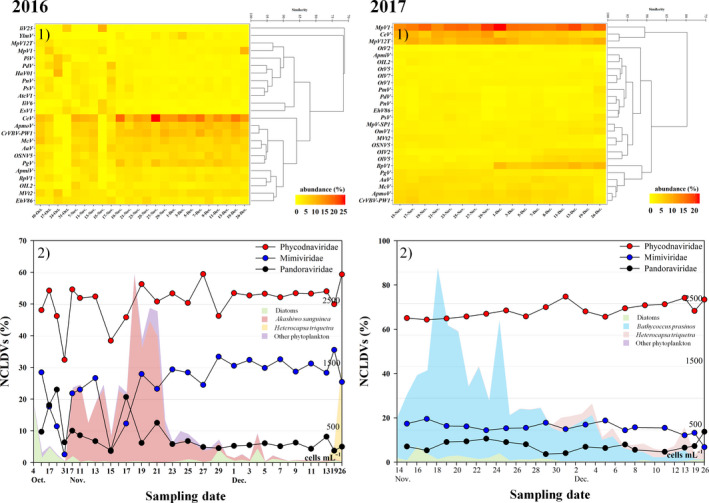
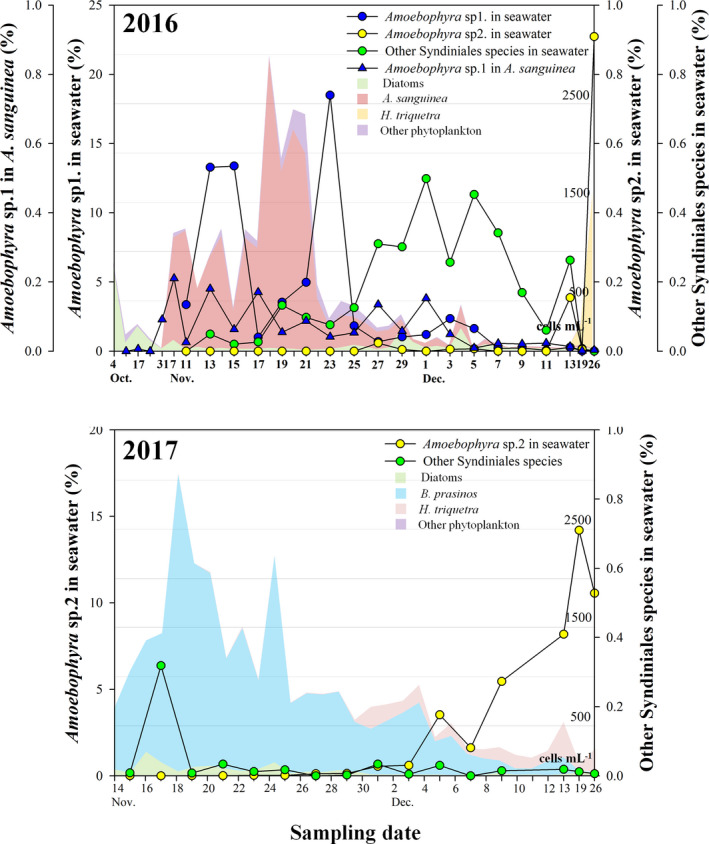
Characterizing ecological relationships between viruses, bacteria and phytoplankton in the ocean is critical to understanding the ecosystem; however, these relationships are infrequently investigated together. To understand the dynamics of microbial communities and environmental factors in harmful algal blooms (HABs), we examined the environmental factors and microbial communities during Akashiwo sanguinea HABs in the Jangmok coastal waters of South Korea by metagenomics. Specific bacterial species showed complex synergistic and antagonistic relationships with the A. sanguinea bloom. The endoparasitic dinoflagellate Amoebophrya sp. 1 controlled the bloom dynamics and correlated with HAB decline. Among nucleocytoplasmic large DNA viruses (NCLDVs), two Pandoraviruses and six Phycodnaviruses were strongly and positively correlated with the HABs. Operational taxonomic units of microbial communities and environmental factors associated with A. sanguinea were visualized by network analysis: A. sanguinea-Amoebophrya sp. 1 (r = .59, time lag: 2 days) and A. sanguinea-Ectocarpus siliculosus virus 1 in Phycodnaviridae (0.50, 4 days) relationships showed close associations. The relationship between A. sanguinea and dissolved inorganic phosphorus relationship also showed a very close correlation (0.74, 0 day). Microbial communities and the environment changed dynamically during the A. sanguinea bloom, and the rapid turnover of microorganisms responded to ecological interactions. A. sanguinea bloom dramatically changes the environments by exuding dissolved carbohydrates via autotrophic processes, followed by changes in microbial communities involving host-specific viruses, bacteria and parasitoids. Thus, the microbial communities in HAB are composed of various organisms that interact in a complex manner.
表征海洋中病毒、细菌和浮游植物之间的生态关系对于理解生态系统至关重要;然而,这些关系很少被一起研究。为了了解赤潮期间微生物群落和环境因素的动态,我们通过宏基因组学研究了韩国江茂沿海海域 A. sanguinea 赤潮期间的环境因素和微生物群落。特定的细菌物种与 A. sanguinea 藻华表现出复杂的协同和拮抗关系。内寄生的甲藻 Amoebophrya sp. 1 控制了藻华动态,并与赤潮衰退相关。在核质大 DNA 病毒(NCLDVs)中,两种潘多拉病毒和六种 Phycodnaviruses 与赤潮呈强烈正相关。微生物群落和与 A. sanguinea 相关的环境因素的分类单元通过网络分析可视化:A. sanguinea-Amoebophrya sp. 1(r =.59,时间滞后:2 天)和 A. sanguinea-Ectocarpus siliculosus virus 1 在 Phycodnaviridae(0.50,4 天)的关系密切相关。A. sanguinea 与溶解无机磷的关系也显示出非常密切的相关性(0.74,0 天)。在 A. sanguinea 藻华期间,微生物群落和环境动态变化,微生物的快速周转对生态相互作用做出响应。A. sanguinea 藻华通过自养过程分泌溶解的碳水化合物,剧烈改变环境,随后涉及宿主特异性病毒、细菌和寄生蜂的微生物群落发生变化。因此,赤潮中的微生物群落由以复杂方式相互作用的各种生物组成。