• 文献检索
  • 文档翻译
  • 深度研究
  • 学术资讯
  • Suppr Zotero 插件Zotero 插件
  • 邀请有礼
  • 套餐&价格
  • 历史记录
应用&插件
Suppr Zotero 插件Zotero 插件浏览器插件Mac 客户端Windows 客户端微信小程序
定价
高级版会员购买积分包购买API积分包
服务
文献检索文档翻译深度研究API 文档MCP 服务
关于我们
关于 Suppr公司介绍联系我们用户协议隐私条款
关注我们

Suppr 超能文献

核心技术专利:CN118964589B侵权必究
粤ICP备2023148730 号-1Suppr @ 2026

文献检索

告别复杂PubMed语法,用中文像聊天一样搜索,搜遍4000万医学文献。AI智能推荐,让科研检索更轻松。

立即免费搜索

文件翻译

保留排版,准确专业,支持PDF/Word/PPT等文件格式,支持 12+语言互译。

免费翻译文档

深度研究

AI帮你快速写综述,25分钟生成高质量综述,智能提取关键信息,辅助科研写作。

立即免费体验

用于预测 COVID-19 进展的新型生物标志物:一项回顾性、多中心队列研究。

Novel biomarkers for the prediction of COVID-19 progression a retrospective, multi-center cohort study.

机构信息

Department of Hematology, Zhongnan Hospital of Wuhan University , Wuhan, China.

Department of Urology, Zhongnan Hospital of Wuhan University , Wuhan, China.

出版信息

Virulence. 2020 Dec;11(1):1569-1581. doi: 10.1080/21505594.2020.1840108.

DOI:10.1080/21505594.2020.1840108
PMID:33172355
原文链接:https://pmc.ncbi.nlm.nih.gov/articles/PMC7671095/
Abstract

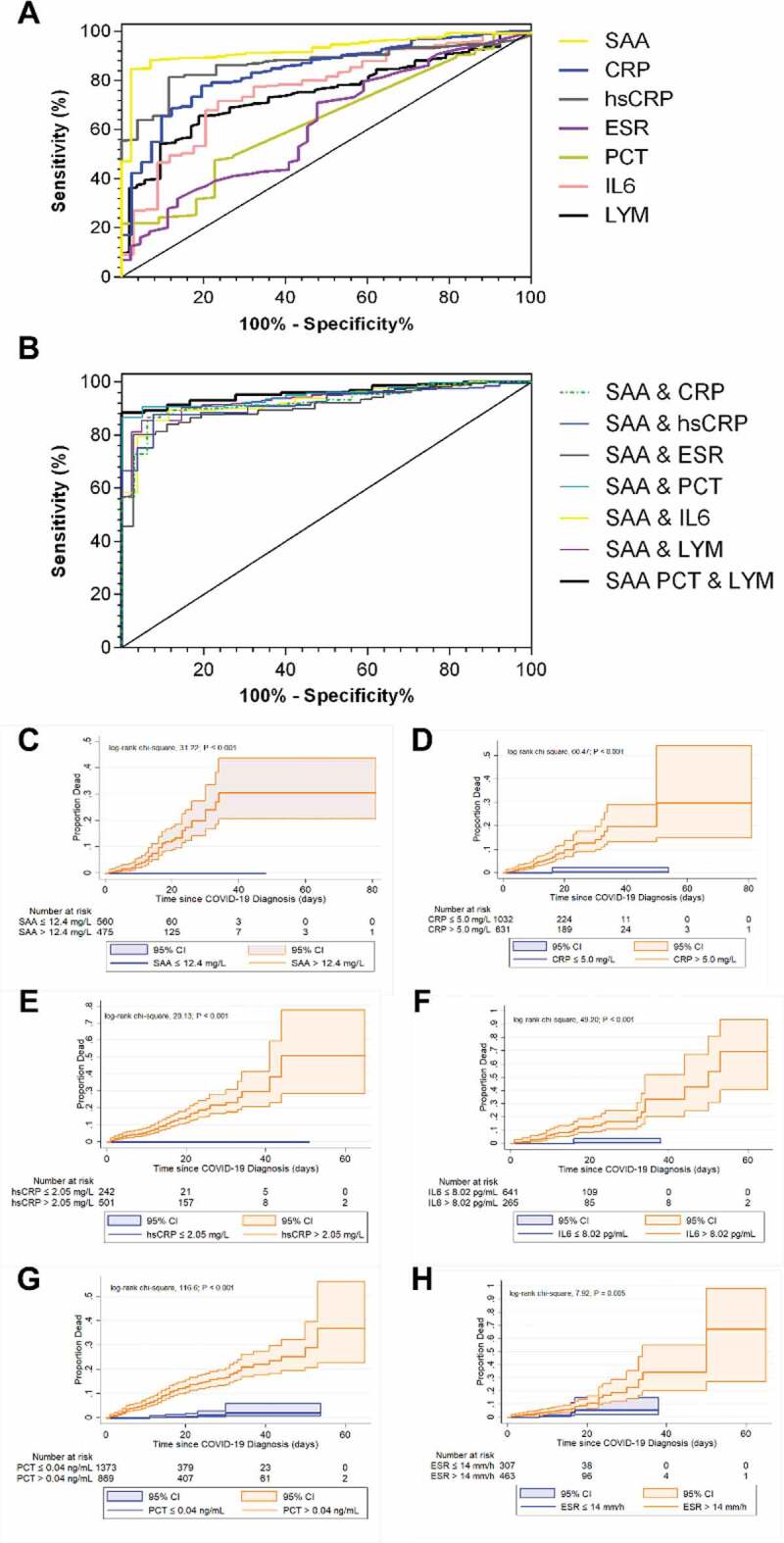
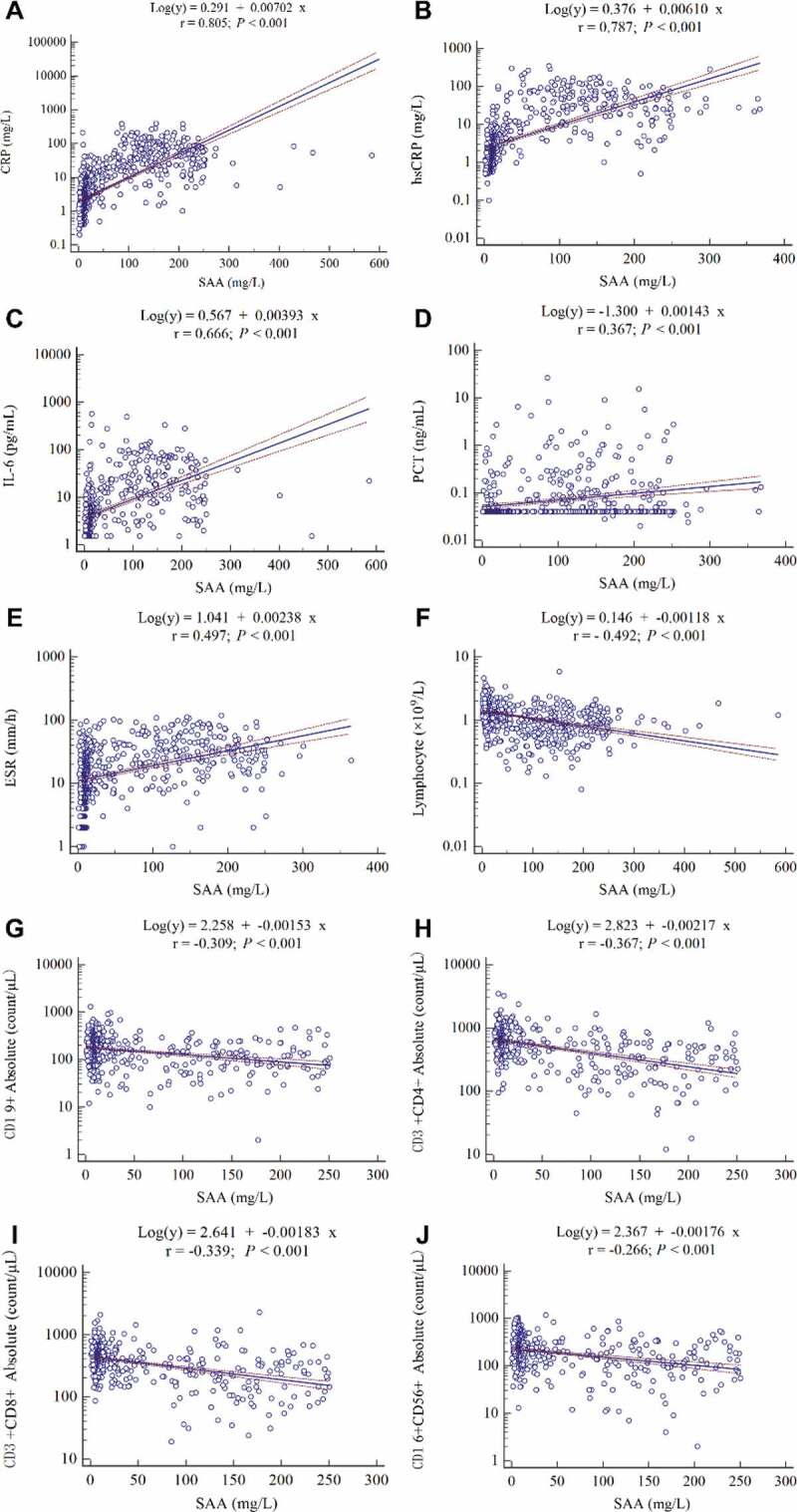
A pandemic designated as Coronavirus Disease 2019 (COVID-19), caused by severe acute respiratory syndrome coronavirus 2 (SARS-CoV-2) is spreading worldwide. Up to date, there is no efficient biomarker for the timely prediction of the disease progression in patients. To analyze the inflammatory profiles of COVID-19 patients and demonstrate their implications for the illness progression of COVID-19. Retrospective analysis of 3,265 confirmed COVID-19 cases hospitalized between 10 January 2020, and 26 March 2020 in three medical centers in Wuhan, China. Patients were diagnosed as COVID-19 and hospitalized in Leishenshan Hospital, Zhongnan Hospital of Wuhan University and The Seventh Hospital of Wuhan, China. Univariable and multivariable logistic regression models were used to determine the possible risk factors for disease progression. Moreover, cutoff values, the sensitivity and specificity of inflammatory parameters for disease progression were determined by MedCalc Version 19.2.0. Age (95%CI, 1.017 to 1.048; < 0.001), serum amyloid A protein (SAA) (95%CI, 1.216 to 1.396; < 0.001) and erythrocyte sedimentation rate (ESR) (95%CI, 1.006 to 1.045; < 0.001) were likely the risk factors for the disease progression. The Area under the curve (AUC) of SAA for the progression of COVID-19 was 0.923, with the best predictive cutoff value of SAA of 12.4 mg/L, with a sensitivity of 83.9% and a specificity of 97.67%. SAA-containing parameters are novel promising ones for predicting disease progression in COVID-19.

摘要

一种由严重急性呼吸系统综合征冠状病毒 2(SARS-CoV-2)引起的被指定为 2019 年冠状病毒病(COVID-19)的大流行病正在全球范围内传播。迄今为止,尚无用于及时预测患者疾病进展的有效生物标志物。为了分析 COVID-19 患者的炎症特征,并证明其对 COVID-19 疾病进展的影响。对 2020 年 1 月 10 日至 3 月 26 日期间在中国武汉的三个医疗中心住院的 3265 例确诊 COVID-19 病例进行回顾性分析。患者被诊断为 COVID-19 并在雷神山医院、武汉大学中南医院和武汉市第七医院住院。采用单变量和多变量逻辑回归模型确定疾病进展的可能危险因素。此外,通过 MedCalc Version 19.2.0 确定炎症参数对疾病进展的截断值、敏感性和特异性。年龄(95%CI,1.017 至 1.048;<0.001)、血清淀粉样蛋白 A 蛋白(SAA)(95%CI,1.216 至 1.396;<0.001)和红细胞沉降率(ESR)(95%CI,1.006 至 1.045;<0.001)可能是疾病进展的危险因素。SAA 用于 COVID-19 进展的曲线下面积(AUC)为 0.923,SAA 的最佳预测截断值为 12.4mg/L,灵敏度为 83.9%,特异性为 97.67%。含 SAA 的参数是预测 COVID-19 疾病进展的有前途的新参数。
https://cdn.ncbi.nlm.nih.gov/pmc/blobs/1ad2/7671095/ab00629ed7b0/KVIR_A_1840108_F0003_OC.jpg
https://cdn.ncbi.nlm.nih.gov/pmc/blobs/1ad2/7671095/4a0ced27832d/KVIR_A_1840108_F0001_OC.jpg
https://cdn.ncbi.nlm.nih.gov/pmc/blobs/1ad2/7671095/3ea153f28e6c/KVIR_A_1840108_F0002_OC.jpg
https://cdn.ncbi.nlm.nih.gov/pmc/blobs/1ad2/7671095/ab00629ed7b0/KVIR_A_1840108_F0003_OC.jpg
https://cdn.ncbi.nlm.nih.gov/pmc/blobs/1ad2/7671095/4a0ced27832d/KVIR_A_1840108_F0001_OC.jpg
https://cdn.ncbi.nlm.nih.gov/pmc/blobs/1ad2/7671095/3ea153f28e6c/KVIR_A_1840108_F0002_OC.jpg
https://cdn.ncbi.nlm.nih.gov/pmc/blobs/1ad2/7671095/ab00629ed7b0/KVIR_A_1840108_F0003_OC.jpg

相似文献

1
Novel biomarkers for the prediction of COVID-19 progression a retrospective, multi-center cohort study.用于预测 COVID-19 进展的新型生物标志物:一项回顾性、多中心队列研究。
Virulence. 2020 Dec;11(1):1569-1581. doi: 10.1080/21505594.2020.1840108.
2
Expressions of SAA, CRP, and FERR in different severities of COVID-19.SAA、CRP 和 FERR 在不同 COVID-19 严重程度下的表达。
Eur Rev Med Pharmacol Sci. 2020 Nov;24(21):11386-11394. doi: 10.26355/eurrev_202011_23631.
3
Serum Amyloid A is a biomarker of severe Coronavirus Disease and poor prognosis.血清淀粉样蛋白 A 是严重冠状病毒病和预后不良的生物标志物。
J Infect. 2020 Jun;80(6):646-655. doi: 10.1016/j.jinf.2020.03.035. Epub 2020 Apr 8.
4
Prognostic value of serum amyloid A in patients with COVID-19.血清淀粉样蛋白 A 在 COVID-19 患者中的预后价值。
Infection. 2020 Oct;48(5):715-722. doi: 10.1007/s15010-020-01468-7. Epub 2020 Jul 30.
5
The hemocyte counts as a potential biomarker for predicting disease progression in COVID-19: a retrospective study.血细胞计数作为预测 COVID-19 疾病进展的潜在生物标志物:一项回顾性研究。
Clin Chem Lab Med. 2020 Jun 25;58(7):1106-1115. doi: 10.1515/cclm-2020-0377.
6
Predictors of progression from moderate to severe coronavirus disease 2019: a retrospective cohort.从中度到重度 2019 冠状病毒病进展的预测因素:一项回顾性队列研究。
Clin Microbiol Infect. 2020 Oct;26(10):1400-1405. doi: 10.1016/j.cmi.2020.06.033. Epub 2020 Jul 2.
7
A Retrospective Study of the C-Reactive Protein to Lymphocyte Ratio and Disease Severity in 108 Patients with Early COVID-19 Pneumonia from January to March 2020 in Wuhan, China.回顾性研究 2020 年 1 月至 3 月中国武汉 108 例早期 COVID-19 肺炎患者 C 反应蛋白与淋巴细胞比值与疾病严重程度的关系
Med Sci Monit. 2020 Sep 11;26:e926393. doi: 10.12659/MSM.926393.
8
Cardiovascular disease potentially contributes to the progression and poor prognosis of COVID-19.心血管疾病可能导致 COVID-19 的进展和预后不良。
Nutr Metab Cardiovasc Dis. 2020 Jun 25;30(7):1061-1067. doi: 10.1016/j.numecd.2020.04.013. Epub 2020 Apr 18.
9
C-reactive protein correlates with computed tomographic findings and predicts severe COVID-19 early.C 反应蛋白与计算机断层扫描结果相关,可早期预测严重 COVID-19。
J Med Virol. 2020 Jul;92(7):856-862. doi: 10.1002/jmv.25871. Epub 2020 Apr 25.
10
Clinical characteristics of 16 patients with fecal severe acute respiratory syndrome coronavirus 2 nucleic acid-positive.16例粪便严重急性呼吸综合征冠状病毒2核酸阳性患者的临床特征
Zhong Nan Da Xue Xue Bao Yi Xue Ban. 2020 May 28;45(5):560-564. doi: 10.11817/j.issn.1672-7347.2020.200230.

引用本文的文献

1
Approaching Personalized Medicine: The Use of Machine Learning to Determine Predictors of Mortality in a Population with SARS-CoV-2 Infection.走近个性化医疗:利用机器学习确定新冠病毒感染人群的死亡率预测因素
Biomedicines. 2024 Feb 9;12(2):409. doi: 10.3390/biomedicines12020409.
2
Validation of a risk prediction model for COVID-19: the PERIL prospective cohort study.新型冠状病毒肺炎风险预测模型的验证:PERIL前瞻性队列研究
Future Virol. 2023 Oct. doi: 10.2217/fvl-2023-0036. Epub 2023 Nov 7.
3
Serum amyloid A-A potential therapeutic target for hyper-inflammatory syndrome associated with COVID-19.

本文引用的文献

1
Novel Insights Into Illness Progression and Risk Profiles for Mortality in Non-survivors of COVID-19.对新冠病毒病非幸存者疾病进展和死亡风险概况的新见解。
Front Med (Lausanne). 2020 May 22;7:246. doi: 10.3389/fmed.2020.00246. eCollection 2020.
2
Association of inflammatory markers with the severity of COVID-19: A meta-analysis.炎症标志物与 COVID-19 严重程度的相关性:一项荟萃分析。
Int J Infect Dis. 2020 Jul;96:467-474. doi: 10.1016/j.ijid.2020.05.055. Epub 2020 May 18.
3
The pathogenesis and treatment of the `Cytokine Storm' in COVID-19.
血清淀粉样蛋白A——新型冠状病毒肺炎相关高炎症综合征的潜在治疗靶点
Front Med (Lausanne). 2023 Mar 16;10:1135695. doi: 10.3389/fmed.2023.1135695. eCollection 2023.
4
Prognostic models in COVID-19 infection that predict severity: a systematic review.COVID-19 感染中预测严重程度的预后模型:系统评价。
Eur J Epidemiol. 2023 Apr;38(4):355-372. doi: 10.1007/s10654-023-00973-x. Epub 2023 Feb 25.
5
Role of Serum Amyloid A as a Biomarker for Predicting the Severity and Prognosis of COVID-19.血清淀粉样蛋白 A 作为 COVID-19 严重程度和预后预测生物标志物的作用。
J Immunol Res. 2022 Nov 24;2022:6336556. doi: 10.1155/2022/6336556. eCollection 2022.
6
Heterogeneity and Risk of Bias in Studies Examining Risk Factors for Severe Illness and Death in COVID-19: A Systematic Review and Meta-Analysis.研究2019冠状病毒病重症和死亡风险因素的研究中的异质性和偏倚风险:一项系统评价和荟萃分析
Pathogens. 2022 May 10;11(5):563. doi: 10.3390/pathogens11050563.
7
Serum amyloid A concentrations, COVID-19 severity and mortality: An updated systematic review and meta-analysis.血清淀粉样蛋白A浓度、新冠病毒疾病严重程度及死亡率:一项更新的系统评价与荟萃分析
Int J Infect Dis. 2021 Apr;105:668-674. doi: 10.1016/j.ijid.2021.03.025. Epub 2021 Mar 15.
新型冠状病毒病中“细胞因子风暴”的发病机制与治疗。
J Infect. 2020 Jun;80(6):607-613. doi: 10.1016/j.jinf.2020.03.037. Epub 2020 Apr 10.
4
Serum Amyloid A is a biomarker of severe Coronavirus Disease and poor prognosis.血清淀粉样蛋白 A 是严重冠状病毒病和预后不良的生物标志物。
J Infect. 2020 Jun;80(6):646-655. doi: 10.1016/j.jinf.2020.03.035. Epub 2020 Apr 8.
5
As COVID-19 cases, deaths and fatality rates surge in Italy, underlying causes require investigation.随着意大利新冠肺炎病例、死亡人数和死亡率激增,潜在原因需要调查。
J Infect Dev Ctries. 2020 Mar 31;14(3):265-267. doi: 10.3855/jidc.12734.
6
Preparation for Possible Sustained Transmission of 2019 Novel Coronavirus: Lessons From Previous Epidemics.针对2019新型冠状病毒可能的持续传播做准备:既往疫情的教训
JAMA. 2020 Mar 24;323(12):1129-1130. doi: 10.1001/jama.2020.1960.
7
COVID-19 and Italy: what next?COVID-19 和意大利:下一步如何?
Lancet. 2020 Apr 11;395(10231):1225-1228. doi: 10.1016/S0140-6736(20)30627-9. Epub 2020 Mar 13.
8
Clinical course and risk factors for mortality of adult inpatients with COVID-19 in Wuhan, China: a retrospective cohort study.中国武汉成人 COVID-19 住院患者的临床病程和死亡危险因素:一项回顾性队列研究。
Lancet. 2020 Mar 28;395(10229):1054-1062. doi: 10.1016/S0140-6736(20)30566-3. Epub 2020 Mar 11.
9
The deadly coronaviruses: The 2003 SARS pandemic and the 2020 novel coronavirus epidemic in China.致命的冠状病毒:2003 年 SARS 大流行和 2020 年中国新型冠状病毒疫情。
J Autoimmun. 2020 May;109:102434. doi: 10.1016/j.jaut.2020.102434. Epub 2020 Mar 3.
10
Clinical Characteristics of Coronavirus Disease 2019 in China.《中国 2019 年冠状病毒病临床特征》
N Engl J Med. 2020 Apr 30;382(18):1708-1720. doi: 10.1056/NEJMoa2002032. Epub 2020 Feb 28.