School of Mathematical Sciences, Science and Engineering Faculty, Queensland University of Technology, Brisbane, Australia.
Centre for Data Science, Queensland University of Technology, Brisbane, Australia.
BMC Public Health. 2020 Dec 7;20(1):1868. doi: 10.1186/s12889-020-09972-z.
The global impact of COVID-19 and the country-specific responses to the pandemic provide an unparalleled opportunity to learn about different patterns of the outbreak and interventions. We model the global pattern of reported COVID-19 cases during the primary response period, with the aim of learning from the past to prepare for the future.
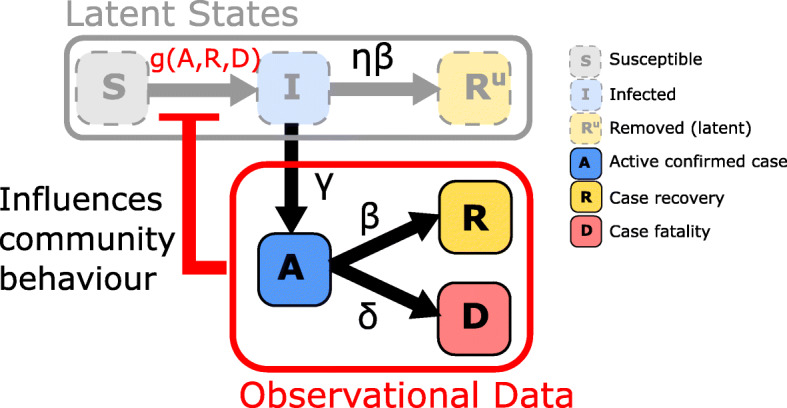
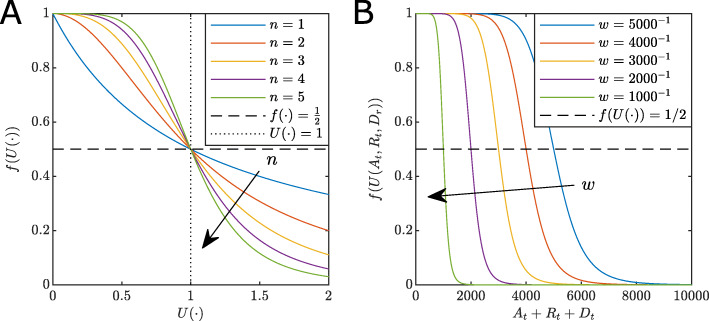
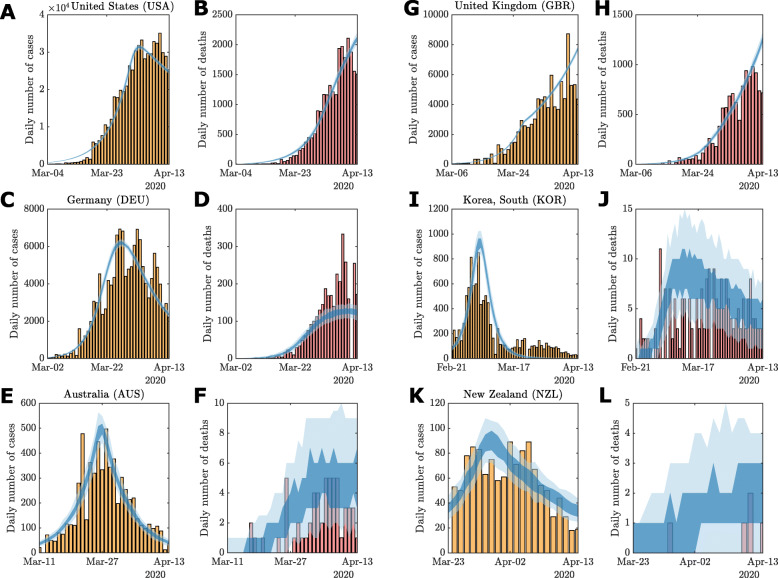
Using Bayesian methods, we analyse the response to the COVID-19 outbreak for 158 countries for the period 22 January to 9 June 2020. This encompasses the period in which many countries imposed a variety of response measures and initial relaxation strategies. Instead of modelling specific intervention types and timings for each country explicitly, we adopt a stochastic epidemiological model including a feedback mechanism on virus transmission to capture complex nonlinear dynamics arising from continuous changes in community behaviour in response to rising case numbers. We analyse the overall effect of interventions and community responses across diverse regions. This approach mitigates explicit consideration of issues such as period of infectivity and public adherence to government restrictions.
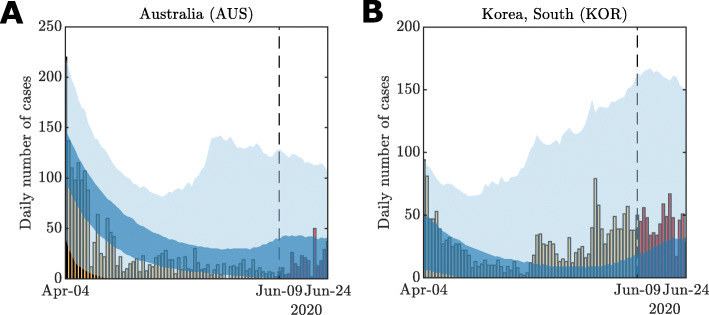
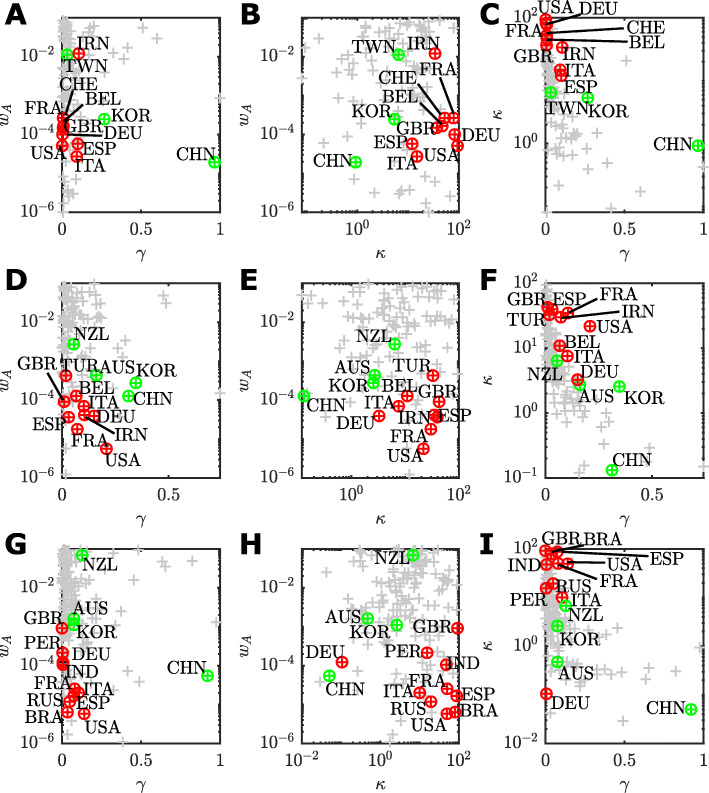
Countries with the largest cumulative case tallies are characterised by a delayed response, whereas countries that avoid substantial community transmission during the period of study responded quickly. Countries that recovered rapidly also have a higher case identification rate and small numbers of undocumented community transmission at the early stages of the outbreak. We also demonstrate that uncertainty in numbers of undocumented infections dramatically impacts the risk of multiple waves. Our approach is also effective at pre-empting potential flare-ups.
We demonstrate the utility of modelling to interpret community behaviour in the early epidemic stages. Two lessons learnt that are important for the future are: i) countries that imposed strict containment measures early in the epidemic fared better with respect to numbers of reported cases; and ii) broader testing is required early in the epidemic to understand the magnitude of undocumented infections and recover rapidly. We conclude that clear patterns of containment are essential prior to relaxation of restrictions and show that modelling can provide insights to this end.
COVID-19 的全球影响以及各国对大流行的应对措施提供了一个无与伦比的机会,可以了解疫情爆发和干预措施的不同模式。我们对主要应对阶段报告的 COVID-19 病例的全球模式进行建模,旨在从过去的经验中学习,为未来做好准备。
我们使用贝叶斯方法,对 2020 年 1 月 22 日至 6 月 9 日期间 158 个国家/地区的 COVID-19 疫情应对情况进行分析。这涵盖了许多国家实施各种应对措施和初始放松策略的时期。我们不是为每个国家/地区明确建模特定的干预类型和时间,而是采用包括病毒传播反馈机制的随机传染病模型,以捕捉因社区行为不断变化而产生的复杂非线性动态,这些变化是对病例数量上升的反应。我们分析了不同地区干预措施和社区反应的总体效果。这种方法减轻了对传染性时期和公众对政府限制的遵守等问题的明确考虑。
累计病例最多的国家的特点是反应滞后,而在研究期间避免了大规模社区传播的国家反应迅速。快速恢复的国家也具有更高的病例识别率和在疫情早期阶段少量未记录的社区传播。我们还表明,未记录感染数量的不确定性极大地影响了多波次的风险。我们的方法对于预测潜在的爆发也很有效。
我们展示了建模在解释疫情早期社区行为方面的效用。对于未来有两个重要的经验教训:i)在疫情早期实施严格遏制措施的国家在报告病例数量方面表现更好;ii)在疫情早期需要更广泛的检测,以了解未记录感染的规模并迅速恢复。我们的结论是,在放松限制之前,明确的遏制模式是必不可少的,并表明建模可以为此提供深入的了解。