Arciuolo Roberta, Santos Carla, Soares Célia, Castello Giuseppe, Spigolon Nicola, Chiusa Giorgio, Lima Nelson, Battilani Paola
Department of Sustainable Crop Production, Università Cattolica del Sacro Cuore, Piacenza, Italy.
CEB - Centre of Biological Engineering, Micoteca da Universidade do Minho, University of Minho, Braga, Portugal.
Front Plant Sci. 2020 Dec 11;11:611655. doi: 10.3389/fpls.2020.611655. eCollection 2020.
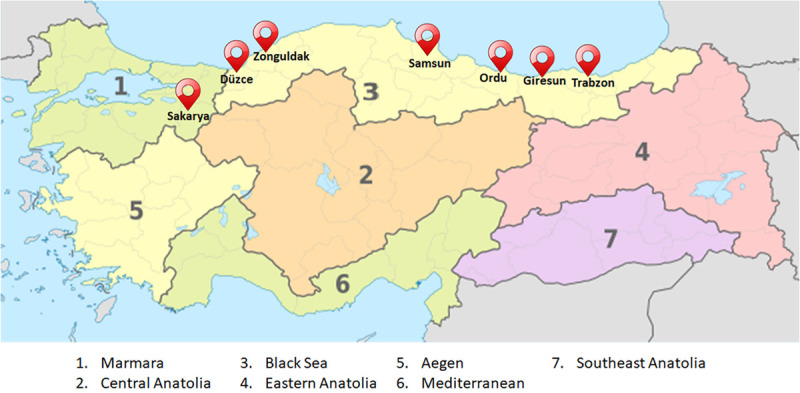
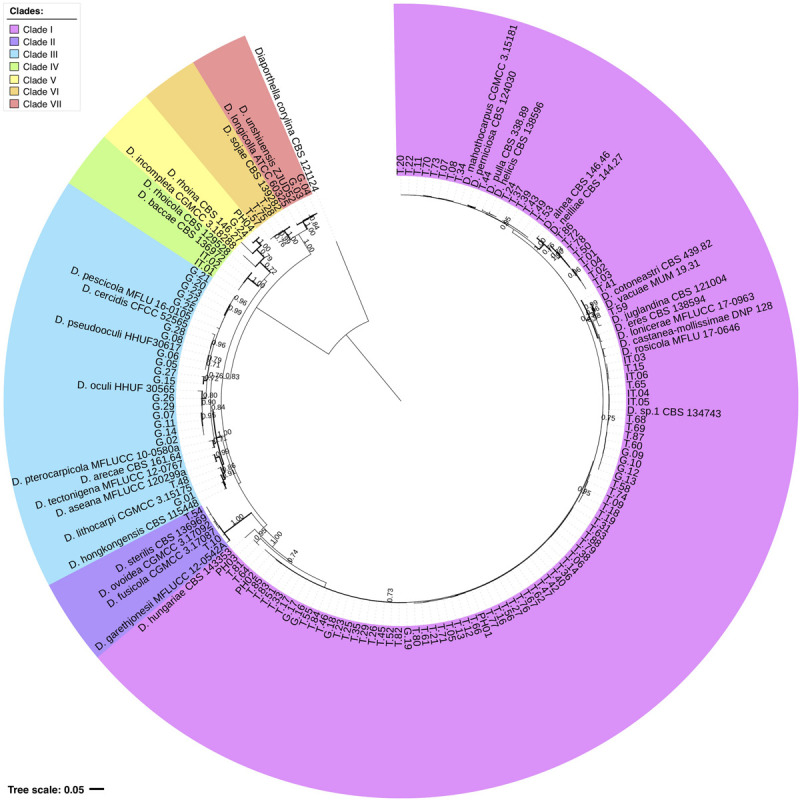
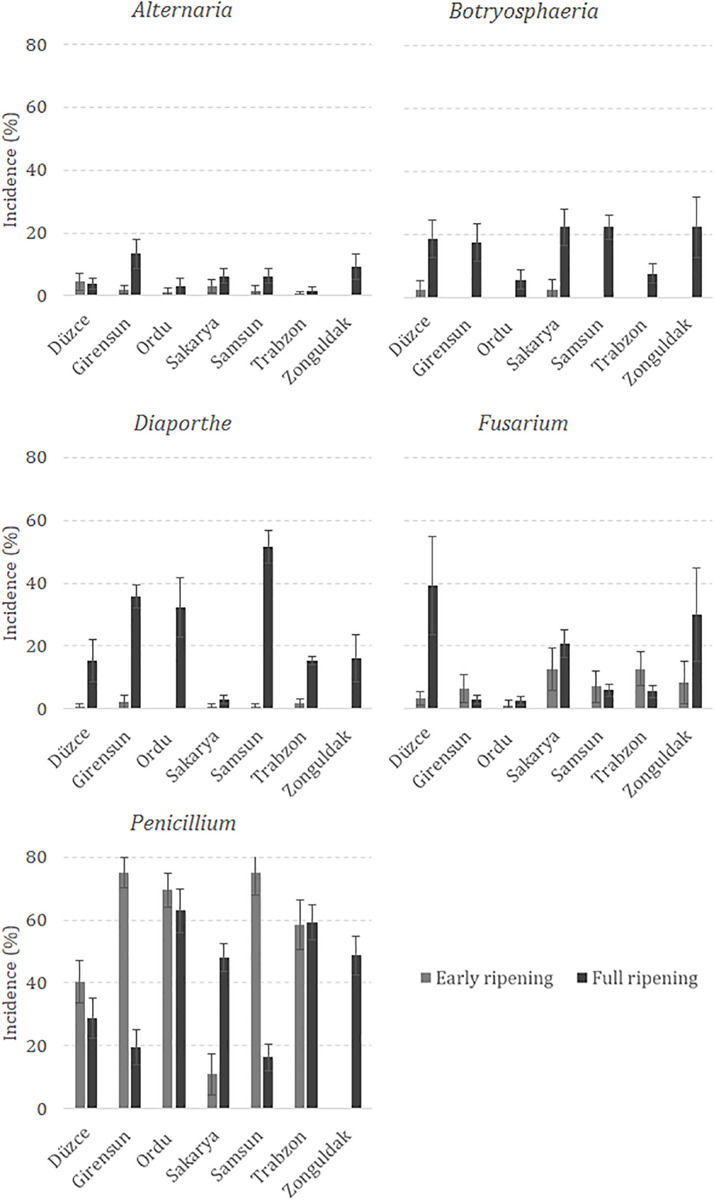
Fungi of the genus have been reported as the main causative agent of hazelnut defects in the Caucasus area. This study aimed to define which fungal species are present in defective hazelnuts grown in Turkey and confirm the role of spp. Seven hazelnut orchards were selected, with each one located in a different Turkish Province (Düzce, Giresun, Ordu, Samsun, Sakarya, Trabzon, and Zonguldak), and hazelnuts were collected at early and full ripening. Fungal isolation and identification were performed at the genus level based on morphological characteristics. Several genera were isolated, with spp. being among the prevalent. This was the only genus with increasing incidence from early to full ripening, and incidence at full ripening was positively correlated both with internal (ρ = 0.86) and visible defects (ρ = 0.81), which confirmed its role as the key causative agent of hazelnut defects. The correlation of defect occurrence with rainfall, reported in previous study, was not confirmed, possibly due to the low defect incidence. A total of 86 monosporic strains isolated from Turkish hazelnut samples, together with 33 strains collected in the Caucasus region and 6 from Italy, were analyzed with a multi-locus phylogeny based on three genomic loci (ITS, -α, and ). The results showed that strains can be grouped into 7 distinct clades, with a majority of Turkish strains (95%) being placed into a single clade related with . These samples were organized into several sub-clades, which indicates the existence of genetically diverse sub-populations.
属的真菌已被报道为高加索地区榛子出现缺陷的主要致病因子。本研究旨在确定土耳其种植的有缺陷榛子中存在哪些真菌物种,并证实属物种的作用。选择了七个榛果园,每个果园位于土耳其的不同省份(杜兹切、吉雷松、奥尔杜、萨姆松、萨卡里亚、特拉布宗和宗古尔达克),并在榛子早熟和完全成熟时进行采集。基于形态特征在属水平上进行真菌分离和鉴定。分离出了几个属,属物种是其中的优势种之一。这是唯一一个从早熟到完全成熟发病率增加的属,并且完全成熟时的发病率与内部缺陷(ρ = 0.86)和可见缺陷(ρ = 0.81)均呈正相关,这证实了其作为榛子缺陷关键致病因子的作用。先前研究中报道的缺陷发生与降雨的相关性未得到证实,可能是由于缺陷发生率较低。对从土耳其榛子样本中分离出的总共86个单孢菌株,连同在高加索地区收集的33个菌株和来自意大利的6个菌株,基于三个基因组位点(ITS、-α和)进行多位点系统发育分析。结果表明,菌株可分为7个不同的进化枝,大多数土耳其菌株(95%)被归入与相关的一个单一进化枝。这些样本被组织成几个亚进化枝,这表明存在遗传上不同的亚种群。