HCI/IWR, Heidelberg University, Heidelberg, Germany.
European Molecular Biology Laboratory, Heidelberg, Germany.
Bioessays. 2021 Mar;43(3):e2000257. doi: 10.1002/bies.202000257. Epub 2020 Dec 30.
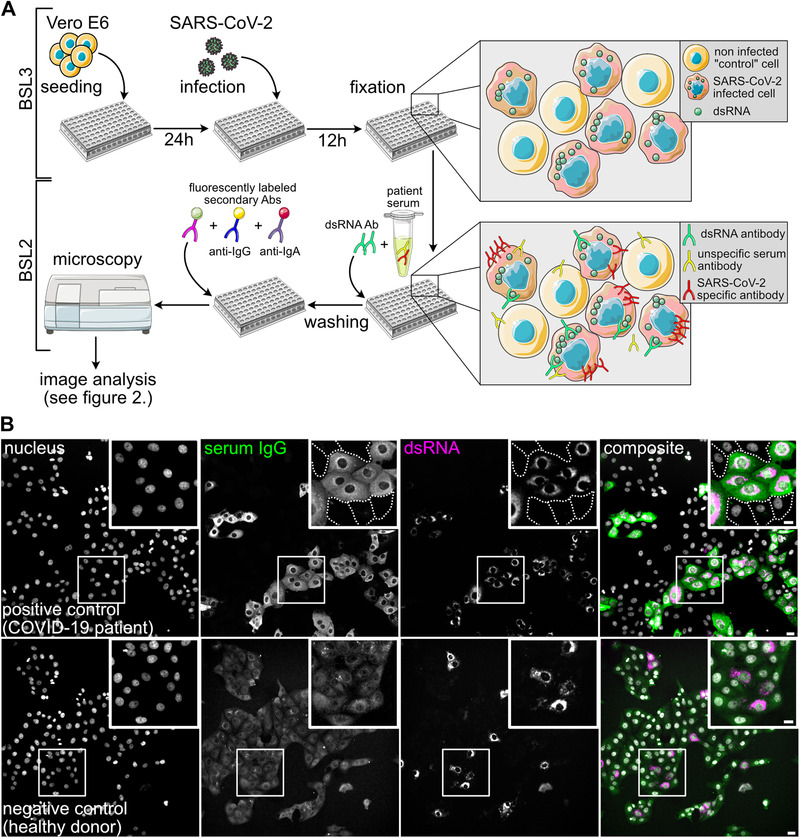
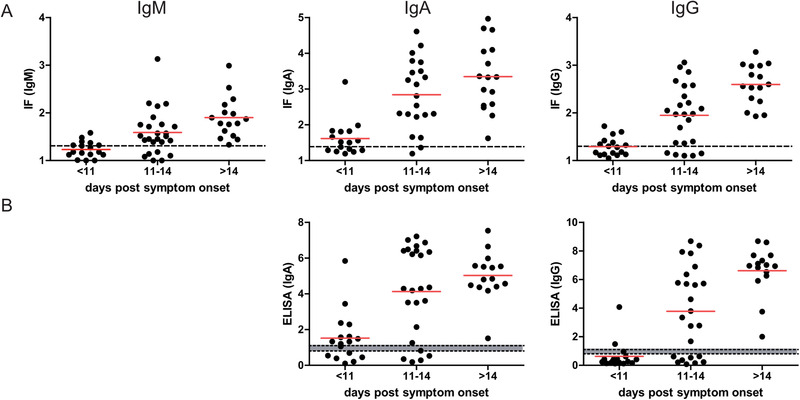
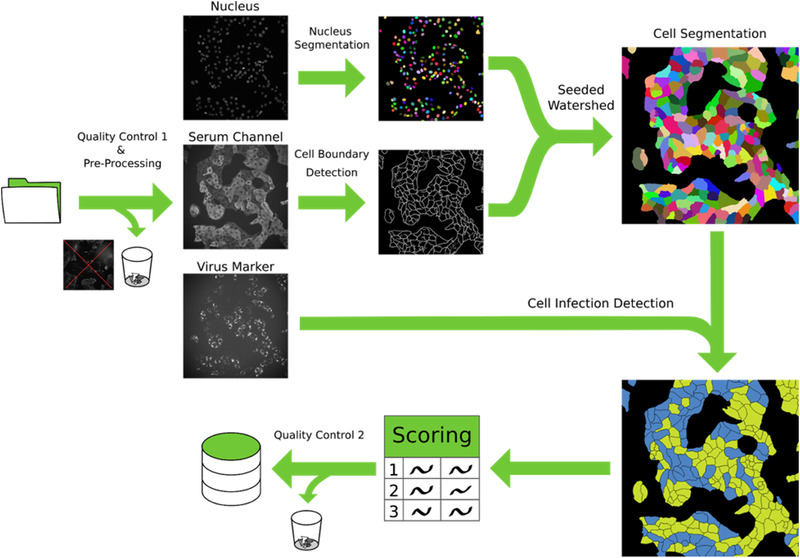
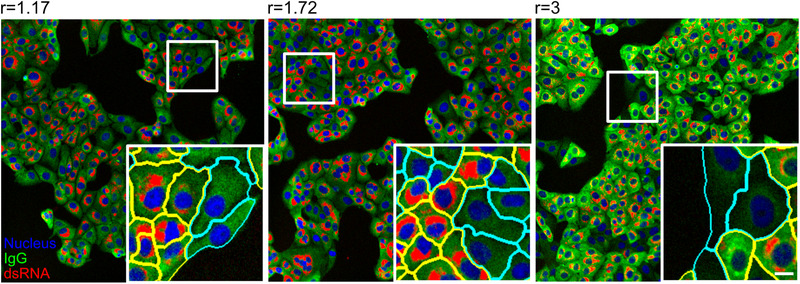
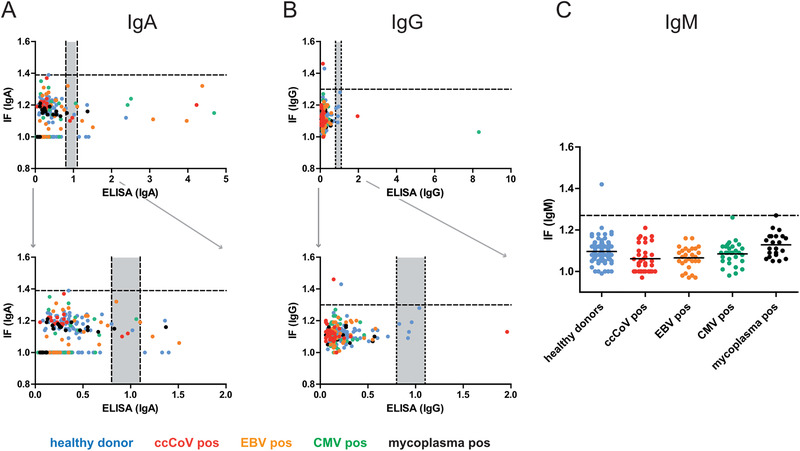
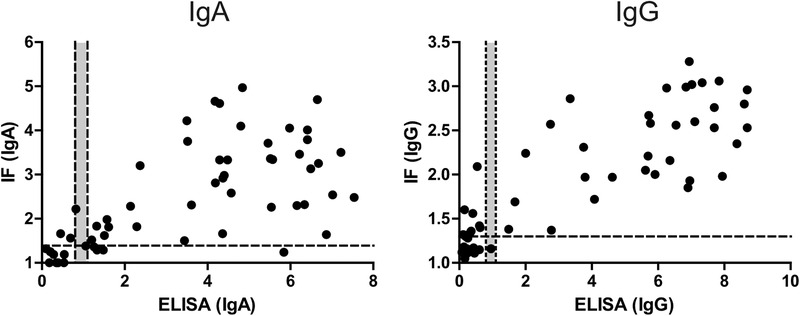
Emergence of the novel pathogenic coronavirus SARS-CoV-2 and its rapid pandemic spread presents challenges that demand immediate attention. Here, we describe the development of a semi-quantitative high-content microscopy-based assay for detection of three major classes (IgG, IgA, and IgM) of SARS-CoV-2 specific antibodies in human samples. The possibility to detect antibodies against the entire viral proteome together with a robust semi-automated image analysis workflow resulted in specific, sensitive and unbiased assay that complements the portfolio of SARS-CoV-2 serological assays. Sensitive, specific and quantitative serological assays are urgently needed for a better understanding of humoral immune response against the virus as a basis for developing public health strategies to control viral spread. The procedure described here has been used for clinical studies and provides a general framework for the application of quantitative high-throughput microscopy to rapidly develop serological assays for emerging virus infections.
新型致病冠状病毒 SARS-CoV-2 的出现及其迅速的全球传播带来了严峻的挑战,急需引起重视。在此,我们描述了一种半定量的高通量基于显微镜的检测方法,用于检测人类样本中三种主要类型(IgG、IgA 和 IgM)的 SARS-CoV-2 特异性抗体。该方法能够检测针对整个病毒蛋白质组的抗体,同时结合稳健的半自动图像分析工作流程,从而实现了特异性、敏感性和无偏倚的检测,补充了 SARS-CoV-2 血清学检测方法组合。对于更好地了解针对病毒的体液免疫反应,从而制定控制病毒传播的公共卫生策略,迫切需要灵敏、特异和定量的血清学检测方法。本文所述的程序已用于临床研究,并为将高通量定量显微镜应用于快速开发新兴病毒感染的血清学检测方法提供了一般框架。