Department of Health Sciences, University "Magna Graecia", Catanzaro88100, Italy.
Outpatient Service for Clinical Research and Treatment of Eating Disorders, University Hospital Mater Domini, Catanzaro88100, Italy.
Eur Psychiatry. 2020 Dec 16;64(1):e2. doi: 10.1192/j.eurpsy.2020.109.
There is growing interest in new factors contributing to the genesis of eating disorders (EDs). Research recently focused on the study of microbiota. Dysbiosis, associated with a specific genetic susceptibility, may contribute to the development of anorexia nervosa (AN), bulimia nervosa, or binge eating disorder, and several putative mechanisms have already been identified. Diet seems to have an impact not only on modification of the gut microbiota, facilitating dysbiosis, but also on its recovery in patients with EDs.
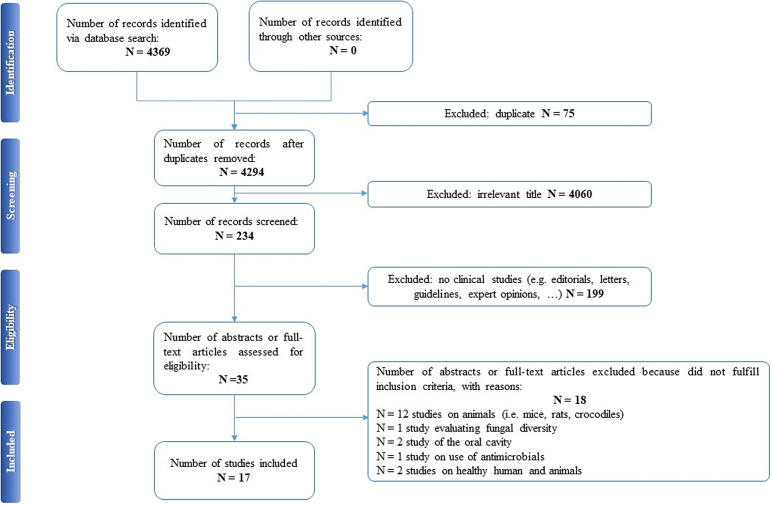
This systematic review based on the PICO strategy searching into PubMed, EMBASE, PsychINFO, and Cochrane Library examined the literature on the role of altered microbiota in the pathogenesis and treatment of EDs.
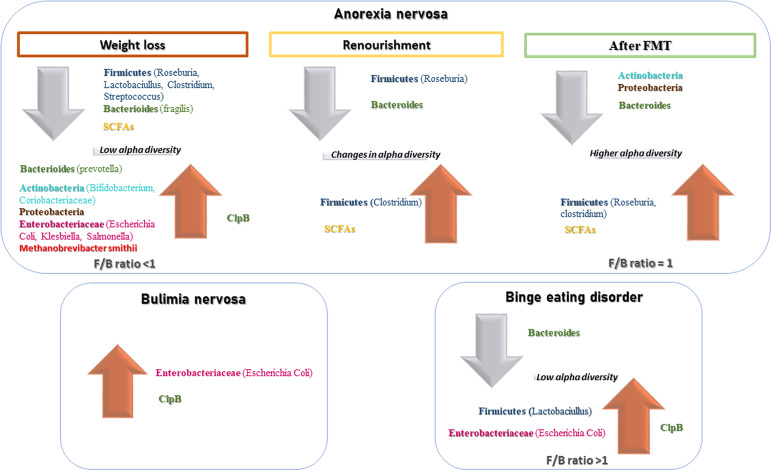
Sixteen studies were included, mostly regarding AN. Alpha diversity and short-chain fatty acid (SCFA) levels were lower in patients with AN, and affective symptoms and ED psychopathology seem related to changes in gut microbiota. Microbiota-derived proteins stimulated the autoimmune system, altering neuroendocrine control of mood and satiety in EDs. Microbial richness increased in AN after weight regain on fecal microbiota transplantation.
Microbiota homeostasis seems essential for a healthy communication network between gut and brain. Dysbiosis may promote intestinal inflammation, alter gut permeability, and trigger immune reactions in the hunger/satiety regulation center contributing to the pathophysiological development of EDs. A restored microbial balance may be a possible treatment target for EDs. A better and more in-depth characterization of gut microbiota and gut-brain crosstalk is required. Future studies may deepen the therapeutic and preventive role of microbiota in EDs.
人们对导致饮食失调(ED)的新因素越来越感兴趣。最近的研究集中在研究微生物组上。与特定遗传易感性相关的生态失调可能导致神经性厌食症(AN)、神经性贪食症或暴食障碍的发展,已经确定了几种假设机制。饮食似乎不仅对肠道微生物群的改变有影响,促进生态失调,而且对 ED 患者的恢复有影响。
本系统评价基于 PICO 策略,在 PubMed、EMBASE、PsychINFO 和 Cochrane Library 中搜索,研究了改变的微生物群在 ED 发病机制和治疗中的作用的文献。
纳入了 16 项研究,主要涉及 AN。AN 患者的 alpha 多样性和短链脂肪酸(SCFA)水平较低,情感症状和 ED 心理病理学似乎与肠道微生物群的变化有关。微生物衍生蛋白刺激自身免疫系统,改变 ED 中情绪和饱腹感的神经内分泌控制。在接受粪便微生物群移植后体重恢复的 AN 中,微生物丰富度增加。
微生物群稳态对于肠道和大脑之间健康的通讯网络似乎至关重要。生态失调可能会促进肠道炎症、改变肠道通透性,并触发饥饿/饱腹感调节中心的免疫反应,从而导致 ED 的病理生理发展。恢复微生物平衡可能是 ED 的一种潜在治疗靶点。需要更好和更深入地描述肠道微生物群和肠道-大脑相互作用。未来的研究可能会加深微生物在 ED 中的治疗和预防作用。