Special Center for Nanoscience, Jawaharlal Nehru University, New Delhi, India.
Amity Institute of Applied Sciences, Amity University, Uttar Pradesh, Noida, India.
Sci Rep. 2021 Jan 14;11(1):1338. doi: 10.1038/s41598-020-80122-6.
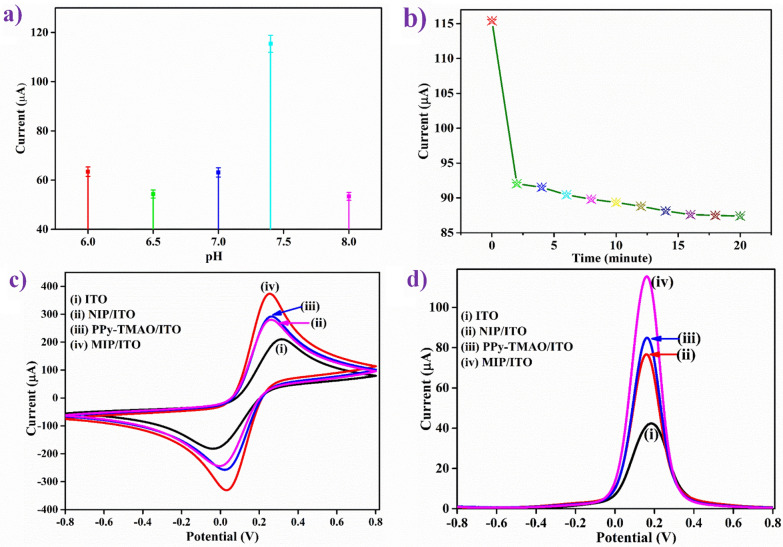
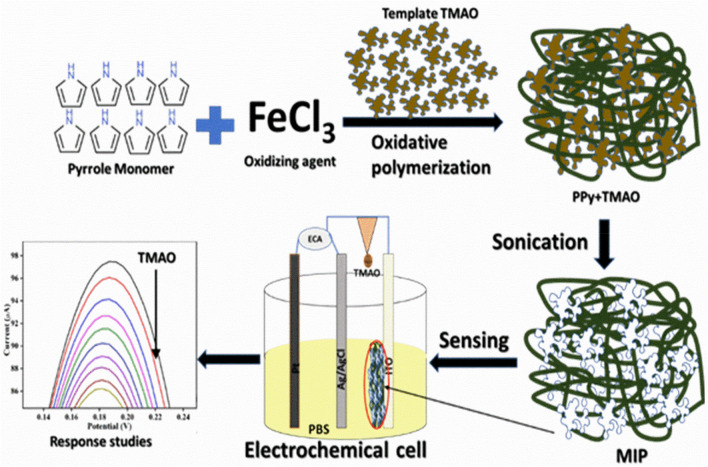
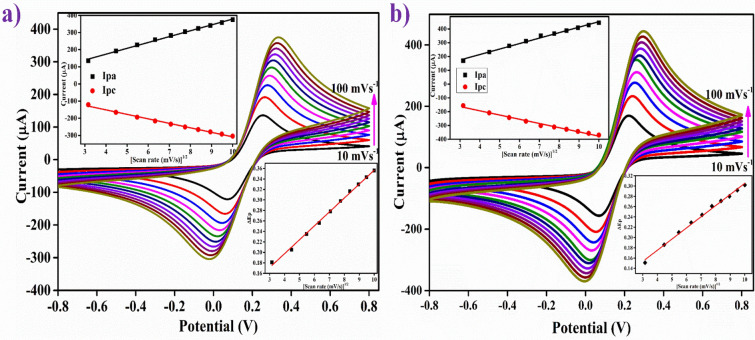
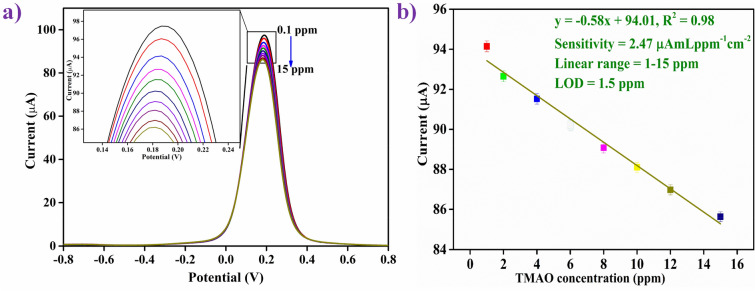
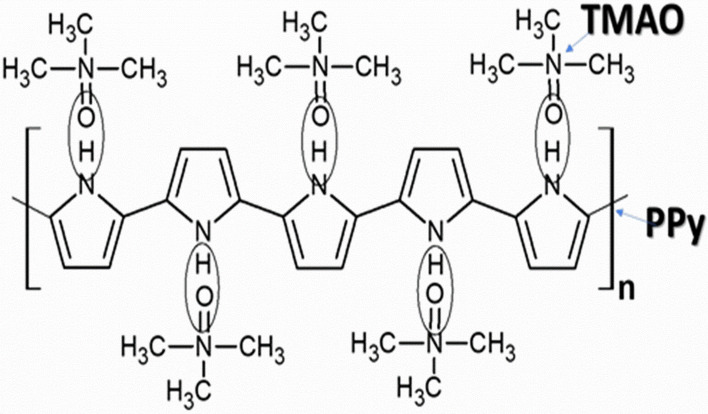
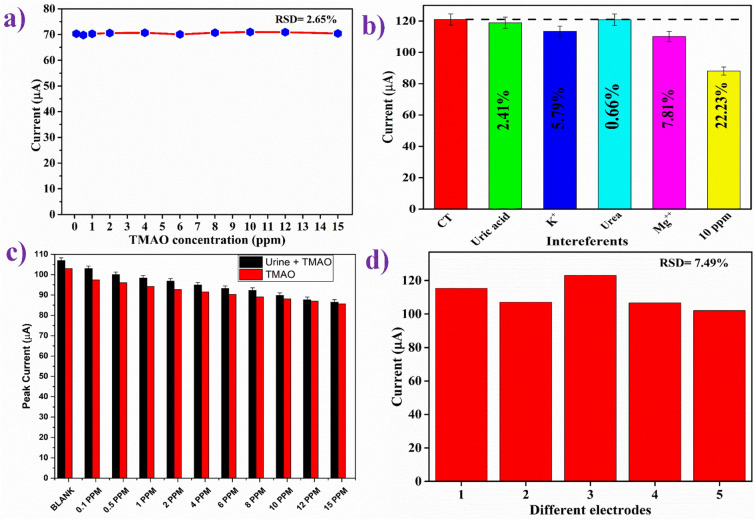
Trimethylamine N-oxide (TMAO), a microbiota-derived metabolite has been implicated in human health and disease. Its early detection in body fluids has been presumed to be significant in understanding the pathogenesis and treatment of many diseases. Hence, the development of reliable and rapid technologies for TMAO detection may augment our understanding of pathogenesis and diagnosis of diseases that TMAO has implicated. The present work is the first report on the development of a molecularly imprinted polymer (MIP) based electrochemical sensor for sensitive and selective detection of TMAO in body fluids. The MIP developed was based on the polypyrrole (PPy), which was synthesized via chemical oxidation polymerization method, with and without the presence of TMAO. The MIP, NIP and the non-sonicated polymer (PPy-TMAO) were separately deposited electrophoretically onto the hydrolyzed indium tin oxide (ITO) coated glasses. The chemical, morphological, and electrochemical behavior of MIP, non-imprinted polymer (NIP), and PPy-TMAO were characterized using Fourier transform infrared spectroscopy (FT-IR), scanning electron microscopy (SEM), and electrochemical techniques. The detection response was recorded using differential pulse voltammetry (DPV), which revealed a decrease in the peak current with the increase in concentration of TMAO. The MIP sensor showed a dynamic detection range of 1-15 ppm with a sensitivity of 2.47 µA mL ppm cm. The developed sensor is easy to construct and operate and is also highly selective to detect TMAO in body fluids such as urine. The present research provides a basis for innovative strategies to develop sensors based on MIP to detect other metabolites derived from gut microbiota that are implicated in human health and diseases.
三甲胺 N-氧化物(TMAO)是一种源自微生物群的代谢物,与人类健康和疾病有关。在体液中早期检测到 TMAO 被认为对了解许多疾病的发病机制和治疗方法具有重要意义。因此,开发可靠和快速的 TMAO 检测技术可能会增进我们对 TMAO 相关疾病发病机制和诊断的理解。本工作首次报道了一种基于分子印迹聚合物(MIP)的电化学传感器,用于灵敏和选择性地检测体液中的 TMAO。所开发的 MIP 基于聚吡咯(PPy),通过化学氧化聚合方法合成,有和没有 TMAO 的存在。MIP、NIP 和未经超声处理的聚合物(PPy-TMAO)分别通过电泳沉积在水解的铟锡氧化物(ITO)涂覆的玻璃上。使用傅里叶变换红外光谱(FT-IR)、扫描电子显微镜(SEM)和电化学技术对 MIP、非印迹聚合物(NIP)和 PPy-TMAO 的化学、形态和电化学行为进行了表征。使用差分脉冲伏安法(DPV)记录检测响应,结果表明随着 TMAO 浓度的增加,峰电流减小。MIP 传感器的动态检测范围为 1-15 ppm,灵敏度为 2.47 µA mL ppm cm。所开发的传感器易于构建和操作,并且对尿液等体液中的 TMAO 具有高度选择性。本研究为开发基于 MIP 的传感器来检测与人类健康和疾病有关的其他源自肠道微生物群的代谢物提供了依据。