IEEE J Biomed Health Inform. 2021 Oct;25(10):3784-3793. doi: 10.1109/JBHI.2021.3051470. Epub 2021 Oct 5.
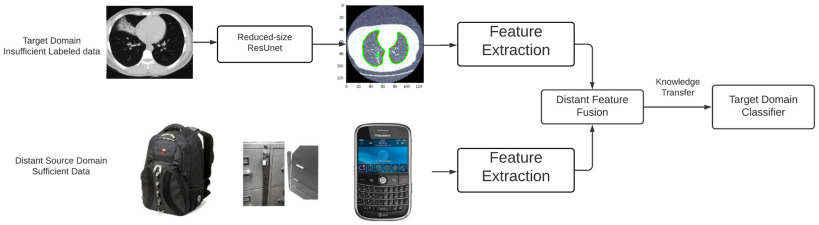
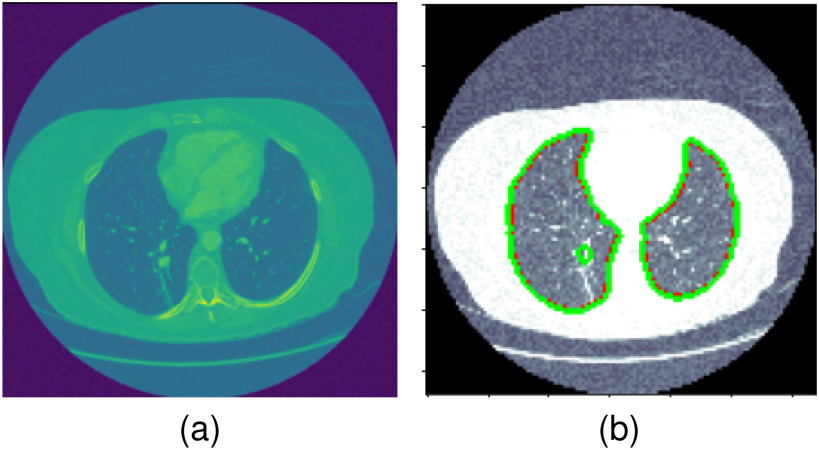
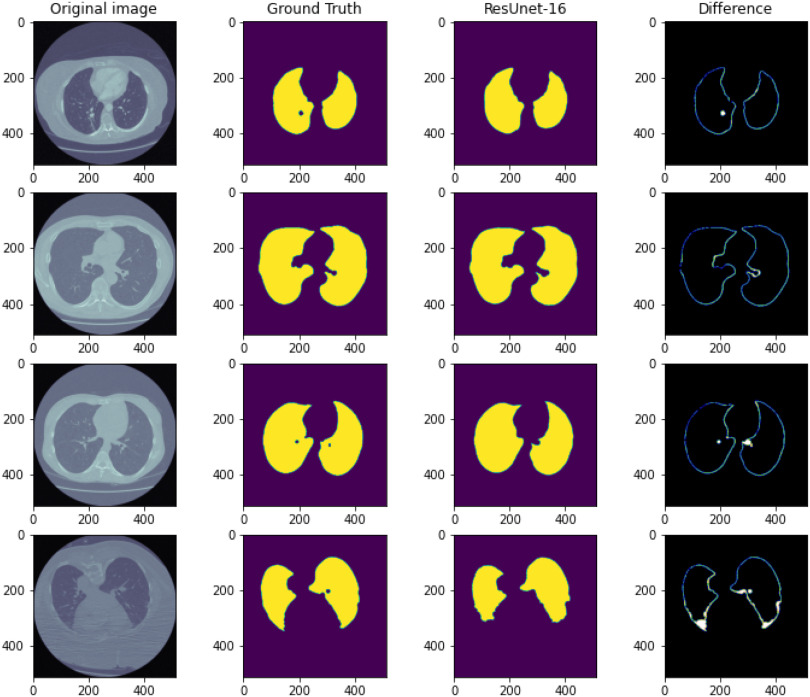
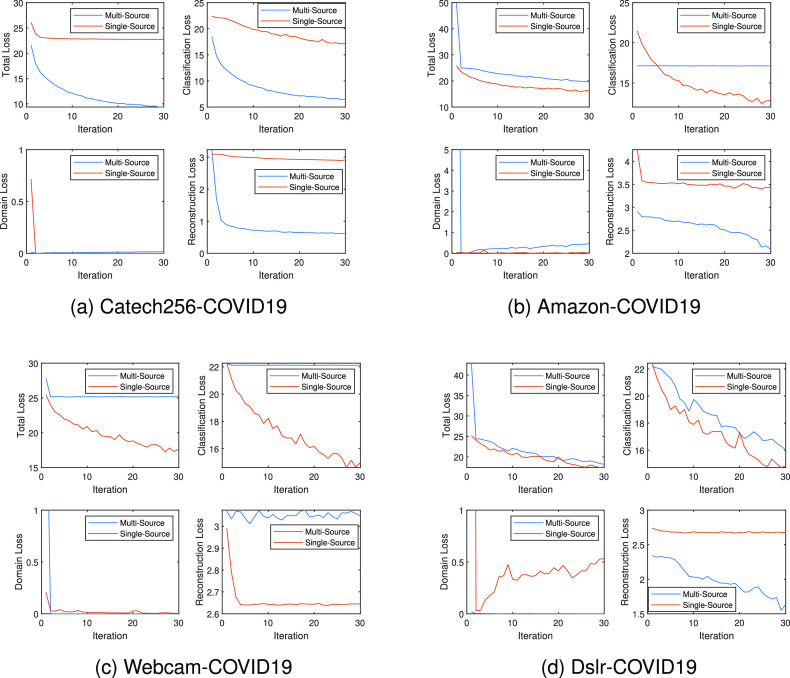
Medical image processing is one of the most important topics in the Internet of Medical Things (IoMT). Recently, deep learning methods have carried out state-of-the-art performances on medical imaging tasks. In this paper, we propose a novel transfer learning framework for medical image classification. Moreover, we apply our method COVID-19 diagnosis with lung Computed Tomography (CT) images. However, well-labeled training data sets cannot be easily accessed due to the disease's novelty and privacy policies. The proposed method has two components: reduced-size Unet Segmentation model and Distant Feature Fusion (DFF) classification model. This study is related to a not well-investigated but important transfer learning problem, termed Distant Domain Transfer Learning (DDTL). In this study, we develop a DDTL model for COVID-19 diagnosis using unlabeled Office-31, Caltech-256, and chest X-ray image data sets as the source data, and a small set of labeled COVID-19 lung CT as the target data. The main contributions of this study are: 1) the proposed method benefits from unlabeled data in distant domains which can be easily accessed, 2) it can effectively handle the distribution shift between the training data and the testing data, 3) it has achieved 96% classification accuracy, which is 13% higher classification accuracy than "non-transfer" algorithms, and 8% higher than existing transfer and distant transfer algorithms.
医学图像处理是物联网(IoMT)中最重要的主题之一。最近,深度学习方法在医学成像任务上取得了最先进的性能。在本文中,我们提出了一种用于医学图像分类的新的迁移学习框架。此外,我们还将该方法应用于 COVID-19 诊断与肺部 CT 图像。然而,由于疾病的新颖性和隐私政策,难以获得标记良好的训练数据集。所提出的方法有两个组成部分:缩小规模的 U-Net 分割模型和远距离特征融合(DFF)分类模型。这项研究涉及一个尚未深入研究但很重要的迁移学习问题,称为远程域迁移学习(DDTL)。在这项研究中,我们使用未标记的 Office-31、Caltech-256 和胸部 X 射线图像数据集作为源数据,使用一小部分标记的 COVID-19 肺部 CT 作为目标数据,开发了一种用于 COVID-19 诊断的 DDTL 模型。本研究的主要贡献有:1)所提出的方法受益于远程域中的未标记数据,这些数据易于获取;2)它可以有效地处理训练数据和测试数据之间的分布转移;3)它实现了 96%的分类准确率,比“非迁移”算法高 13%,比现有的迁移和远程迁移算法高 8%。