Brouwer Charlotte L, Dinkla Anna M, Vandewinckele Liesbeth, Crijns Wouter, Claessens Michaël, Verellen Dirk, van Elmpt Wouter
University of Groningen, University Medical Center Groningen, Department of Radiation Oncology, Groningen, The Netherlands.
Department of Radiation Oncology, Amsterdam University Medical Center, VU University, The Netherlands.
Phys Imaging Radiat Oncol. 2020 Nov 30;16:144-148. doi: 10.1016/j.phro.2020.11.002. eCollection 2020 Oct.
The use of artificial intelligence (AI)/ machine learning (ML) applications in radiation oncology is emerging, however no clear guidelines on commissioning of ML-based applications exist. The purpose of this study was therefore to investigate the current use and needs to support implementation of ML-based applications in routine clinical practice.
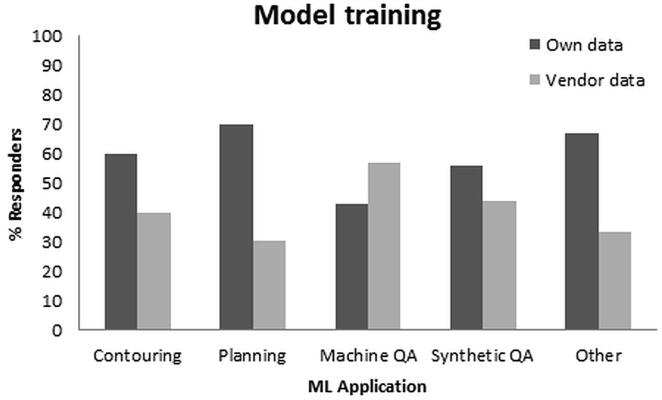
A survey was conducted among medical physicists in radiation oncology, consisting of four parts: clinical applications (1), model training, acceptance and commissioning (2), quality assurance (QA) in clinical practice and General Data Protection Regulation (GDPR) (3), and need for education and guidelines (4). Survey answers of medical physicists of the same radiation oncology centre were treated as a separate unique responder in case reporting on different AI applications.
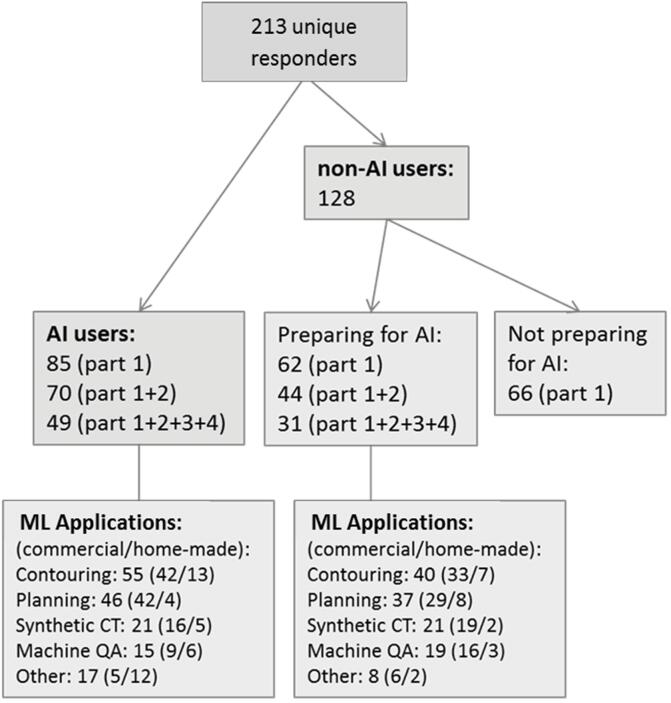
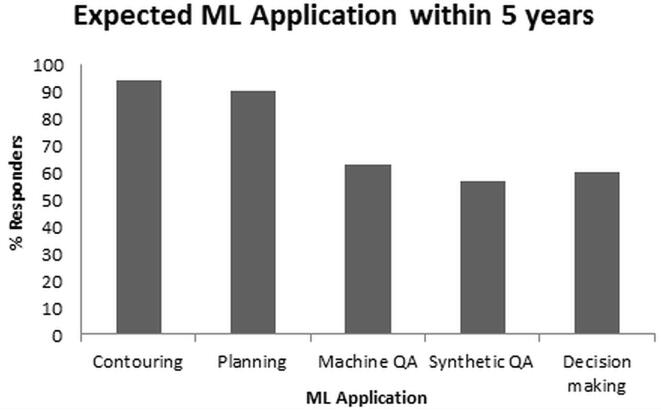
In total, 213 medical physicists from 202 radiation oncology centres were included in the analysis. Sixty-nine percent (1 4 7) was using (37%) or preparing (32%) to use ML in clinic, mostly for contouring and treatment planning. In 86%, human observers were still involved in daily clinical use for quality check of the output of the ML algorithm. Knowledge on ethics, legislation and data sharing was limited and scattered among responders. Besides the need for (implementation) guidelines, training of medical physicists and larger databases containing multicentre data was found to be the top priority to accommodate the further introduction of ML in clinical practice.
The results of this survey indicated the need for education and guidelines on the implementation and quality assurance of ML-based applications to benefit clinical introduction.
人工智能(AI)/机器学习(ML)应用在放射肿瘤学中的使用正在兴起,但目前尚无关于基于ML的应用程序调试的明确指南。因此,本研究的目的是调查ML在常规临床实践中的当前使用情况以及支持其实施的需求。
对放射肿瘤学领域的医学物理师进行了一项调查,调查包括四个部分:临床应用(1)、模型训练、验收与调试(2)、临床实践中的质量保证(QA)和通用数据保护条例(GDPR)(3),以及对教育和指南的需求(4)。在报告不同AI应用的案例时,同一放射肿瘤学中心的医学物理师的调查答案被视为一个单独的唯一应答者。
总共纳入了来自202个放射肿瘤学中心的213名医学物理师进行分析。69%(147名)正在(37%)或准备(32%)在临床中使用ML,主要用于轮廓勾画和治疗计划。在86%的情况中,人工观察者仍参与日常临床使用,以对ML算法的输出进行质量检查。应答者对伦理、立法和数据共享的知识有限且分散。除了需要(实施)指南外,医学物理师的培训以及包含多中心数据的更大数据库被认为是在临床实践中进一步引入ML的首要任务。
本次调查结果表明,需要关于基于ML的应用程序实施和质量保证的教育与指南,以促进其临床应用。